
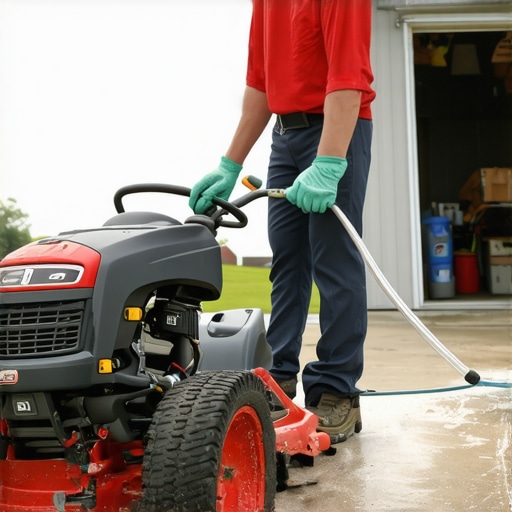
The Forensic Autopsy of a Rotted Mower Deck
Cleaning your mower deck involves removing the packed, acidic layer of decaying grass clippings that trap moisture against the steel, leading to structural failure and the spread of turf pathogens. Neglecting this maintenance reduces airflow, creates a jagged cut on your landscaping, and can ruin a fresh sod install through fungal cross-contamination.
I always drill into my new crew members: if you don’t fix the equipment maintenance habits first, every high-end plant you put in the ground is just expensive compost. I remember a sub-contractor I hired three years ago who thought he could skip the end-of-day blowout. Within two months, his $12,000 zero-turn had a deck so pitted with rust it looked like Swiss cheese. Even worse, he’d been hauling that fermented sludge from a yard with Pythium blight straight onto a pristine, $20,000 Kentucky Bluegrass sod install. He didn’t just kill his machine; he killed the client’s lawn. The chemistry of decaying grass is brutal. When clippings sit, they undergo anaerobic decomposition, producing organic acids that eat through powder coatings and high-tensile steel faster than you’d believe.
The Chemical Reality of Grass Buildup
Grass clipping fermentation creates a corrosive paste with a low pH that aggressively attacks the metallurgy of your mower deck while harboring dormant fungal spores. This buildup acts as a sponge, retaining moisture from irrigation cycles or morning dew, ensuring the oxidation process never stops even in a dry garage.
“The accumulation of organic debris on metal surfaces creates an anaerobic environment that accelerates oxidation and structural failure of the mower housing.” – Agronomy Equipment Maintenance Manual
When you leave that green cake under the deck, you are effectively creating a Petri dish. In the landscaping world, we call this the ‘pathogen bridge.’ Those clippings hold moisture, and moisture is the primary vector for Rhizoctonia solani (Brown Patch). If you don’t scrape that deck before storage, you’re guaranteed to inoculate your yard the moment you engage the blades next spring. The physics of the cut also suffer. A mower deck is an engineered vacuum chamber. It relies on specific CFM (cubic feet per minute) of airflow to lift the grass blades upright before the steel edge makes contact. When the deck is choked with debris, the vortex is disrupted. The grass isn’t lifted; it’s pushed over. You end up with a ragged, torn leaf surface instead of a clean, surgical cut. This isn’t just about aesthetics. A torn blade loses water 50% faster than a clean-cut one, putting massive stress on your irrigation system to keep up.
How much modified gravel do I need for a patio base?
While often discussed in hardscaping, the principles of compaction and drainage apply to your mower’s storage area too. If your mower sits on a damp dirt floor, the underside of the deck will never truly dry out, leading to ‘bottom-up’ rust even if the top looks clean. Always store equipment on a raised, dry surface or a concrete pad with a vapor barrier.
Will a dirty mower deck kill my new sod?
Dirty mower decks harbor pathogens like dollar spot and red thread, which are easily transferred to vulnerable, newly installed sod through the mower’s discharge. The lack of airflow also causes the mower to ‘clump,’ dropping heavy mats of wet grass that will smother and kill young turf shoots in 48 hours.
The Professional Cleaning Protocol: A Step-by-Step Breakdown
Do not just spray it with a hose and walk away. That’s a rookie mistake. Water is the catalyst for the very rust you’re trying to prevent. You need a mechanical and chemical approach to ensure the steel remains virginal through the winter months. Use this professional checklist to prepare for storage.
- Disconnect the Spark Plug: Never put your hands near the blades without physically removing the ignition source. No exceptions.
- Mechanical Scraping: Use a plastic or stiff putty knife to remove the bulk of the ‘caked’ material. Metal scrapers can gouge the paint, creating new rust points.
- The Pressure Wash: If you use water, you must use it with an objective. Hit the spindles, the baffles, and the discharge chute.
- Thermal Drying: After washing, run the mower for 5 minutes. The heat from the engine and the friction of the blades will help evaporate residual moisture.
- Chemical Barrier: Apply a thin coat of fluid film, graphite spray, or even a non-stick cooking spray to the underside of the deck. This prevents future buildup and seals the metal from oxygen.
Maintenance Tool Comparison
| Tool | Effectiveness | Risk Level | Professional Use Case |
|---|---|---|---|
| Wire Brush | High | High (Removes Paint) | Restoring a rusted deck to bare metal. |
| Plastic Scraper | Medium | Low | Daily maintenance and end-of-season bulk removal. |
| Pressure Washer | High | Medium (Bearing Damage) | Deep cleaning after yard cleanup in wet conditions. |
| Air Compressor | Low | Low | Daily dust removal and drying sensitive components. |
While the internet tells you to water every day, turf grass actually needs deep, infrequent watering—exactly 1 inch per week—to force roots to chase the water down. The same logic applies to mower maintenance. You don’t need a light cleaning every day; you need a deep, invasive cleaning once a season that addresses the microscopic reality of the machine. If you skip the fluid barrier, you’re just waiting for the next rain to start the rot again.
“Dull blades and restricted airflow from debris buildup tear grass tissue rather than cutting it, increasing water loss and pathogen entry into the landscaping.” – Penn State Extension
The Physics of the Cut
A professional yard cleanup isn’t just about picking up leaves; it’s about setting the stage for the next biological cycle. When the mower deck is clean, the blade speed generates a high-pressure zone that forces clippings to be processed multiple times—this is true mulching. If the deck is dirty, the clippings hit the side walls and drop immediately. This results in ‘windrowing,’ where long lines of wet grass sit on top of your lawn. This is the fastest way to invite pests and mold. It’s a failure of engineering. Don’t be the person who spends $5,000 on irrigation and then kills the grass because they were too lazy to spend 20 minutes with a scraper. It will rot. Don’t skip this. The structural integrity of your mower and the cellular integrity of your grass depend on that air space under the deck. Clean it once, clean it right, and spray it down with a moisture displacer. Your future self will thank you when the mower starts on the first pull in April and the grass looks like a golf course fairway instead of a ragged pasture.