
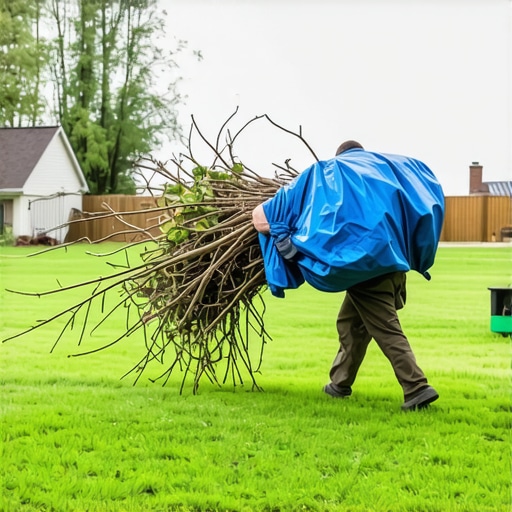
The Forensic Autopsy of a Storm-Wrecked Landscape
The aftermath of a major storm is more than a visual mess; it is a structural and biological crisis for your soil. Clearing 2026 storm debris requires a surgical approach to prevent the weight of fallen timber and heavy equipment from destroying the soil’s macropores, which are essential for oxygen and water infiltration. When you see standing water or stunted growth after a cleanup, you are looking at the result of catastrophic soil compaction. I always drill into my new crew members: if you don’t fix the soil grading and preserve the structure first, every plant you put in the ground is just expensive compost. I have seen too many rookies roll a five-ton skid steer over wet clay to move a fallen oak, effectively turning the yard into a parking lot. That soil is dead. It won’t breathe, and it won’t grow anything but crabgrass for five years. We do it differently. We look at the PSI (pounds per square inch) we are exerting on the turf. If you can’t walk on it without leaving a footprint deeper than a quarter-inch, you have no business putting a machine on it.
What is the Tarp-Slide Trick for Storm Cleanup?
The Tarp-Slide Trick is a mechanical advantage technique using 20-mil high-density polyethylene tarps to move massive amounts of organic yard cleanup debris while maintaining a ground pressure of less than 2 PSI. This method prevents the shearing of the root zone and protects the underlying irrigation lines from being crushed by concentrated wheel loads. It is physics. A standard wheelbarrow puts roughly 30-50 PSI on a single point. A heavy-duty tarp spreads that load over 100 square feet. You aren’t just moving wood; you are floating it. This is critical when the ground is saturated from storm surge or heavy rain.
How do I move heavy storm debris without a tractor?
By using the tarp-slide method, you utilize the low friction coefficient of polyethylene against wet grass to move up to 500 pounds of debris with a simple 2:1 pulley system or a small winch. This avoids the need for heavy treaded machinery that causes deep rutting.
“Soil compaction is the single greatest cause of plant decline in urban landscapes, as it reduces the pore space necessary for root respiration and water movement.” – Penn State Agricultural Extension
Will storm debris kill my existing grass?
Yes, if left for more than 72 hours. Organic debris creates a localized heat island and blocks photosynthetic light, while decaying wood leaches tannins that can temporarily alter surface soil pH.
The Engineering of Post-Storm Soil Restoration
Once the heavy timber is moved, we have to address the “nitrogen drawdown.” As wood chips and small debris decompose, the microbes responsible for breaking down the carbon-heavy wood consume the available nitrogen in the soil. This leaves your yard looking yellow and sickly. We counter this with a precise application of slow-release nitrogen, but only after checking the pH levels. Storm debris from coniferous trees like pine can drop the pH, making the soil too acidic for a successful sod install. We aim for a pH between 6.2 and 6.8 for most cool-season grasses. If the storm caused flooding, we are also looking for silt deposits. Even a half-inch of silt can act like a layer of plastic, suffocating the roots below. We use core aeration—not those cheap spike aerators—to pull 3-inch plugs out of the earth, allowing the soil to breathe again. It is manual, it is slow, and it is the only way to do it right.
Tactical Material Selection for High-Volume Cleanup
| Material Type | Friction Coefficient | Max Load Capacity | Ground Pressure (EST) |
|---|---|---|---|
| Polyethylene Tarp (20-mil) | 0.15 (Wet) | 800 lbs | 1.2 PSI |
| Standard Plywood Sheet | 0.40 (Dry) | 400 lbs | 2.5 PSI |
| Compact Skid Steer | N/A | 2,500 lbs | 4.5 – 6.0 PSI |
| Standard Wheelbarrow | N/A | 300 lbs | 40.0 PSI |
The 5-Step Storm Recovery Checklist
- Damage Assessment: Locate all irrigation heads and valve boxes before moving any heavy debris. Flag them.
- Debris Triage: Separate woody debris (carbon) from green waste (nitrogen) to manage your compost ratios.
- Tarp-Slide Execution: Load tarps at the furthest point of the yard and work your way back toward the staging area to minimize traffic.
- Soil Decompaction: Use a core aerator to remove 20-40 plugs per square foot.
- Nutrient Reset: Apply a high-nitrogen starter fertilizer only after a soil test confirms pH stability.
Restoring Irrigation and Preparing for Sod Install
After the debris is gone, you cannot just throw down sod install and hope for the best. You have to pressure test the irrigation system. Falling limbs often create lateral line breaks that aren’t visible from the surface. We run every zone for 10 minutes, looking for the tell-tale “bubble up” of a cracked pipe. If you ignore this, your new sod will rot from the bottom up within two weeks due to anaerobic conditions. Once the pipes are cleared, we focus on the grade. We use a 70/30 mix of screened topsoil and coarse sand to fill in the ruts. This provides the drainage needed to prevent future heaving. Don’t skip the compaction check. I use a hand tamper. It should bounce. If it sinks, your base isn’t set.
“A retaining wall doesn’t fail because of the stone; it fails because of the water trapped behind it, creating hydrostatic pressure that overcomes the structural integrity of the base.” – Hardscape Engineering Axiom
The Long-Term Maintenance Horizon
The first year after a major storm cleanup is the most critical. The soil is in a state of flux. You will see a flush of weeds as the soil was disturbed, bringing dormant seeds to the surface. We use a pre-emergent in early spring, but only after the new sod has established a deep root system—at least 4 inches. Don’t scalp the yard. Keep the deck height at 3.5 inches to shade the soil and reduce evaporation. It’s not about being pretty; it’s about survival. You’re rebuilding an ecosystem, not just a lawn.