
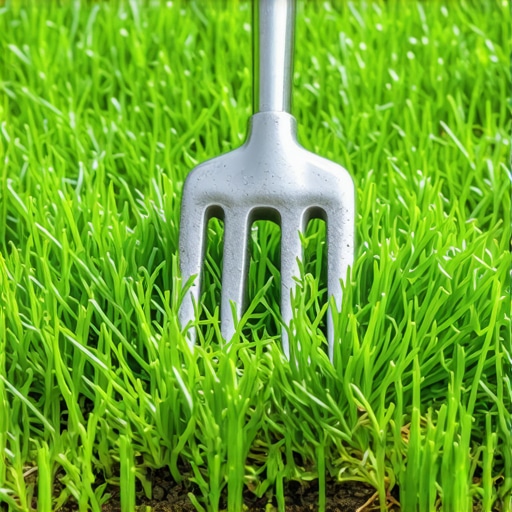
The Forensic Autopsy of a Dying Lawn
I always drill into my new crew members: if you don’t fix the soil grading and compaction first, every plant you put in the ground is just expensive compost. Last season, I walked onto a property where the owner had spent five figures on a sod install. Within three months, the grass was yellowing in a strange, checkerboard pattern. They thought it was a fungus. They were wrong. I took a penetrometer reading and found the soil resistance was over 300 PSI just two inches down. The roots were hitting a wall of hard-packed clay, effectively drowning in a thin layer of mud every time the irrigation kicked on. This wasn’t a disease issue; it was a civil engineering failure. The soil was so tight that oxygen couldn’t reach the microbes. If you want a 2026 lawn that survives a dry July, you have to stop looking at the green blades and start looking at the pore space between the dirt clods.
The Physics of Hard-Packed Dirt: Why Your Soil is Suffocating
Soil compaction is the silent killer of domestic turf because it physically eliminates the macropores required for gas exchange and water infiltration. When bulk density exceeds 1.6 grams per cubic centimeter, root elongation ceases, leading to anaerobic conditions that favor pathogenic fungi over beneficial bacteria. Mechanical core aeration is the only intervention that physically removes soil mass to lower this density. It is not just about holes; it is about relieving lateral pressure. When the soil is tight, the water from your irrigation system doesn’t soak in. It runs off. It takes your expensive fertilizer with it. Your yard becomes a desert that happens to be wet on the surface. We measure this. We don’t guess. If I can’t push a screwdriver into your lawn with two fingers, your grass is starving for air. It is that simple.
“Core aeration increases the rate of gas exchange between the soil and the atmosphere, significantly improving root zone oxygenation during periods of peak growth.” – Penn State Center for Turfgrass Science
How deep should core aeration plugs be?
To effectively remediate soil compaction, mechanical core aeration plugs must reach a minimum depth of 2.5 to 3 inches. Shallow 1-inch penetrations only disturb the thatch layer and fail to reach the subsurface clay where root hair development occurs. Deep plugs ensure capillary action can pull water into the lower soil horizons. Do not settle for light machines. You need a commercial-grade aerator with enough weight to force the hollow tines through the hardpan. If the plugs look like cigars, you’re doing it right. If they look like little buttons, you’re wasting gas.
Mechanical Extraction vs. The Spike Myth
Mechanical core aeration involves removing a physical plug of soil, whereas spike aeration simply pushes a solid tine into the ground. While spikes create a hole, they actually increase compaction around the perimeter of that hole by forcing the soil sideways, a process known as glazing. For a successful yard cleanup or landscaping overhaul, you must extract the material. Removing the plug creates a void. This void allows the surrounding soil to expand into the gap, naturally loosening the entire soil profile over several weeks. This is the information gain the big-box stores won’t tell you: those spiked sandals for lawn care are actually making your compaction worse. They are a gimmick. Real landscaping requires heavy machinery and physical removal of mass.
| Method | Action | Compaction Relief | Thatch Impact |
|---|---|---|---|
| Core Aeration | Soil Plug Extraction | High (Relieves Lateral Pressure) | Excellent Removal |
| Spike Aeration | Soil Displacement | Negative (Increases Glazing) | None |
| Liquid Aeration | Chemical Surfactants | Low (Surface Only) | None |
| Vertical Mowing | Surface Slicing | None | High (Thatch Only) |
Every landscaping professional knows the bulk density of the soil dictates the health of the sod install. If you are prepping for 2026, you need to understand the nitrogen cycle‘s dependency on oxygen. Nitrifying bacteria, which convert ammonia into plant-available nitrates, are aerobic. In compacted, waterlogged soil, these bacteria die off, and denitrifying bacteria take over, turning your fertilizer into nitrogen gas that floats away. You are literally throwing money into the air. Aeration fixes the microbiology before it fixes the grass.
Coordinating Your 2026 Irrigation and Sod Strategy
Irrigation systems must be calibrated to the infiltration rate of the soil, which is directly altered by core aeration. After a heavy yard cleanup and aeration cycle, your soil’s percolation rate will increase, meaning you can water for longer durations without hydrostatic runoff. This is the time to check your irrigation heads. Are they hitting the pavement? Is the zone pressure consistent? If you are planning a sod install for next year, the aeration must happen at least one season prior to ensure the sub-base is receptive to new root graft. Do not lay sod over compacted clay. It will rot. It will fail. You must prep the foundation first.
When is the best time to aerate and overseed?
The optimal window for core aeration and overseeding is during the active growth phases of your specific turfgrass species, typically late summer to early fall for cool-season grasses. This timing allows the seed-to-soil contact in the aeration holes to benefit from warm soil and cooling air temperatures. For warm-season turf, late spring is preferred. Avoid aerating during drought dormancy or extreme heat, as this can desiccate the crown of the plant. Always time your aeration before a fertilizer application to ensure the nutrients reach the root zone immediately.
“A retaining wall doesn’t fail because of the stone; it fails because of the water trapped behind it, much like a lawn fails not from lack of water, but from the inability to move it through the soil.” – Hardscape Engineering Axiom
The 2026 Maintenance Checklist: Step-by-Step Remediation
Follow this hardscape-foreman approved protocol to ensure your soil is ready for the 2026 growing season. Don’t skip these steps. They are non-negotiable for high-performance turf.
- Mark Irrigation Lines: Call 811 and flag all irrigation heads and shallow utility lines. An aerator will shear off a plastic sprinkler head in a heartbeat.
- Hydrate the Soil: Water the lawn 24 hours before aeration. You need the soil moist enough for the tines to penetrate, but not so wet that the machine mucks up the surface.
- Double Pass Technique: Run the aerator in a grid pattern. Go north-to-south, then east-to-west. This ensures you get roughly 20 to 40 holes per square foot.
- Topdress with Compost: After extracting the plugs, spread a quarter-inch of organic compost. This material will fall into the holes, permanently changing the soil structure.
- Apply Soil Amendments: This is the time for lime or gypsum. The holes provide a direct highway to the subsoil.
While the internet tells you to water every day, turf grass actually needs deep, infrequent watering exactly 1 inch per week to force roots to chase the water down. Aeration makes this possible. If you water every day for 5 minutes, you are encouraging shallow roots and thatch buildup. That is how you get a lawn that dies the first time the temperature hits 90 degrees. You have to train your grass to be tough. You have to make it work for its water. But it can only do that if the soil isn’t a brick. Yard cleanup is about more than raking leaves; it is about resetting the biological clock of your property. If you ignore compaction, you are just decorating a corpse. Get the plugs out. Get the air in. That is how you win the 2026 season.
Comments are closed.