
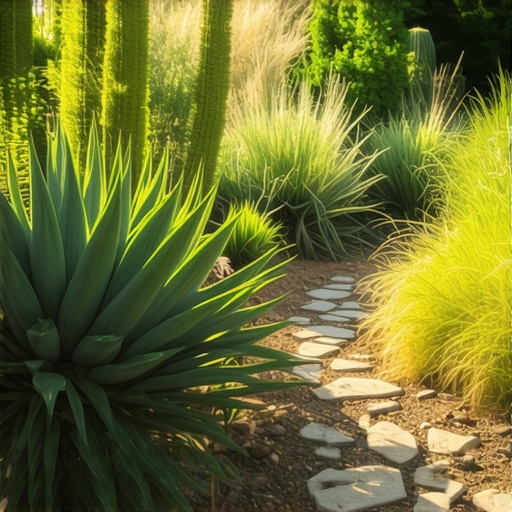
Engineering the Resilient Landscape
To engineer a drought-tolerant garden using native plants, you must first calculate the evapotranspiration rates and match them to soil drainage capacity. This involves soil testing for pH balance and texture, followed by the installation of low-volume irrigation systems that target root zones directly. It requires more than just picking dry-climate flora; it is a structural overhaul of the microclimate. I always drill into my new crew members: if you don’t fix the soil grading first, every plant you put in the ground is just expensive compost. You can buy the most expensive 15-gallon native oak on the market, but if you drop it into a hole that does not drain, you have just built a very expensive bathtub for a dead tree. My foremen know that 80 percent of the work happens before the first shovel hits the dirt. We look at the Cation Exchange Capacity (CEC) of the soil and the bulk density of the site. If the ground is compacted to 95 percent proctor, those native roots aren’t going anywhere. You have to break that hardpan or you are wasting the client’s money. Landscaping is civil engineering with living components.
The Soil Matrix and Hydraulic Conductivity
Effective landscaping begins with soil remediation and understanding how hydraulic conductivity dictates the movement of water through the soil horizons. We do not just toss down sod install remnants; we rebuild the rhizosphere to ensure long-term plant health and water retention. Stop looking at your yard as a flat surface. It is a three-dimensional filter. Most failures in irrigation happen because the contractor did not account for the percolation rate of the native soil. If you have heavy clay, your irrigation emitters need to be spaced for lower GPH (gallons per hour) to prevent surface runoff. In sandy loam, you need to tighten that spacing.
“The success of a drought-tolerant system is determined by the depth of the root zone, which is directly influenced by the soil’s physical properties and pore space.” – Agricultural Extension Service Manual
How much water do native plants actually need?
During the establishment phase, which typically lasts 12 to 24 months, native plants require approximately 1 inch of water per week delivered via drip irrigation to ensure the root ball does not dehydrate. Once established, these species can often survive on ambient rainfall alone, provided the mulch layer is maintained at a 3-inch depth to prevent evaporative loss. Do not listen to the big-box store advice about watering every day. That is how you grow shallow, weak roots. You want to water deep and infrequent. Force those roots to chase the moisture 18 inches down. That is where the temperature stays stable. Table 1: Comparison of Native Species vs. Conventional Turf
| Metric | Native Grass (Blue Grama) | Standard Sod (Bluegrass) | Native Shrubs |
|---|---|---|---|
| Water Use (Inches/Week) | 0.25 – 0.5 | 1.0 – 1.5 | 0.1 – 0.3 |
| Mowing Frequency | Once per month | Weekly | Pruning annually |
| Root Depth (Inches) | 12 – 36 | 2 – 4 | 24 – 60 |
| Nitrogen Requirement | Low | High | Minimal |
Strategic Irrigation and Yard Cleanup Protocols
A proper yard cleanup for a drought-tolerant install involves removing invasive species that compete for soil moisture and nitrogen, followed by a site grading check to ensure stormwater is directed toward planting beds. We call this passive rainwater harvesting. Every irrigation system we install for native landscaping uses pressure-compensating emitters. This ensures that the plant at the end of the line gets the same 1.0 GPH as the plant at the start of the line. If you skip the pressure regulator, you will blow out your fittings or starve your uphill plants. It is physics, not magic.
When is the best time for a yard cleanup before planting?
The optimal time for yard cleanup and site preparation is late autumn or early spring when the soil moisture levels allow for mechanical aeration without causing structural compaction. This window allows for the removal of perennial weeds before they reach the seed-head stage, reducing the seed bank in the topsoil. Check your 811 utility markings before you start digging.
“Effective weed management in native landscapes requires a multi-year strategy focusing on the reduction of the soil seed bank and the maintenance of a continuous mulch barrier.” – Weed Science Society of America
The Installation Checklist
Follow these technical steps for a professional-grade install. Don’t skip the testing phase.
- Soil Texture Test: Perform a jar test to determine the percentage of sand, silt, and clay.
- Grading: Ensure a minimum 2 percent slope away from all hardscape structures and foundations.
- Irrigation Layout: Map out hydrozones, grouping plants with identical water requirements on the same valve circuit.
- Planting Depth: Locate the root flare; never bury the stem, as this leads to adventitious rooting and trunk rot.
- Mulching: Use arborist wood chips rather than dyed mulch to encourage mycorrhizal fungi growth.
Year-One Maintenance and Settlement
The first year is the critical window for native plant survival. You must monitor for transplant shock. If the leaves are curling, don’t just dump water on them. Check the soil moisture 4 inches down. It might be a drainage issue, not a drought issue. Over-watering native plants is the fastest way to kill them with Phytophthora root rot. Keep your irrigation controller seasonal. Adjust the run times as the evapotranspiration rate drops in the fall. This is not a set-it-and-forget-it system until year three. By then, the root architecture should be robust enough to handle a 30-day dry spell without wilting. [{“@context”:”https://schema.org”,”@type”:”Article”,”headline”:”Creating a Drought-Tolerant Garden with Native Plants”,”author”:{“@type”:”Person”,”name”:”Veteran Horticulturist”},”description”:”A technical guide to engineering resilient native landscapes using advanced soil science and irrigation techniques.”},{“@context”:”https://schema.org”,”@type”:”FAQPage”,”mainEntity”:[{“@type”:”Question”,”name”:”How much water do native plants actually need?”,”acceptedAnswer”:{“@type”:”Answer”,”text”:”Native plants require approximately 1 inch of water per week during the 12-24 month establishment phase. Once established, they survive on ambient rainfall and minimal supplemental irrigation.”}},{“@type”:”Question”,”name”:”When is the best time for a yard cleanup before planting?”,”acceptedAnswer”:{“@type”:”Answer”,”text”:”The best time is late autumn or early spring to avoid soil compaction and effectively manage the weed seed bank before the growing season begins.”}}]}]