
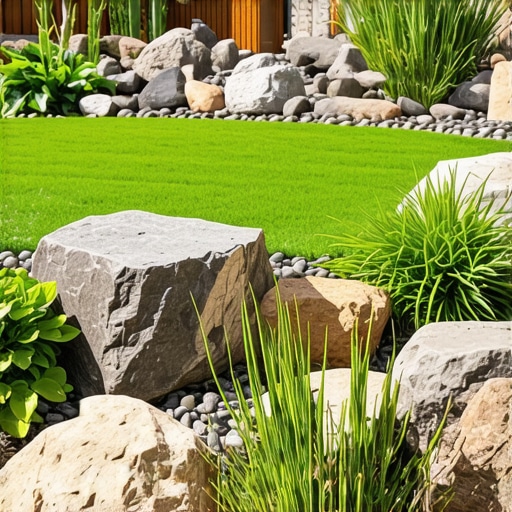
The Engineering of a Professional Rock Garden: Beyond the Aesthetics
Designing a 2026 rock garden requires a detailed topographic assessment and soil percolation test to ensure the subgrade can handle drainage without the cooling effect of turf. By analyzing hydrostatic pressure and slope grade, you prevent water from undermining your foundation or adjacent properties while drastically reducing utility costs. This is not a weekend DIY project: it is a civil engineering task on a residential scale.
I recently got called out to tear up a $30,000 patio that was sinking because the previous contractor thought they could just lay stone over uncompacted native soil. They ignored the capillary action of the local clay. Within two seasons, the entire structure had settled four inches, creating a massive bowl that collected water and pumped it straight into the homeowner’s basement. This is the risk you take when you prioritize the ‘look’ over the subgrade. When we talk about landscaping, we are talking about managing weight and water. A cubic yard of stone can weigh 2,700 pounds. If your soil isn’t prepared to handle that PSI (pounds per square inch), your beautiful rock garden will become a geological sinkhole in three years. We start by excavating 6 to 8 inches of organic matter. You cannot build on sod. It will rot. That decomposition creates air pockets, and air pockets lead to shifting. We replace that organic fluff with a modified gravel base, compacted in two-inch lifts using a vibratory plate compactor until the base literally bounces the machine back at you. That is the only way to ensure 20 years of stability.
“A retaining wall doesn’t fail because of the stone; it fails because of the water trapped behind it.” – Hardscape Engineering Axiom
How much modified gravel do I need for a patio base?
To calculate your base needs, multiply your square footage by the desired depth in feet (usually 0.5 feet for 6 inches), then divide by 27 to find cubic yards. Always add a 10 percent compaction factor to your final order to account for the reduction in volume during the tamping process. Sod install professionals often overlook this when transitioning to hardscape, leading to shallow bases that fail during freeze-thaw cycles.
The Soil Microbiology of Xeric Transitions
Successful yard cleanup for a rock garden involves stripping the existing sod install and remediating the soil to prevent anaerobic conditions under your new stone layers. You must address the soil pH and bulk density before the first boulder is placed to ensure long-term plant health in your xeric zones. Many hacks will tell you to just throw down some plastic weed barrier and dump rocks. That is a death sentence for your yard. Plastic suffocates the soil microbiome, killing the beneficial fungi and bacteria that your new plants need to survive. Instead, we use a high-denisty, woven geotextile fabric. This allows for gas exchange and water infiltration while providing the tensile strength needed to keep your heavy boulders from sinking into the subgrade. We are looking for pore space. Even in a rock garden, your plants need oxygen at the root zone. If you are moving from a high-water Kentucky Bluegrass lawn, your soil is likely compacted and depleted. We use a vertical mulch technique around new plantings, backfilling with a mix of expanded shale and compost to jumpstart the biological activity in a high-heat rock environment.
2026 Rock Garden Material Comparison
| Crushed Granite (3/4″) | 2,500 | High | Pathways and primary fill |
| River Rock (2-4″) | 2,700 | Moderate | Dry creek beds and accents |
| Decomposed Granite | 2,300 | Low | Stabilized walking surfaces |
| Lava Rock (Scoria) | 1,200 | Very High | Heat retention and slope stability |
Irrigation Retrofitting: From Spray to Subsurface Drip
Converting a high-water lawn to a rock garden requires a complete irrigation overhaul, moving from high-evaporation spray heads to pressure-compensating drip emitters. This transition reduces water waste by up to 70 percent by delivering moisture directly to the root flare of each individual plant. When you have a lawn, you are watering the air as much as the grass. In a rock garden, the stones act as a thermal mass, absorbing heat during the day and radiating it at night. This increases the evapotranspiration rate of your plants. To counter this, we install 17mm inline drip tubing buried two inches beneath the rock mulch. We use emitters rated for 0.6 or 0.9 GPH (gallons per hour). This slow delivery allows the water to bloom outward in the soil profile, reaching the entire root zone without runoff. You must also install a pressure regulator at the valve. Most residential systems run at 50-80 PSI, but drip components are designed for 25-30 PSI. Without that regulator, you will blow the fittings off underground, and you won’t know it until you see a sinkhole forming under your expensive boulders.
“Effective irrigation in arid environments is not about how much water you apply, but how little you lose to the atmosphere.” – Texas A&M Agrilife Extension
Will a rock garden increase my property value?
A professionally engineered rock garden increases property value by reducing long-term maintenance costs and improving curb appeal through structural permanence. High-quality landscaping that focuses on water conservation is becoming a major selling point in regions with increasing water restrictions and rising utility rates. Don’t listen to the ‘mow-and-blow’ guys who say people want grass. They want a yard that doesn’t cost them $400 a month in water and 4 hours every Saturday in maintenance.
The Installation Checklist: Ground-Up Protocol
- Call 811: Never break ground without marking underground utilities. A severed fiber optic line will cost you more than the entire garden.
- Excavation: Remove 6 inches of soil. Do not just ‘spray the weeds.’ You need to remove the seed bank and the organic layer.
- Subgrade Compaction: Use a mechanical tamper. If the dirt is soft, your rocks will move.
- Geotextile Layering: Lay woven fabric with 12-inch overlaps. Secure with 6-inch landscape staples.
- Boulder Placement: Set the largest ‘anchor’ stones first. Bury them 1/3 into the ground so they look like natural outcroppings, not dropped marbles.
- Irrigation Install: Run your drip lines before the final mulch layer. Test for 30 minutes to check for leaks.
- Top-Dress: Apply 3 to 4 inches of your primary rock mulch. Thinner layers will allow light to reach the soil, triggering weed growth.
Remember, the ‘albedo effect’ is real. Light-colored stones like limestone reflect heat, while dark basalt or lava rock will absorb it. If you live in a high-heat zone, choosing a dark rock will cook the roots of your plants. You have to match the mineralogy of your stone to the physiology of your plants. This is the difference between a garden that thrives and one that becomes a parched graveyard of expensive nursery stock. Stop looking at Pinterest and start looking at your local USDA Hardiness Zone map. Your 2026 garden depends on it. Be smart. Build it once. Build it right.”,