
The Structural Integrity of Modern Walkways: Beyond the Surface
Most walkways fail before the first paver ever touches the ground. They fail in the mud, the uncompacted subgrade, and the poor drainage planning that ignores the laws of physics. As we look toward 2026, the industry is moving away from the aesthetic-first approach and toward a civil engineering mindset. I recently got called out to tear up a $30,000 patio that was sinking because the previous contractor used stone dust as a base instead of a properly graded 21A modified gravel. The stone dust held water, underwent massive freeze-thaw cycles, and essentially turned into a lubricant that allowed the pavers to migrate. It was a disaster that could have been avoided with 20% more effort in the excavation phase. We had to rip it all out, regrade the soil, and start from the dirt up. Don’t let your project become an autopsy report.
The Engineering of the Sub-Base
Building a durable paver walkway requires a minimum 6-inch compacted gravel base composed of ASTM D2940 graded aggregate to ensure long-term structural stability and hydrostatic pressure relief. This base acts as the foundation of your hardscape. If the soil beneath is heavy clay, you need to excavate deeper. I tell my crews: the dirt tells the truth. We use a plate compactor that hits with at least 4,000 lbs of centrifugal force. We do it in 2-inch lifts. If you dump 6 inches of gravel and run a tamper over the top, the bottom 4 inches stay loose. It will settle. It will fail. Stop cutting corners.
“A retaining wall doesn’t fail because of the stone; it fails because of the water trapped behind it.” – Hardscape Engineering Axiom
How much modified gravel do I need for a patio base?
To calculate the amount of modified gravel needed, multiply the square footage of your walkway by the depth of the base in feet, then divide by 27 to get cubic yards. For a standard 100-square-foot walkway with a 6-inch base, you need approximately 2.5 tons of 21A or CR-6 stone. Factor in a 20% compaction rate when ordering materials.
3 Patterns for Structural Strength
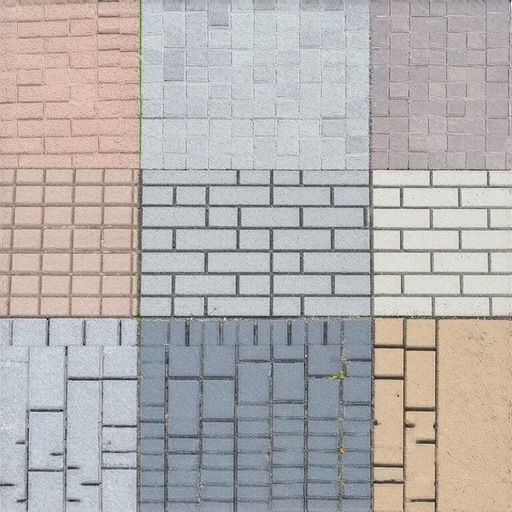
Selecting a paver pattern for 2026 isn’t just about looks; it’s about interlocking strength and the distribution of lateral loads to prevent paver shifting and joint failure. The pattern dictates how force moves through the system. If you choose a weak pattern for a high-traffic area, you are inviting the joints to open up. Once joints open, water enters. Once water enters, the base softens. It is a predictable cycle of failure.
| Pattern Type | Load Distribution | Complexity | Best Use Case |
|---|---|---|---|
| 45-Degree Herringbone | Superior | High | Driveways & Main Walkways |
| Running Bond | Moderate | Low | Secondary Garden Paths |
| I-Paver Interlock | Excellent | Medium | Commercial-Grade Areas |
Which paver pattern is strongest for high-traffic walkways?
The 45-degree herringbone pattern is the strongest paver layout because it provides the highest level of interlock, distributing lateral forces across all surrounding units. This prevents creep and shifting, making it the gold standard for any high-traffic hardscape installation. Each paver is locked in by its neighbors on all four sides. It is a mechanical bond that resists the pushing force of walking or light equipment.
Integrating Landscape Components and Site Stabilization
A successful hardscape installation must account for irrigation lines, soil grading, and sod install to ensure the surrounding landscaping does not undermine the walkway’s foundation. If you don’t move your irrigation heads at least 12 inches away from the paver edge, you are inviting saturation of the bedding sand. I see it every week: a beautiful walkway ruined because an irrigation clock was set to ‘monsoon’ mode right next to the edge restraints.
Essential Site Prep Checklist
- Mark all utilities via 811 before any excavation.
- Verify a 2% slope away from the home foundation for drainage.
- Install a heavy-duty non-woven geo-textile fabric between the subgrade and gravel.
- Use professional-grade edge restraints with 10-inch steel spikes every 12 inches.
- Ensure yard cleanup includes removing all organic debris from the subgrade.
The Final Compaction and Joint Stabilization
The final step in a 2026 paver installation is the polymeric sand application, which requires a clean surface and precise moisture levels to create a weatherproof joint. Don’t use play sand. Don’t use masonry sand. You need a high-polymer content product that resists wash-out and weed growth. We use a vibratory plate with a protective mat to set the pavers into the bedding sand. This forces the sand up into the joints from the bottom while we sweep from the top. It creates a monolithic slab that can still breathe.
“The durability of a segmental pavement system is directly proportional to the density of its joints and the compaction of its bedding layer.” – ICPI Tech Spec #2
The Relationship Between Sod and Stone
When you finish the stone work, your job isn’t done. A proper sod install at the edges of the walkway is critical for erosion control. Without grass roots to hold the soil, the base material will eventually wash out from under the edge restraints. We grade the soil to be flush with the top of the paver, allowing for the 1-inch thickness of the sod. This prevents a trip hazard and protects the structural integrity of the walk. Landscaping is a system. If one part is weak, the whole yard suffers. Keep your yard cleanup rigorous; leaving piles of mulch or leaves on new pavers can lead to tannin staining that is a nightmare to remove. 2026 is the year of the professional install. No more hacks. No more sinking stones.