
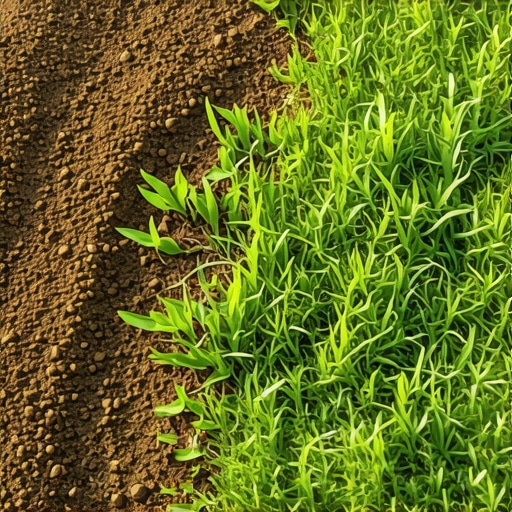
Early 2026 Grass Seeding: Why Soil Temp is Overrated
Early 2026 grass seeding success depends more on soil-to-seed contact, moisture consistency, and proper site grading than hitting a specific 55-degree temperature mark on a digital thermometer. While soil temperature dictates germination speed, the long-term viability of your landscaping project is determined by the structural integrity of the seedbed and the irrigation protocols established during the initial yard cleanup phase.
The Apprentice Lesson: Why Biology Beats the Thermometer
I always drill into my new crew members: if you don’t fix the soil grading first, every plant you put in the ground is just expensive compost. Last season, I watched a greenhorn technician obsess over a soil probe, waiting for that perfect window of 55 to 60 degrees. He ignored the fact that the client’s yard was a compacted mess of heavy clay with a 5 percent slope leading toward the foundation. We seeded at the ‘perfect’ temperature, and the first spring thunderstorm washed $2,000 worth of elite fescue right into the storm drain. It was a $4,000 mistake because we had to redo the yard cleanup and regrade the entire north quadrant. In 2026, we are moving away from thermometer-watching and back to the fundamentals of soil physics and engineering. If your soil tilth is poor, temperature is irrelevant. You need a crumbly, aerated structure that allows the primary radical to penetrate the top 0.25 inches of the profile without hitting a compaction layer. We use a 1.5-ton roller half-filled with water to ensure the seed is pressed into the earth, not just sitting on top of it. This mechanical bond is what protects the embryo from the desiccation of early spring winds. It is about biology, not just weather reports.
The Science of Soil Tilth and Dormant Seeding
In the professional landscaping world, we recognize that dormant seeding in early 2026 can often outperform mid-spring installs. This process relies on the natural freeze-thaw cycles of the earth to pull the seed into the soil profile.
“The success of a turfgrass stand is less dependent on the specific date of seeding and more on the physical properties of the seedbed, including Cation Exchange Capacity (CEC) and bulk density.” – Agronomy Manual for Professional Turf Managers
Every time the ground freezes and thaws, it creates microscopic fissures. The seed falls into these cracks, achieving a level of soil contact that no rake can replicate. By the time the soil naturally hits 55 degrees, the seed is already hydrated and ready to pop. This gives it a three-week head start over the ‘wait-and-see’ crowd who are still shopping for sod install quotes in May. We focus on the nitrogen cycle. We apply a slow-release starter fertilizer with a 10-20-10 NPK ratio. High phosphorus is non-negotiable. You need those roots to chase the water table deep into the profile before the July heat hits. If you wait for the ‘ideal’ temperature, you are cutting your root-development window by 30 percent.
When is the best time for early grass seeding in 2026?
The best time for early 2026 grass seeding is late February through early March, regardless of the air temperature. You want the seed in the ground before the first flush of spring weeds. Using pre-emergent herbicides like Mesotrione allows you to seed and prevent crabgrass simultaneously. This creates a clean runway for your turf to establish without competition from invasive species. Don’t wait for the weather to feel like spring. If the ground isn’t frozen solid and you can get a slice-seeder through it, you should be planting.
Comparing Turf Establishment Strategies
| Feature | Early Seeding (Professional) | Standard Sod Install | Late Spring Seeding |
|---|---|---|---|
| Root Depth potential | 8 to 12 inches | 2 to 4 inches (initial) | 4 to 6 inches |
| Cost per Sq Ft | $0.15 – $0.25 | $1.25 – $2.25 | $0.15 – $0.25 |
| Water Requirement | Moderate (Initial) | Extreme (First 21 days) | High (Heat stress) |
| Weed Competition | Low (with Mesotrione) | Minimal | High |
The Engineering of Yard Cleanup and Grading
A successful 2026 lawn starts with a brutal yard cleanup. We aren’t just talking about raking leaves. We are talking about the removal of all thatch exceeding 0.5 inches and the mechanical core aeration of the entire lot. If your soil is compacted, your irrigation water will just run off the surface, taking your expensive seed with it.
“Surface drainage is the most critical component of hardscape and softscape longevity; without a 2 percent minimum slope away from structures, soil saturation will lead to root rot and fungal pathogens.” – ICPI Hardscape Engineering Axiom
We use a laser level to ensure the grade is perfect. We look for ‘bird baths’ or low spots where water collects. In these areas, we don’t just add topsoil. We excavate, add 4 inches of modified gravel if it is near a patio, or use a 70/30 sand-to-soil mix for turf areas to increase drainage. The goal is to manage hydrostatic pressure. If the soil stays saturated for more than 24 hours, the grass seed will literally drown. Oxygen is just as important as water for a germinating seed.
How do I prep my soil for sod install after a yard cleanup?
To prep for a sod install after a yard cleanup, you must rototill the top 4 to 6 inches of soil to break up compaction. Then, incorporate a soil amendment like compost or peat moss to increase organic matter to at least 5 percent. Level the area with a landscape rake and ensure you have a firm but not compacted base. The sod must have direct contact with the loosened soil to allow the adventitious roots to knit into the ground quickly. If the ground is hard as a brick, your sod will just turn into an expensive brown carpet in two weeks.
Irrigation: The Lifeblood of the 2026 Lawn
The biggest mistake homeowners make is watering for 10 minutes every day. That is how you grow fungus, not grass. You need deep, infrequent watering. For a new sod install or a fresh seeding, you need to keep the top 1 inch of soil moist, but once it is established, you transition to 1 inch of water per week, delivered in two heavy sessions. This forces the roots to grow downward to find moisture. We install irrigation systems with smart controllers, but we tell our clients to ignore the ‘automated’ settings. Check the soil with a screwdriver. If you can’t push it 6 inches into the ground, it is too dry. We use rotary nozzles because they deliver water at a slower rate (0.5 inches per hour), which allows the soil to actually absorb the moisture instead of letting it run off. Check your PSI. If your system is running at 70 PSI but your heads are rated for 30, you are just creating mist that evaporates before it hits the ground. Use pressure-regulating heads. It is a small investment that saves thousands of gallons of water and ensures your 2026 lawn survives the summer.
The 2026 Pre-Seeding Checklist
- Call 811 to mark all underground utility lines before any grading or irrigation work begins.
- Test soil pH and aim for a 6.5 to 7.0 range; apply lime or sulfur accordingly 4 weeks before seeding.
- Perform a mechanical core aeration, pulling 3-inch plugs to relieve sub-surface compaction.
- Remove all debris, including rocks larger than 1 inch, to ensure uniform seed distribution.
- Select a high-quality seed blend (Bluegrass, Fescue, or Ryegrass) based on your specific USDA Hardiness Zone.
- Calibrate your spreader to ensure an even distribution of 6 to 8 pounds of seed per 1,000 square feet.
Stop waiting for the thermometer to hit a magical number. Get out there, fix your soil structure, manage your water, and get the seed in the ground. The biology of the grass will take care of the rest when the time is right. If you want a professional lawn in 2026, you have to start thinking like an engineer, not a gardener. It is about the base, the grade, and the moisture. Everything else is just details.