
The Physics of Hydrostatic Pressure in Pond Design
A bubbling pond liner, commonly referred to as a pond whale or hippo, occurs when groundwater or methane gas becomes trapped under the EPDM membrane, creating significant uplift pressure. This failure indicates a lack of gas venting or hydrostatic pressure relief in the original sub-grade installation. I recently got called out to tear up a $30,000 patio and pond combo that was literally lifting out of the ground because the previous contractor ignored the high water table in a heavy clay region. The homeowner thought the liner was leaking. It was not. The soil was simply vomiting gas and water that had nowhere to go. When you have a heavy clay shelf, water does not percolate; it sits. If you place a non-permeable barrier like a 45-mil EPDM liner on top of it, the water will eventually push that liner up with enough force to displace thousands of gallons of pond water. This is not just a cosmetic issue; it is a structural failure of the basin engineering. Most guys in this business are just digging holes. They do not understand that the ground is a living, breathing, and pressurized environment. If you do not account for the expansion of gases and the movement of sub-surface water, your landscaping project is just a ticking time bomb.
“Sub-surface drainage is critical for all flexible membrane liners to prevent gas-induced uplift and maintain structural integrity of the basin.” – International Association of Geosynthetic Installers (IAGI)
Why Your Pond Liner is Floating
The primary cause of liner bubbling is hydrostatic pressure, which is the pressure exerted by a fluid at rest due to the force of gravity. In areas with poor irrigation management or high water tables, the soil becomes saturated. This saturation forces air and water upward. If your yard lacks proper landscaping drainage, this pressure has no escape route but to lift the liner. Additionally, anaerobic decomposition of organic matter trapped under the liner produces methane. In a poorly executed yard cleanup, if roots or old sod were simply buried instead of removed, they rot. This rot releases gas. Without a vent, that gas expands under the heat of the sun, creating the bubble. It is basic chemistry and physics. You cannot fight the expansion of gas; you can only direct it.
The Air Vent Pipe Fix: A Step-by-Step Engineering Solution
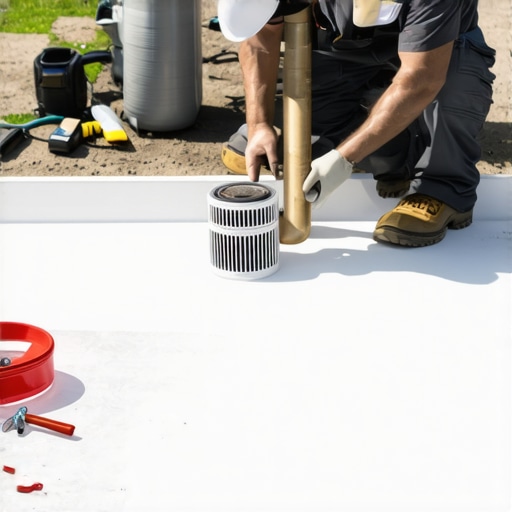
To fix a floating liner, you must install a perforated vent pipe system that allows methane and groundwater to escape to the atmosphere. This is the only way to equalize the pressure. First, you must drain the pond. There is no shortcut here. Once the liner is pulled back, you will likely see a soup of grey, stinking mud. This is the anaerobic zone. You need to excavate a trench at the lowest point of the pond bowl, roughly 6 inches deep and 6 inches wide. Fill this trench with clean 3/4 inch crushed stone. This acts as a collection gallery for the gas and water. Lay a 2-inch Schedule 40 perforated PVC pipe into this stone bed. This pipe must run from the bottom of the pond, up the side wall, and terminate above the high-water mark, hidden behind a rock or under a sod install near the perimeter. This creates a chimney effect. Pressure builds, enters the perforations, and vents out the top. Simple. Effective. Mandatory for any pond over 1,000 gallons in clay soil.
| Material Component | Specification | Purpose |
|---|---|---|
| Liner Type | 45-mil EPDM | Primary Waterproofing |
| Underlayment | 12-oz Non-woven Geotextile | Puncture Protection and Gas Path |
| Vent Pipe | 2-inch Perforated PVC | Pressure Equalization |
| Backfill Medium | 3/4-inch Clean Crushed Stone | Void Space for Gas Collection |
Do not use corrugated pipe for this fix. It collapses under the weight of the water and stone once the pond is refilled. Use Schedule 40 PVC. You are looking for a compaction rate that maintains the pipe’s integrity while allowing gas flow. When you are re-installing the sod around the vent exit, ensure the exit is not blocked by dirt or debris. I have seen guys spend days on a vent only to cover the end with a piece of sod, effectively sealing the system shut. Use a small decorative vent cover or a specialized hardscape cap. It must breathe. If it doesn’t breathe, the liner will rise again. This is where most landscaping crews fail; they value aesthetics over the 101 level physics of the site.
“Anaerobic conditions in submerged soils lead to the production of methane and carbon dioxide, which can exert upwards of 5 PSI on impermeable barriers.” – USDA Soil Science Manual
How much modified gravel do I need for a pond base?
For a standard 10×15 pond, you should plan for at least 2 tons of clean crushed stone for the venting and perimeter stabilization. This is not the place to save $50. Use ASTM D448 No. 57 stone. Avoid stone dust or fines, as they will clog the perforations in your vent pipe within the first year. The goal is to maintain void space. High-end landscaping is about what you don’t see. The structural base is the engine of the pond. If the engine is clogged with dirt because you used cheap yard cleanup fill, the system fails. You need the water and gas to move freely toward the pipe. I always drill into my new crew members: if you don’t fix the soil grading and venting first, every plant you put in the ground and every gallon of water you pump is just expensive compost waiting to happen.
The Checklist for a Permanent Pond Fix
- Verify Water Table: Check 811 and municipal records for local groundwater levels before digging.
- Excavate Trench: Minimum 6×6 inches at the deepest point of the pond basin.
- Install Geotextile: Use an 8-oz or 12-oz non-woven fabric to prevent soil fines from clogging the gravel.
- Pipe Placement: Perforated PVC holes should face downward to prevent silt accumulation.
- Termination Point: The vent must exit above the flood plain of the pond.
- Sod Restoration: Carefully install sod around the vent to ensure the exit remains clear of organic blockages.
Once the system is in place, you can begin the sod install to repair the damage to the surrounding turf. The irrigation system should be adjusted to ensure that runoff is directed away from the pond basin. Excessive irrigation near the pond edge only adds to the hydrostatic pressure you are trying to mitigate. The landscaping should work with the pond, not against it. This means choosing plants that can handle the occasional moisture without needing constant soaking. This holistic approach is the difference between a professional install and a DIY nightmare. The ground will always move. Your job is to give it a path of least resistance that doesn’t involve lifting your $2,000 liner. Don’t skip the venting. It will rot. You will regret it. Follow the physics and the biology of the site, and the pond will last for decades. Ignore it, and you will be calling me in 2026 to fix your floating whale.