
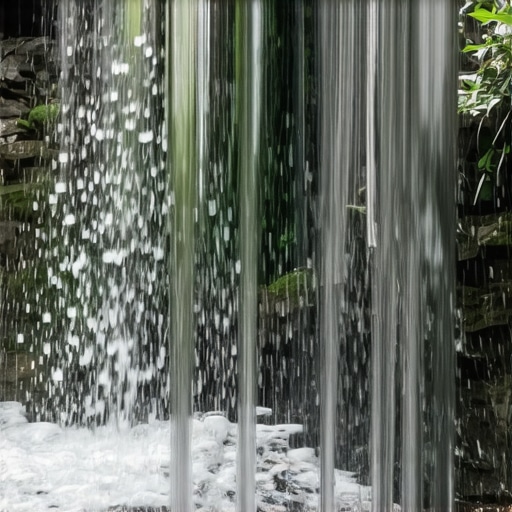
Identifying the Structural Failure in Modern Waterfalls
To fix a leaking 2026 waterfall, you must identify if the loss is evaporative, structural, or mechanical. Using black pond foam (expandable polyurethane) allows you to divert water back over the liner, preventing wicking where water travels behind rocks and escapes the system containment. This technical approach addresses the hydrostatic pressure that often forces water through microscopic gaps in the rockwork.
I recently got called out to tear up a $30,000 patio and waterfall feature that was sinking because the previous contractor failed to use professional grade sealants. The water was escaping the spillway, saturating the modified gravel base of the adjacent patio, and essentially liquefying the foundation. The homeowner was losing four inches of water every twelve hours. After an autopsy of the build, we found that 90 percent of the rocks were loosely stacked with no foam or liner-to-stone bond. It was a disaster. It was a perfect example of why you cannot cut corners with hydraulic engineering.
The Engineering of Water Diversion
Water follows the path of least resistance. In a waterfall, that path is rarely over the face of the stone unless you force it there. When water hits a flat rock, it wants to curl underneath the edge due to surface tension. If that edge is not sealed to the liner with black pond foam, the water will run backward, find the edge of the EPDM liner, and disappear into the soil. This is not just a leak; it is a structural threat to your landscaping and any nearby hardscaping.
“A retaining wall or waterfall doesn’t fail because of the stone; it fails because of the water trapped behind it.” – Hardscape Engineering Axiom
The Science of Black Polyurethane Pond Foam
Professional grade black pond foam is a closed-cell polyurethane sealant designed to withstand constant moisture and UV exposure. Unlike standard hardware store gap fillers, this foam does not absorb water and will not rot or degrade when exposed to the elements. Its primary job is to fill the voids between the irregular surfaces of the rocks and the flexible liner. This forces the water to stay on top of the stones. It is also an adhesive, providing lateral stability to the rock stack.
| Material Property | Black Pond Foam | Standard Mortar | Silicone Sealant |
|---|---|---|---|
| Flexibility | High (Moves with Liner) | Zero (Cracks easily) | Moderate |
| Water Absorption | < 0.05 percent | High (Porous) | Zero |
| UV Resistance | Very High | Moderate | Low (Yellows/Fails) |
| Bond Strength | Aggressive to EPDM | Mechanical only | Variable |
How much black pond foam do I need for a waterfall?
Calculating foam requirements depends on the total linear footage of the spillways and the depth of the gaps between stones. For a standard three foot high waterfall with multiple drops, expect to use three to five 24-ounce cans. If the gaps are wider than two inches, you should use stone shims to reduce the volume of foam required. Overfilling gaps is a common amateur mistake. The foam expands significantly. Use a professional dispensing gun for better control than the plastic straws provided with consumer cans.
The Forensic Repair Process: Step-by-Step
Before you spray anything, the area must be prepped. Biofilm, algae, and loose debris will prevent the foam from bonding. If the foam does not bond, the leak will persist. Clean the surfaces with a wire brush and let them dry. 811 should always be called if your repair involves any excavation near the pond edge to ensure you aren’t hitting irrigation lines or utility feeds.
- Deconstruction: Remove the top layer of rocks where the leak is suspected.
- Cleaning: Scrub the liner and the underside of the stones.
- Application: Apply the foam in the gaps, working from the bottom up.
- Setting: Wait 30 minutes for the foam to become tack-free.
- Disguising: While the foam is still wet, press gravel or sand into it to match the rock color.
Precision is mandatory. If you leave a single pinhole gap, the pressure of the falling water will find it. This is why we use a professional foam gun. It allows for a bead as thin as a pencil or as thick as a thumb. You are essentially creating a custom gasket for every stone in the assembly.
Will pond foam stop a major liner tear?
No. Black pond foam is a water-diverter, not a patch for a punctured liner. If your EPDM or PVC liner is torn, you must use an EPDM patch kit with a primer. Applying foam over a hole in the liner is a temporary fix that will fail as the system undergoes thermal expansion and contraction. Use the right tool for the right job. Foam is for gaps; patches are for holes.
“The integrity of any hydraulic structure depends on the continuity of its impermeable layer.” – Agricultural Extension Water Management Manual
The Impact of Poor Grading and Soil Pressure
In regions with heavy clay or high frost-heave potential, the soil behind a waterfall exerts immense pressure. If you did not install a proper drainage layer (clean stone and a French drain) behind the waterfall, that pressure will shift the rocks and break the foam seals. This is why yard cleanup and proper soil grading are part of any real leak repair. You have to fix the environment, not just the symptom. If the ground is saturated from a failing irrigation system or poor sod install drainage, the waterfall will never stay level. It will shift. It will leak again.
The Long-Term Maintenance Schedule
Once the repair is complete, do not just walk away. The waterfall needs a settling-in period. In the first year, check the foam seals every season. UV light is the enemy of all polymers. Even though black pond foam is UV-stabilized, it lasts much longer if it is shaded by the rocks or covered by a thin layer of gravel. If you see foam turning orange or brittle, it is being destroyed by the sun and needs a fresh coat of rock dust or a replacement bead.