
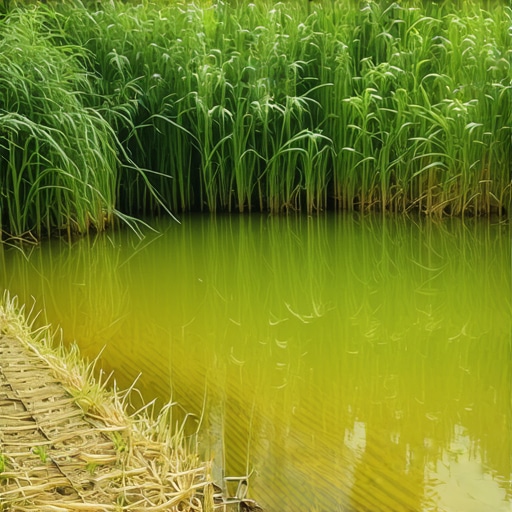
Understanding the Science of Barley Straw in Pond Management
To prevent 2026 pond algae blooms using barley straw, you must apply it in early spring before the water temperature consistently exceeds 50 degrees Fahrenheit. The straw undergoes a complex aerobic decomposition process, releasing lignins that oxidize into hydrogen peroxide, which inhibits the growth of new algae cells without harming established aquatic plants or fish. This biological control method requires months of lead time to become effective, meaning your strategy for a clear 2026 season begins with late 2025 preparations.
I always drill into my new crew members: if you don’t fix the soil grading first, every plant you put in the ground is just expensive compost. The same logic applies to pond management. You can throw all the barley straw in the world at a pond, but if your landscaping is sloped toward the water, every rainstorm is just a nutrient injection for the next bloom. I remember a site where a homeowner spent four figures on high-end sod install right up to the water’s edge. Within three months, the nitrogen runoff from the sod’s initial fertilization had turned that pond into a thick, pea-soup disaster. We had to go back, rip out a five-foot buffer, and install a native riparian zone to catch that runoff before it hit the water. Engineering the environment is 90% of the battle; the straw is just the finishing touch.
The Chemical Mechanism of Algae Suppression
Barley straw is not an algaecide in the traditional sense. It is a microbial reactor. When submerged, the straw begins to rot. In the presence of oxygen, fungi and bacteria break down the cellular structure. This process is highly dependent on water movement and dissolved oxygen levels. As the cell walls of the straw degrade, they release humic substances. When these substances interact with sunlight and oxygen, they create a low-level concentration of hydrogen peroxide. It is enough to disrupt the membrane of a single-cell algae spore but not enough to hurt a complex organism like a Bluegill or a Lily pad.
“The effectiveness of barley straw is heavily dependent on oxygen. In anaerobic conditions, the straw will rot without producing the necessary oxidative compounds, potentially adding more nutrients to the pond rather than suppressing growth.” – Penn State Agricultural Extension
How much barley straw do I need for my pond?
Calculating the correct amount of barley straw is critical to avoid oxygen depletion while ensuring enough peroxide production. You should aim for approximately 2 to 3 bales (roughly 40-60 pounds) per surface acre of water. For smaller residential ponds, the standard rule of thumb is 10 to 25 grams of straw per square meter of surface area. If the pond is historically prone to heavy blooms, you can increase this dose slightly, but never exceed 50 grams per square meter, or you risk deoxygenating the water as the straw decomposes.
| Pond Surface Area | Light/Maintenance Dose | Heavy Bloom History Dose |
|---|---|---|
| 1,000 Gallons (Small) | 0.5 lbs | 1.2 lbs |
| 1/4 Acre | 10-15 lbs | 20-25 lbs |
| 1 Acre | 45 lbs | 60-75 lbs |
The Impact of Irrigation and Yard Cleanup on Pond Clarity
Your irrigation schedule and yard cleanup habits are the primary drivers of pond eutrophication. If your irrigation heads are over-spraying into the pond, you are constantly diluting the peroxide levels produced by your barley straw and likely washing lawn fertilizers directly into the water column. This creates a nutrient-rich environment where algae thrives regardless of biological inhibitors. During your fall yard cleanup, it is vital to remove leaf litter and organic debris. If left to rot in the pond, these materials consume oxygen and release phosphorus, the primary fuel for 2026’s algae blooms. A pond is a closed system. Whatever you put in, stays in.
Step-by-Step Installation for 2026 Prevention
1. Source certified organic barley straw. 2. Weigh the straw to match your pond’s surface area requirements. 3. Pack the straw loosely into mesh bags; tight packing prevents oxygen flow. 4. Attach floats to the bags so they sit in the top 12 inches of the water column where oxygen and light are highest. 5. Anchor the bags in areas with water movement, such as near a waterfall or irrigation return. 6. Replace the straw every 4 to 6 months to maintain a continuous release of lignins. 7. Do not bury the bags; they must be suspended. It will rot otherwise. Don’t skip the anchors.
Is barley straw safe for all aquatic life?
When used at the recommended dosages, barley straw is one of the safest biological controls available. It does not possess the toxicity of copper-based algaecides. However, because the decomposition process requires oxygen, placing too much straw in a pond with poor aeration can lead to a fish kill. This is why we prioritize surface placement and movement. If you see your fish gasping at the surface, remove half the straw immediately and check your pump’s GPH (Gallons Per Hour) flow rate.
“Biological controls like barley straw are preventative, not curative. They will not kill a pond full of existing algae; they must be in place before the growth cycle begins.” – Global Agronomy Manual
Why Professional Landscaping Integration Matters
A landscaping plan that ignores the pond’s watershed is a failure. When we perform a sod install near a water feature, we use a different grading protocol. We create subtle swales that direct rainwater toward a gravel-filled French drain rather than letting it sheet-flow over the grass and into the pond. This keeps the high-nitrogen fertilizers used on the sod out of the aquatic ecosystem. If you are serious about clear water in 2026, you need to look at your yard as a series of connected zones, not isolated projects. The health of the grass impacts the health of the water. Period.
Maintenance Checklist for Clear Water
- Check barley straw bags for buoyancy every 30 days.
- Clear irrigation filters to ensure proper water movement in the pond.
- Perform a deep yard cleanup to remove nitrogen-rich leaf debris.
- Test pond water for phosphorus levels every quarter.
- Monitor sod install zones for fertilizer runoff signs.
Preventing algae isn’t a one-time event; it’s a commitment to biology. You have to work with the natural cycles of the water. Start your barley treatment early. Manage your runoff. Keep the oxygen moving. That is how you win against the bloom.