
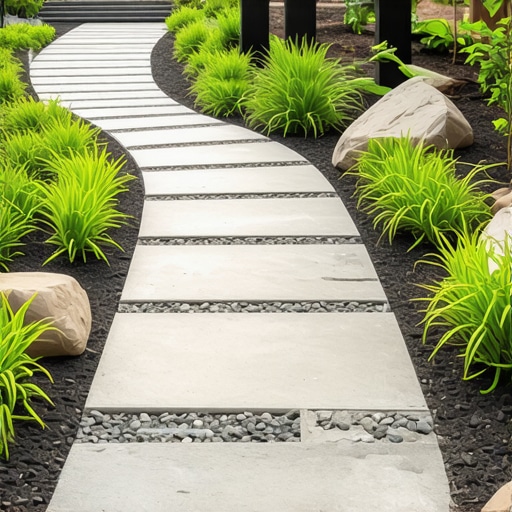
The Engineering of a Modern Walkway: Why 80 Percent of Success Happens Underground
Designing a modern walkway using pavers and rocks requires a rigorous understanding of soil mechanics, hydrostatic pressure, and base compaction to ensure structural integrity over decades. Most homeowners focus on the aesthetic pattern, but the real work involves the scientific preparation of the subgrade and the management of water runoff. It must be built to last. I recently got called out to tear up a $30,000 patio and walkway system that was sinking and shifting because the previous contractor failed to account for the local clay expansion. They simply threw sand over uncompacted topsoil. Three rainstorms later, the entire install looked like a topographical map of a disaster zone. We had to excavate 12 inches of muck just to reach a stable base. This is the reality of hardscaping: if the foundation is flawed, the finish is irrelevant. Don’t skip the prep work.
“A retaining wall doesn’t fail because of the stone; it fails because of the water trapped behind it.” – Hardscape Engineering Axiom
How much modified gravel do I need for a patio base?
Calculating modified gravel volume involves multiplying the total square footage of the walkway area by the depth of the base layer (typically 4 to 6 inches) and dividing by 27 to find the cubic yardage. You must always account for a 20 percent compaction factor when ordering materials. For a standard 100-square-foot walkway, you will need approximately 2.5 tons of 2A modified stone to achieve a dense, 6-inch compacted lift. This base acts as the primary structural component, distributing the load of the pavers and providing a reservoir for moisture to move away from the surface. Without this, frost heave will destroy your alignment in a single winter.
| Material Type | Average Size | Primary Use Case | Drainage Rating |
|---|---|---|---|
| 2A Modified Gravel | 0.75″ to Fines | Structural Base Layer | Moderate |
| #57 Crushed Stone | 0.5″ to 1″ | Drainage/French Drains | Excellent |
| Decomposed Granite | Fine Grits | Modern Path Infill | Fair |
| River Rock (Mexican Beach) | 1″ to 3″ | Decorative Borders | High |
The Anatomy of the Subgrade and Geotextile Integration
The subgrade is the raw soil remaining after you have excavated your path. You must determine if you are dealing with heavy clay, sandy loam, or silt. Clay soils have high plasticity and expand when wet, which can exert massive upward force on your pavers. This is where non-woven geotextile fabric becomes mandatory. Place the fabric directly on the excavated soil before adding your gravel. This prevents the stone from being swallowed by the mud over time. It creates a permanent separation layer. It is a non-negotiable step. Use a plate compactor with at least 4,000 lbs of centrifugal force. Run it until the tamper literally bounces off the surface of the gravel. That is the sound of a job done correctly.
What type of rock is best for walkway borders?
The best rock for walkway borders in a modern design is a clean, angular crushed stone like basalt or slate chips because they lock together and prevent migration. Modern aesthetics often favor dark, high-contrast stones that highlight the clean lines of large-format concrete pavers. Avoid rounded river stones for narrow borders, as they act like ball bearings and will spill onto your grass or pavers every time you use a leaf blower. For a high-end look, use Mexican Beach Pebbles, but ensure they are recessed below the paver edge to prevent tripping hazards. These stones provide a functional drainage gap that allows water to exit the walkway surface rapidly, preventing the slick moss growth common in poorly drained areas.
“Proper base compaction is the single most critical factor in the longevity of any segmental pavement system.” – ICPI Tech Manual
- Call 811: Never break ground without marking utility lines.
- Set Your Pitch: Every walkway needs a 2 percent slope away from foundations.
- Screeding: Use 1-inch O.D. pipes to create a perfectly level bedding sand layer.
- Edge Restraints: Install professional-grade PVC or aluminum edging to stop lateral shifting.
- Polymeric Sand: Use high-performance stabilized sand to lock the joints and prevent weed growth.
Integrating Irrigation and Sod for a Complete System
A modern walkway does not exist in a vacuum; it must be integrated with your irrigation system and sod install. If you are laying new sod alongside your pavers, ensure the soil level is 1 inch below the paver height. This allows the grass blades to sit flush with the stone after the first mow. Do not bury the root flare of adjacent trees. When running irrigation lines, always sleeve them under the walkway using a 2-inch PVC pipe. This allows for future repairs without tearing up your hardscape. If you skip the sleeve, you are gambling with your investment. During yard cleanup, avoid using harsh chemicals on your rocks. A simple vinegar solution or manual weeding is better for the soil microbiology than drenching your borders in glyphosate. Maintenance is not a chore; it is the preservation of engineering. Keep the joints full. Keep the drains clear. Your walkway will outlast the house if you do.