
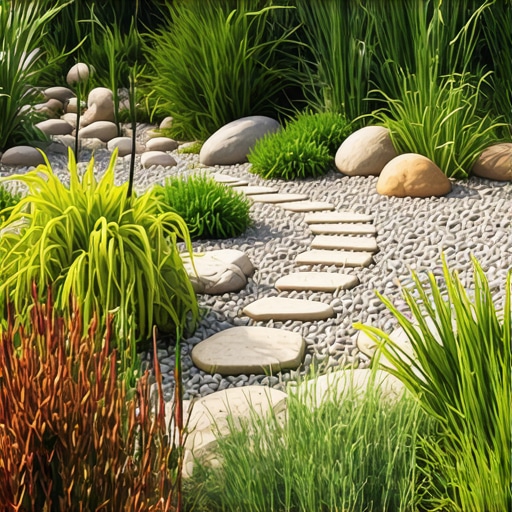
The Foundation of High-Performance Low-Water Landscapes
A high-performance low-water garden relies on site-specific hydrology, soil amendments, and hydrozoning to minimize supplemental irrigation. By selecting native species and optimizing soil carbon levels, you create a self-sustaining ecosystem that thrives without the constant input of potable water or synthetic fertilizers. Most homeowners approach landscaping backwards. They buy the pretty flower first and think about where to stick it later. That is a recipe for a graveyard. 80 percent of a successful install happens before a single plant arrives on site.
The Apprentice Lesson: Soil Grading and Hydrostatic Pressure
I always drill into my new crew members: if you don’t fix the soil grading first, every plant you put in the ground is just expensive compost. I remember an apprentice who thought he could hide a grading error with a thick layer of mulch. Within three months, the client had a swamp against their foundation and three dead Japanese Maples. The water had no exit strategy. We had to rip it all out. When designing for low water, you aren’t just saving moisture; you are managing its movement. You need to understand how hydrostatic pressure works against your retaining walls and how capillary action moves water through different soil textures. If your grade is flat, your roots will suffocate in the first heavy rain. If it is too steep, your irrigation will just sheet off the surface.
Soil Biology: Engineering the Root Zone
Increasing Soil Organic Matter (SOM) is the most effective way to build a drought-resistant garden because a one percent increase in SOM allows the soil to hold 20,000 additional gallons of water per acre. We do not just dump store-bought topsoil and call it a day. We analyze the Cation Exchange Capacity (CEC). This is the soil’s ability to hold onto essential nutrients. In sandy soils, CEC is low. In heavy clay, it is high but the pore space is too small for oxygen. We use yard cleanup as an opportunity to integrate organic fines back into the profile. We inoculate the root zone with mycorrhizal fungi. These organisms form a symbiotic relationship with plant roots, effectively increasing the root surface area by hundreds of times. They act as a microscopic straw, reaching water that the plant’s own roots cannot touch.
“Soil structure is the arrangement of soil particles into aggregates. These aggregates are vital for creating the macropores required for gas exchange and the micropores required for water retention.” – USDA NRCS Soil Mechanics Handbook
How do I improve soil for a low-water garden?
To improve soil for a low-water garden, you must decompact the sub-base and incorporate aerated compost to a depth of 8 to 12 inches. Avoid tilling high-sand soils, as this destroys what little structure exists. Instead, use broadforking to allow air and organic matter to penetrate without flipping the soil horizons. This preserves the anaerobic and aerobic bacterial balance necessary for nutrient cycling.
| Material Type | Water Retention Capacity | Decomposition Rate | Best Use Case |
|---|---|---|---|
| Triple-Ground Bark | High | Fast (12 months) | Flower beds, vegetable zones |
| Crushed Granite (Decomposed) | Low | None | Paths, succulent beds |
| Pine Straw | Medium | Moderate (18 months) | Acid-loving plants, sloped areas |
| Arborist Wood Chips | Very High | Slow (24+ months) | Large perimeter plantings |
The Logic of Hydrozoning and Irrigation Engineering
Precision irrigation systems utilize sub-surface drip lines and smart controllers linked to local weather stations to eliminate evaporation loss. The core principle here is hydrozoning. You group plants with identical evapotranspiration (ET) rates together. Do not put a thirsty hydrangea on the same valve as a desert willow. It is a waste of resources. We design systems based on GPM (Gallons Per Minute) and PSI (Pounds per Square Inch) at the source. If your pressure is too high, you get misting, which drifts away in the wind. If it is too low, your emitters at the end of the line will never open. We install pressure-compensating emitters to ensure every plant gets exactly what it needs, regardless of the slope.
What is the most efficient way to water a drought-tolerant garden?
The most efficient way to water is deep, infrequent cycles that force roots to grow downward into the cooler, moister subsoil. Set your smart irrigation controller to water at 3:00 AM to minimize wind drift and evaporation. Use inline drip tubing buried two inches under the mulch to deliver water directly to the soil-root interface, bypassing the foliage entirely to prevent fungal pathogens.
- Step 1: Conduct a soil ribbon test to determine clay/sand/silt ratios.
- Step 2: Rough grade the site to ensure 2 percent slope away from all structures.
- Step 3: Install 20-mil pond liner or heavy-duty weed barrier only in non-planting zones.
- Step 4: Lay out the irrigation mainlines and lateral valves.
- Step 5: Amend planting holes with 30 percent compost by volume.
- Step 6: Install nursery-grade stock, ensuring the root flare is visible above the soil line.
- Step 7: Apply 3 to 4 inches of coarse organic mulch. No mulch volcanoes.
Plant Selection: Why Nursery Stock Beats Big-Box Hacks
Buying plants from a big-box store is like buying a marathon runner who has lived in a closet. They are root-bound, pampered on high-nitrogen liquid feeds, and go into shock the second they hit real soil. We source from local growers who harden their plants off. For a low-water design, we look for xerophytic adaptations. This includes pubescent leaves (tiny hairs that trap moisture), glaucous coatings (waxy blue surfaces that reflect UV rays), and taproots that can punch through heavy clay. If you are doing a sod install as part of the project, choose warm-season grasses like TifTuf Bermuda or Zoysia that go dormant during drought rather than dying. Avoid Kentucky Bluegrass unless you want to spend your retirement paying the water bill.
“Water moves from areas of high water potential to areas of low water potential. In a drought, the soil’s water potential drops below that of the plant, causing the plant to lose moisture to the earth.” – Plant Physiology, 6th Edition
Hardscape Integration and Drainage
Hardscaping is not just for looks; it is a water harvesting tool. We use permeable pavers with a #57 stone base. This allows rainwater to infiltrate the ground and recharge the local aquifer instead of running into the storm drain. When we build a retaining wall, we use perforated drain tile and a chimney drain of clean gravel. If you don’t manage the water behind the wall, the wall will eventually lean or collapse. It is basic physics. We also use dry creek beds. These aren’t just decorative; they are functional bioswales. During a heavy downpour, they slow the water down, let the sediment settle, and give the ground time to absorb the moisture. It turns a problem (runoff) into an asset (deep-soil hydration).
How much modified gravel do I need for a patio base?
For a standard pedestrian patio, you need a 4-inch compacted base of 2A modified stone. This requires approximately 1 ton of stone per 50 square feet at a 4-inch depth. Never skip the plate compactor step. You must reach 95 percent Standard Proctor Density or your pavers will settle and hold standing water, which defeats the entire purpose of a graded landscape.
The Maintenance Reality: Post-Install Care
A low-water garden is not a “no-maintenance” garden. The first 18 months are critical. This is the establishment phase. You must monitor soil moisture sensors religiously. Once the roots have pushed past the original planting hole and into the native soil, you can start backing off the water. Annual yard cleanup is mandatory. You need to remove dead biomass that can harbor pests, but leave the leaf litter in the beds to break down into humus. Check your irrigation filters. A single grain of sand can clog a drip emitter and kill a $200 specimen shrub in a week. This is precision engineering. Treat it that way. If you want a landscape that survives the next decade of heatwaves, you have to build it from the dirt up with science, not just aesthetics.