
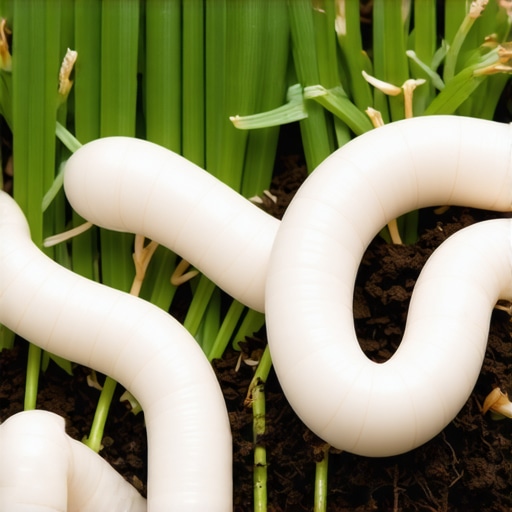
I always drill this into my new crew members: if you do not fix the soil grading and understand the biology of the root zone first, every plant you put in the ground is just expensive compost. I have seen guys spend twenty thousand dollars on a high-end sod install only to watch it wither into a brown, detached mess within six months because they ignored the subsurface activity. Landscaping is not about what you see on the surface; it is about the engineering of the soil and the life cycles of the organisms inhabiting the rhizosphere. If you are noticing dead patches in your lawn, do not just throw 10-10-10 fertilizer at it and hope for the best. You need a forensic approach to identify if white grubs are chewing through your investment. Most ‘mow-and-blow’ contractors will tell you it is just a lack of irrigation. They are usually wrong. It is often a structural failure of the grass root system caused by larval infestation.
What Are White Grubs and Why Are They Eating Your Yard?
White grubs are the C-shaped larvae of various beetles, including Japanese beetles and June bugs, which feed on turfgrass roots during their development stages. These pests sever the plant from its water source, leading to rapid desiccation and turf death that mimics severe drought or fungal pathogens in late summer. Identifying them early is the only way to prevent a total lawn failure.
How deep do I need to dig to find grubs?
To find grubs, you must use a spade to cut a three-inch deep square of turf and peel it back. Most larvae reside in the top 2 to 4 inches of the soil profile where the most tender fibrous roots are located. If the grass comes up like a piece of loose carpet, the roots are gone.
“White grubs are the larval stage of various beetles and are among the most destructive pests of turfgrass in the United States.” – The Ohio State University Extension
The Forensic Autopsy: How to Identify Grub Damage
You can identify grub damage by checking for spongy turf that can be easily lifted from the soil surface, exposing the cream-colored, C-shaped larvae underneath. Unlike heat stress, grub damage will not recover with irrigation because the vascular system of the grass plant has been physically disconnected from the soil. You need to look for the ‘Pull Test’ failure. If you can grab a handful of brown grass and it lifts away with zero resistance, you are looking at a root-zone massacre. Do not mistake this for chinch bugs or dollar spot. Those issues stay attached to the ground. Grubs leave the soil bare and slick. It is a biological demolition. You should also watch for increased animal activity. Skunks and raccoons will tear up your landscaping to get to the protein-rich larvae. If your yard looks like it was hit by a rototiller overnight, you have a grub problem that has reached the buffet stage.
| Treatment Type | Active Ingredient | Application Timing | Best Use Case |
|---|---|---|---|
| Preventative | Chlorantraniliprole | April through June | Long-term residual protection |
| Curative | Trichlorfon | August through September | Active infestation knockdown |
| Biological | Milky Spore | Spring or Fall | Long-term Japanese Beetle control |
| Biological | Nematodes | Late Summer | Organic, moisture-dependent control |
Treating the Infestation: Chemicals vs. Biological Controls
Treating a grub infestation requires a two-pronged approach: using preventative systemic insecticides like chlorantraniliprole in the spring or curative contact killers like trichlorfon when larvae are actively feeding in late summer. Soil moisture is the critical engineering variable here. Many homeowners fail because they apply the product and walk away. You must water these treatments in with exactly 0.5 inches of water immediately after application. This moves the chemistry into the root zone where the grubs live. If the chemical stays on the grass blade, it is useless. It will degrade in the UV light. You are wasting money and poisoning the surface for nothing. Biological controls like Heterorhabditis bacteriophora nematodes are effective but finicky. They are living organisms. If you put them on dry soil in the middle of a 90-degree day, they will die in minutes. They require a pre-irrigated lawn and a follow-up soak to navigate the soil pores.
When is the best time to apply grub control?
The best time to apply preventative grub control is between May and early July, before the beetle eggs hatch. For curative treatments, you must wait until the grubs are visible and feeding near the surface, typically in August or September, depending on your local soil temperatures and beetle flight patterns.
“Effective management requires understanding the lifecycle of the specific beetle species, as treatment windows are narrow and dependent on soil temperature.” – Penn State Center for Turfgrass Science
Preventing Future Outbreaks Through Cultural Practices
Preventing grub outbreaks involves maintaining optimal turf health through deep, infrequent irrigation, proper aeration to reduce thatch, and maintaining a mowing height of at least 3 inches to encourage deep root growth. High-nitrogen fertilizers in the heat of summer are a mistake. They create flush, succulent growth that is basically candy for beetles. You want a tough, resilient root system. A thick lawn is the best defense. Beetles prefer to lay eggs in thin, stressed turf or over-watered, soft ground. During your yard cleanup, ensure you are removing excessive thatch layers. Thatch thicker than half an inch acts as a sponge that traps insecticides and prevents them from reaching the soil. It also provides a perfect incubator for eggs. If your landscaping plan does not include annual core aeration, you are inviting soil compaction, which further stresses the grass and makes it easier for grubs to dominate.
Professional Grub Management Checklist
- Early Spring: Conduct a soil test to check pH levels; acidic soil can reduce the efficacy of some insecticides.
- Late Spring: Apply preventative treatment if you had an infestation the previous year.
- Summer: Monitor irrigation. Do not over-water, as moist soil attracts egg-laying beetles.
- Late Summer: Perform the ‘Pull Test’ on any suspicious brown patches.
- Fall: If grubs are found, apply a curative fast-acting insecticide and water it in immediately.
- Post-Treatment: If damage was severe, schedule a sod install or heavy overseeding to reclaim the area.
Do not be the homeowner who ignores the signs until the lawn is a total loss. Yard cleanup is not just about raking leaves; it is about monitoring the health of the ecosystem under your feet. If you see more than 10 grubs per square foot, the lawn cannot recover on its own. It will rot. You must act. Precision in application and timing is the difference between a resilient landscape and a dirt lot. Stop buying cheap big-box store ‘weed and feed’ and start focusing on the actual biology of your soil. Your grass depends on it.