
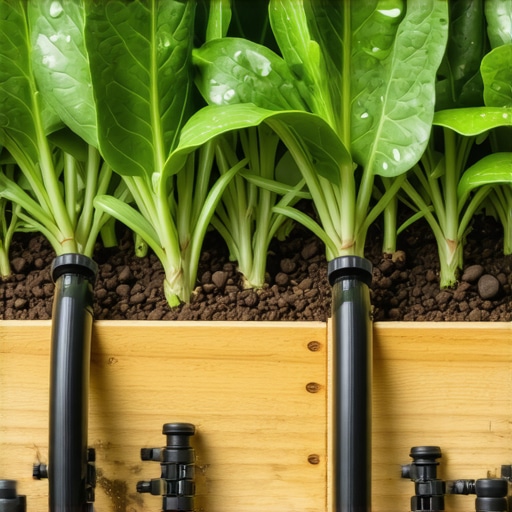
The Engineering of Raised Bed Hydration
Installing a drip irrigation system for raised beds involves connecting a mainline to a pressure regulator and filter, then routing emitter tubing directly to the root zones to maximize water efficiency and plant health. Most homeowners view irrigation as a luxury. I view it as a survival requirement for your investment. If you are still hand-watering with a hose, you are wasting 40 percent of your water to evaporation and runoff. Worse, you are likely over-watering the foliage and under-watering the roots. A professional-grade drip system removes the human error factor and delivers precise moisture where the biology actually happens.
The Apprentice Lesson: Pressure is Everything
I always drill into my new crew members: if you dont fix the soil grading first, every plant you put in the ground is just expensive compost. The same logic applies to your irrigation headers. I have seen guys spend thousands on high-end cedar beds only to hook them up to a raw garden hose with 80 PSI. Within a week, the fittings pop, the emitters fly off like plastic bullets, and the soil is a soupy mess. You cannot ignore the physics of hydrostatic pressure. A raised bed is an isolated ecosystem. It drains faster than the ground. It heats up faster. It requires a specific, metered approach to water delivery. If you dont respect the pressure requirements of the tubing, the system will fail. It is that simple. I once walked onto a job where a homeowner tried to run 100 feet of 1/4 inch micro-tubing off a single tap. The friction loss was so high that the last bed didn’t get a single drop. That is a $500 mistake in dead vegetable starts. Calculate your flow rate before you buy your first roll of poly.
Selecting Professional Grade Components
Professional landscaping kits require high-density polyethylene tubing, pressure-compensating emitters, and a backflow preventer to ensure that irrigation water never siphons back into your home drinking supply. Cheap kits from big-box stores use low-grade plastics that degrade under UV exposure within two seasons. You want components that can handle the thermal expansion and contraction of your climate. Look for 1/2 inch mainline tubing with a wall thickness of at least 0.050 inches. For the actual distribution, 1/4 inch soaker dripline with pre-installed emitters every 6 or 12 inches is superior to individual