
The Forensic Autopsy of a Dying Lawn
To effectively kill grubs without harming earthworms, you must utilize targeted biological controls such as Heterorhabditis bacteriophora (Hb) nematodes or Bacillus thuringiensis galleriae (Btg), which specifically disrupt the beetle larvae lifecycle without impacting the annelid physiology of beneficial earthworms. Avoid broad-spectrum synthetic neurotoxins like carbaryl or imidacloprid, which are non-selective and decimate soil microbiology.
You walk out onto your turf and it feels like you’re stepping on a wet sponge. You pull at a patch of brown grass and it lifts up like a cheap rug, the roots completely severed. That is the smell of failure. As a landscaper with two decades in the trenches, I see this every August. Homeowners see a brown patch and immediately dump five bags of high-nitrogen fertilizer or, worse, a heavy-duty synthetic pesticide. This is a mistake. I recently saw a homeowner in a panic who completely torched their front lawn by applying a triple-dose of a big-box store ‘grub-killer’ during a 90-degree heatwave. He didn’t just kill the grubs; he sterilized his soil, killed every earthworm in the top six inches, and chemically burned the remaining stolons of his St. Augustine grass. The yard was a toxic wasteland. It took us two seasons of intensive yard cleanup, core aeration, and soil amending to bring it back to life.
Why Grubs and Earthworms Are Not Created Equal
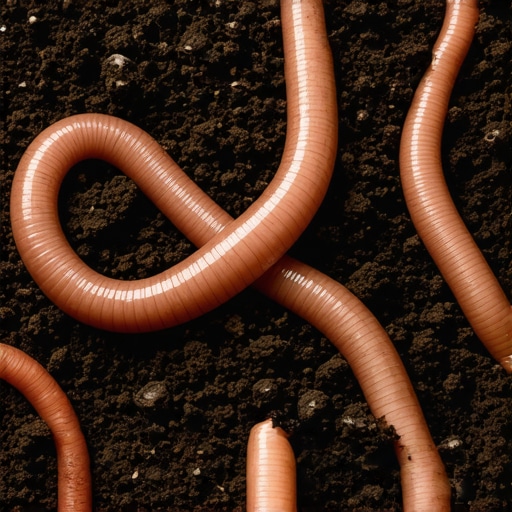
Grubs are the larval stage of various beetles—Japanese beetles, Masked Chafers, and June bugs. They are C-shaped, fat, and have one goal: to chew through the root zone of your sod install. Earthworms, conversely, are the engineers of your soil. They aerate the ground, break down thatch, and turn organic matter into plant-available nutrients. When you use a ‘scorched earth’ chemical approach, you are firing a shotgun at a fly. You might hit the fly, but you’re going to destroy the house in the process. Earthworms are sensitive to pH changes and the chemical salts found in many cheap synthetic pesticides. If you kill the worms, your soil compacts. If your soil compacts, your irrigation can’t penetrate. If your irrigation fails, your landscaping dies. It is a cascading failure of biology.
“A lawn is not a carpet; it is a complex biological engine where the health of the sub-surface macro-fauna dictates the aesthetic quality of the surface sward.” – Agronomy Field Manual, 4th Edition
The Biological Solution: Beneficial Nematodes
If you want to handle a grub infestation like a professional, you use nematodes. These are microscopic roundworms that hunt down grubs. Specifically, look for Heterorhabditis bacteriophora. They enter the grub and release a bacteria that kills the host. They do not touch earthworms. They do not touch pets. They do not touch you. But there is a catch: you have to treat them like the living organisms they are. You cannot just spray them on dry dirt at noon. You need to apply them in the evening when the soil temperature is between 55°F and 85°F. You must pre-irrigate the lawn so the soil is moist, allowing the nematodes to swim through the soil pores to find their targets.
The Technical Breakdown of Grub Control Methods
| Milky Spore | Japanese Beetles Only | 100% Safe | 10-15 Years | Moderate |
| Beneficial Nematodes | Broad Grub Species | 100% Safe | Seasonal | High (Moisture Dependent) |
| Btg (Bacillus) | Beetle Larvae | High Safety | 2-4 Weeks | Low |
| Imidacloprid | Broad Spectrum | Toxic | 4-6 Months | Low |
How much modified gravel do I need for a patio base?
While we are discussing the integrity of the ground, remember that drainage affects grubs. Over-watered, poorly drained soil is a breeding ground for beetle eggs. If your landscaping includes hardscapes, ensure your base is solid. For a standard patio, you need 6 inches of compacted modified gravel (2A or 2B). To calculate the volume, multiply your square footage by 0.5 (for a 6-inch depth) and divide by 27 to get cubic yards. Poor drainage from a sinking patio will lead to localized damp spots in your turf, which is exactly where the beetles will lay their eggs first. Fix the drainage, and you fix half your pest problems.
The Restoration Checklist: Yard Cleanup and Soil Health
- Core Aeration: Pull 3-inch plugs to relieve compaction and allow biologicals to penetrate the root zone.
- Dethatching: Remove more than 1/2 inch of thatch where grubs hide and eggs incubate.
- Soil Testing: Keep your pH between 6.0 and 7.0. Acidic soil stresses turf and favors certain pests.
- Proper Irrigation: Deep, infrequent watering (1 inch per week) forces roots deep, making the turf resilient to minor grub chewing.
- Nematode Application: Apply at dusk and water in immediately with 1/2 inch of water.
“Soil compaction is the silent killer of urban landscapes, limiting gas exchange and forcing anaerobic conditions that favor pathogenic organisms over beneficial ones.” – Penn State Extension, Turfgrass Management
Why Sod Install Timing Matters
If you are planning a new sod install, do not lay it over a grub-infested area without treatment. I have seen guys lay $5,000 worth of premium fescue over a dormant grub colony. By the time the roots tried to knit into the native soil, the grubs were there waiting for a buffet. The sod never took. It just sat there and rotted. If you’re doing a yard cleanup to prepare for new landscaping, treat the bare soil with Btg or nematodes two weeks before the sod arrives. Don’t skip this. It is the difference between a lawn that lasts a decade and one that dies in a month.
The Long Game: Milky Spore
For long-term control of Japanese Beetles specifically, Milky Spore (Bacillus popilliae) is the professional’s choice. It is a bacterium that you apply to the turf. When a grub eats it, they die and release billions more spores into the soil. It takes a year or two to fully establish, but once it’s there, it can last for 15 to 20 years. It is completely harmless to earthworms. It is the ultimate ‘set it and forget it’ biological weapon. However, it only works on Japanese Beetle grubs, not the Masked Chafer. Diagnosis is key. Flip a piece of turf, look at the ‘raster’ pattern (the hairs on the grub’s butt) under a magnifying glass, and identify your enemy before you spend a dime on treatments.