
The Forensic Autopsy of a Dying Orchard
I always drill into my new crew members: if you do not fix the soil grading and the root environment first, every plant you put in the ground is just expensive compost. Last season, I walked onto a property with a 30-year-old McIntosh that looked like a bird’s nest made of barbed wire. The homeowner wanted to ‘trim it up.’ I told them the truth: they weren’t looking at a tree; they were looking at a structural failure. The canopy was choked with water sprouts, the soil was compacted to the density of concrete by years of lawn mower traffic, and the root flare was buried under four inches of mulch. It was suffocating. To revive a tree like this, you cannot just hack away. You have to understand the biological physics of the plant. If you take too much at once, the tree panics and throws out more vegetative ‘suckers,’ ruining your fruit potential for another five years. It requires a forensic approach to restoration.
Diagnosing the Decline: Why Neglected Apple Trees Stop Producing
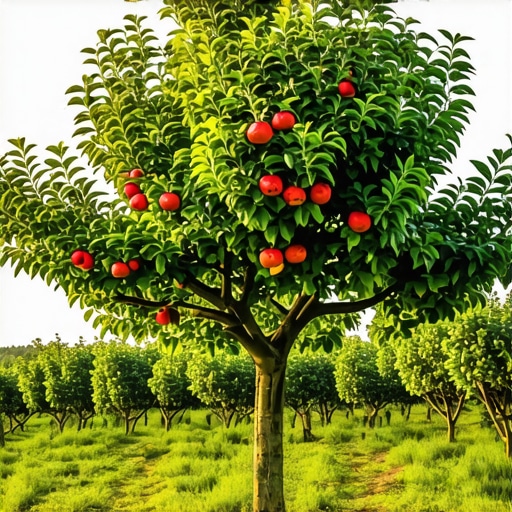
Neglected apple trees fail due to apical dominance of water sprouts, nutrient lockout from soil compaction, and fungal pathogens like apple scab or fire blight. Without intervention, energy is diverted from fruit production to disorganized vegetative growth, leading to small, bitter fruit and increased structural instability. It is a slow death. Most homeowners see a ‘full’ tree and think it is healthy. It is not. It is an overgrown mess that blocks the UV light required to trigger fruit bud differentiation. You need light at the center of the tree. Without it, the interior wood dies, and the fruit only grows on the tips of long, weak branches that will eventually snap under the weight of a heavy crop. [image_placeholder_1]
How do I know if my apple tree is too far gone?
Determine the tree’s viability by checking for cambium health and structural heartwood rot. Scrape a small piece of bark; if it is green underneath, the vascular system is functioning. However, if the main trunk shows significant fruiting bodies of fungi (conks) or has more than 50% dead wood in the primary scaffold branches, the cost of remediation may exceed the value of the tree. Usually, if the tree is still putting on a few inches of new growth at the tips, it can be saved. Don’t quit on it yet. You just need a plan.
“A neglected apple tree is a reservoir for disease; restoration is not merely aesthetic, it is a phytosanitary necessity for the entire landscape.” – USDA Pomology Manual
The Three-Year Pruning Protocol
Reclaiming a canopy requires a three-year pruning cycle to avoid ‘shrubbing out’ the tree with excessive water sprouts. Focus on the three Ds (dead, damaged, diseased) first, then address crossing branches and epicormic shoots to restore sunlight penetration to the fruiting spurs. If you remove more than 25% of the live canopy in a single year, you trigger a hormonal response in the rootstock that sends the tree into a survival frenzy. It will rot if you don’t seal large cuts correctly, though modern arboriculture suggests letting the tree form its own callus tissue rather than using messy wound paints. Year one is for structure. Year two is for thinning. Year three is for fine-tuning the fruiting wood.
| Pruning Tool | Application | Engineering Logic |
|---|---|---|
| Bypass Pruners | Twigs up to 1/2 inch | Clean scissor-cut prevents crushing the vascular tissue. |
| Loppers | Branches up to 1.5 inches | Provides leverage for clean removal of water sprouts. |
| Pruning Saw | Major scaffold branches | Triple-cut method prevents bark stripping down the trunk. |
| Pole Pruner | Upper canopy thinning | Maintains the ‘Central Leader’ or ‘Open Center’ shape. |
Soil Engineering and Root Zone Remediation
Revitalizing root systems involves soil aeration and macronutrient balancing based on a lab-grade soil test rather than guesswork. Use radial trenching or vertical mulching to alleviate compaction and introduce organic matter directly into the rhizosphere without damaging the critical root flare. Apple trees are heavy feeders of Potassium (K) and Calcium (Ca). If your soil pH is below 6.0, the tree cannot physically up-take the nutrients it needs to build the cellular walls of the fruit. This leads to ‘bitter pit’ and poor storage life. Get your pH to 6.5. No excuses. Use pelletized lime if needed, but watch the magnesium levels. High magnesium in clay soils makes them tighter. You want open, aerobic soil.
“Pruning is the most important cultural practice in the orchard, yet it is the most frequently misunderstood by the layman.” – Penn State Agricultural Extension
What is the best fertilizer for old apple trees?
The best fertilizer for old apple trees is a low-nitrogen, high-potassium organic blend applied in early spring before bud break. Avoid high-nitrogen ‘turf’ fertilizers, which stimulate excessive leaf growth and attract aphids and fire blight bacteria. Use a 5-10-15 or similar ratio to support root development and flower production. Spread the fertilizer from the trunk out to the drip line, which is where the active feeder roots are located. Don’t dump it at the base of the trunk. It won’t help there. It will just burn the flare.
- Step 1: Clear all sod and weeds within a 5-foot radius of the trunk.
- Step 2: Apply 1 inch of high-quality compost.
- Step 3: Mulch with 2-3 inches of wood chips, keeping the mulch 6 inches away from the bark.
- Step 4: Install a dedicated irrigation line if the tree is in a dry zone.
- Step 5: Monitor for codling moth and apple scab every 14 days.
Irrigation and Long-Term Maintenance
Apple trees need deep, infrequent watering to force roots to chase moisture down into the subsoil. Exactly 1 inch of water per week is the standard. If you are using a standard lawn irrigation system, you are likely underwatering the tree while overwatering the grass. The tree needs a slow soak. Use a soaker hose or a dedicated drip emitter system. If you see the leaves curling or turning yellow in July, you have already failed the tree. Consistency is the only way to get high-quality fruit. You have to be disciplined. Don’t skip the dormant oil spray in late winter either. It smothers the scale and mite eggs that are waiting to destroy your hard work. This is a marathon, not a sprint. Follow the plan. Stick to the schedule. You will get your fruit back.