
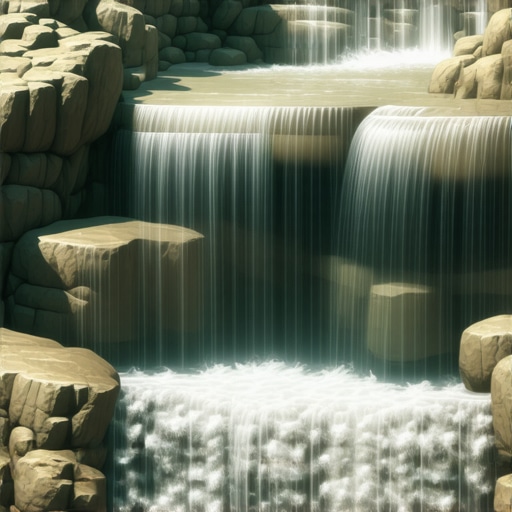
Designing Waterfalls with Engineering Precision
Building a natural-looking waterfall is not an aesthetic exercise; it is an engineering challenge that requires an understanding of fluid dynamics and geology. To achieve a realistic look, you must select native stones that mimic the local stratigraphy while ensuring the structural integrity of the underlying liner system. Most homeowners fail because they prioritize color over rock density and weathering resistance.
I recently got called out to tear up a $30,000 waterfall that was sinking because the previous contractor used porous limestone as the base and neglected the soil compaction requirements. The stone absorbed 40% of its weight in water, became brittle, and eventually crushed the polyurethane foam seals, causing a catastrophic leak that flooded the client’s basement. This is what happens when you treat hardscaping like interior decorating instead of civil engineering. We had to excavate the entire yard cleanup area, re-grade the slope, and start from the geotextile underlayment up.
“A retaining wall doesn’t fail because of the stone; it fails because of the water trapped behind it.” – Hardscape Engineering Axiom
The Geological Requirements for Waterfall Stones
Selecting igneous rocks like granite or basalt ensures long-term structural integrity for your landscaping project. These dense materials resist hydrostatic pressure and prevent water absorption that leads to cracking during freeze-thaw cycles. Always verify the specific gravity before finalizing your stone selection to ensure the boulder won’t migrate over time.
How much rock do I need for a 5-foot waterfall?
Calculating the tonnage for a 5-foot waterfall requires a formula of 1.5 tons of boulders per linear foot of stream, plus 30% for framing stones. You must account for the displacement within the reservoir. Always order 10% more river jack than your calculations suggest to cover the liner edges effectively. Don’t eyeball it. Use a scale.
What is the best stone for pond water quality?
For maintaining high water quality, use inert stones such as granite or quartzite that do not leach calcium carbonate into the water column. Avoid soft limestone or sandstone, as these can spike the pH levels to over 8.5, causing algae blooms and harming fish. The chemistry of the rock is just as important as the shape.
| Stone Type | Density (lbs/ft3) | Porosity % | Primary Use |
|---|---|---|---|
| Granite Boulders | 165-175 | 0.1-0.6 | Structural Base / Framing |
| Moss Rock (Sandstone) | 130-145 | 5.0-15.0 | Aesthetic Veneer Only |
| Slate / Flagstone | 170-180 | 0.4-1.2 | Weir Stones (Water Sheets) |
| River Jack / Cobble | 150-160 | 1.0-2.0 | Fill and Liner Coverage |
The Physics of the Weir Stone
The weir stone is the horizontal slab that creates the waterfall effect, and its selection determines whether you get a sheet flow or a turbulent drop. You need a stone with a sharp leading edge to break the surface tension of the water cleanly. If the stone is rounded, the water will wrap around the underside through capillary action, leaking behind your liner and eroding the soil grade. I prefer weathered slate or thermal-finished granite for this specific task.
“Fluid flow over a weir is governed by the height of the water above the crest and the geometry of the opening.” – Hydraulic Engineering Manual
Integration with Irrigation and Sod
Successful landscaping requires the waterfall feature to integrate with the irrigation system to manage evaporation rates and splash zones. Excessive splashing will over-saturate the surrounding soil, leading to root rot in your new sod. You must adjust your sprinkler zones to avoid the 3-foot perimeter around the waterfall basin. Proper sod install near a water feature involves a 2% counter-slope to ensure surface runoff moves away from the pondless reservoir.
- Check the 811 Markings: Never excavate for a waterfall without utility clearance.
- Filter Fabric: Use 8oz non-woven geotextile under the EPDM liner.
- Compaction: Use a plate compactor on the sub-base until you reach 95% Standard Proctor Density.
- Waterfall Foam: Use black professional-grade pond foam to fill gaps between boulders.
- Final Cleanup: Remove all construction debris before filling the system to protect the pump impeller.
Maintenance and Long-Term Stability
Once the landscaping is complete, the first year is the settling period where you must monitor for hydrostatic shifting. Check the water level daily for the first two weeks to identify liner punctures. If you notice a drop of more than 1 inch that isn’t related to evaporation, you have a mechanical failure in the plumbing. Do not use mow-and-blow crews near your feature; their weed-whackers will shred a 45 mil EPDM liner in seconds. Keep the perimeter clean. It will rot if you leave organic matter in the basin. Use beneficial bacteria to manage the nitrogen cycle from the start. Waterfalls are living systems. Treat them as such.