
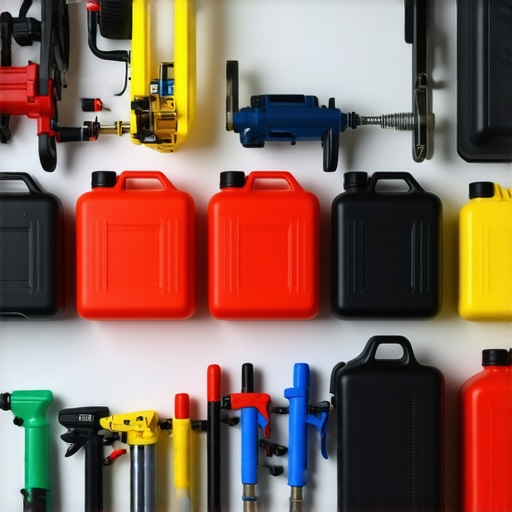
The Ethanol Autopsy: Why Your Lawn Gear Fails in Spring
Preventing fuel gumming in 2026 lawn gear requires a systematic removal of moisture-absorbing ethanol fuels or the chemical stabilization of the combustion chamber and fuel lines before winter dormancy. To avoid carburetor varnish, operators must either run engines dry or utilize high-grade stabilizers that prevent phase separation in the fuel tank.
I recently got called out to a property where the homeowner had completely torched their front lawn by applying fertilizer with a spreader that had seized up mid-pass. The real culprit? They had spent the morning fighting a mower that wouldn’t start because of fuel gumming, got frustrated, and rushed their yard cleanup without calibrating their equipment. By the time I arrived, the mower was sitting in the driveway with a disassembled carburetor, and the lawn looked like a chemical burn ward. That mower didn’t die because of a bad part; it died because of 10% ethanol fuel that sat for four months. Ethanol is hygroscopic, meaning it pulls moisture directly out of the air. In a vented fuel system, that moisture bonds with the alcohol, sinks to the bottom of the tank, and creates a corrosive sludge that eats through brass jets and aluminum housings. It is a slow-motion mechanical suicide. If you are handling a sod install or managing professional landscaping equipment, you cannot afford this downtime.
“Gasoline containing ethanol can begin to degrade in as little as 30 days, leading to the formation of gums and solids that clog small engine components.” – Agricultural Engineering Research Group
The Chemistry of Fuel Degradation in 2026
Modern 2026 fuel blends are significantly more volatile than the fuels used a decade ago. When fuel sits, the light aromatic hydrocarbons evaporate first, leaving behind the heavier, oilier components that eventually harden into a shellac-like substance. This is what we call fuel gumming. In a small engine, the tolerances are measured in thousandths of an inch. A single drop of varnish in a pilot jet will lean out the engine, causing it to run hot and eventually seize. For those running irrigation pumps or heavy-duty brush cutters, the stakes are even higher. Heat is the enemy of air-cooled engines. A gummed-up carb leads to lean-run conditions that can melt a piston in under twenty minutes of operation.
How much fuel stabilizer should I use for a 4-cycle engine?
For standard 4-cycle engines, you should mix one ounce of fuel stabilizer for every 2.5 gallons of fresh, non-ethanol gasoline to ensure chemical stability during the 2026 winter storage period. Always add the stabilizer at the gas station when the fuel is fresh, not after it has sat for weeks. This ensures the stabilizer is thoroughly homogenized with the fuel before it ever hits your equipment. Phase separation cannot be reversed by adding chemicals later. Once the water has bonded with the ethanol, the fuel is biologically and chemically dead. You must drain it and start over.
Should I run my lawn mower dry or keep the tank full?
The most effective way to prevent fuel gumming is to drain the fuel tank and run the engine until it stalls, ensuring no residual fuel remains in the carburetor bowl or fuel lines. If you choose to leave fuel in the tank, it must be ethanol-free (REC-90) and treated with a marine-grade stabilizer. Leaving a tank half-full is the worst possible choice. It creates a massive surface area for condensation to form on the interior walls of the tank. This leads to rust in steel tanks and water contamination in plastic ones.
The Professional 2026 Storage Protocol
My crew follows a strict protocol for every piece of gear, from the smallest string trimmer to the largest zero-turn. We don’t just park them. We perform a forensic cleaning. Yard cleanup gear is particularly susceptible to failure because it is often used in dusty conditions. That dust mixes with fuel leaks to create a grinding paste that destroys linkages. Here is the breakdown of our 2026 winterization schedule.
| Equipment Type | Primary Storage Action | Critical Component Check |
|---|---|---|
| Lawn Mowers | Drain fuel/Fog cylinders | Check blade for stress fractures |
| String Trimmers | Empty tank/Replace fuel filter | Grease the gear head |
| Irrigation Pumps | Blow out lines/Antifreeze | Inspect mechanical seals |
| Blowers | Clean air intake/Fuel purge | Check spark plug gap |
- Step 1: Clean the deck. Dried grass traps moisture against the metal, leading to deck rot. Use a plastic scraper, not a power washer, to avoid forcing water into the spindle bearings.
- Step 2: Change the oil. Used oil contains combustion byproducts and acids that eat away at engine internals over the winter. Fresh oil is cheap insurance.
- Step 3: Fog the engine. Remove the spark plug and spray a shot of fogging oil into the cylinder. Pull the starter cord a few times to coat the cylinder walls and prevent flash rust.
- Step 4: Stabilize or Drain. If you can’t find ethanol-free fuel, you must drain the system completely. Don’t forget the primer bulb.
“Phase separation occurs when water contamination reaches approximately 0.5% by volume, causing the ethanol-water mix to drop out of the gasoline solution.” – Standard Engine Service Manual
Impact of Gear Failure on Sod Install and Yard Cleanup
If you are planning a sod install for the spring of 2027, your prep work starts with your equipment storage in 2026. You cannot prep a soil bed with a tiller that won’t start. You cannot level a grade with a machine that is surging due to a clogged jet. I have seen contractors lose thousands of dollars because their irrigation trenchers were gummed up and they couldn’t get the pipe in the ground before a hard freeze. This is about more than just a clean garage. It is about operational readiness. In the landscaping industry, time is the only commodity we can’t buy more of. If you spend the first two weeks of spring at the mechanic, you’ve already lost the season. Do the work now. Clean the filters. Drain the tanks. Grease the fittings. It isn’t optional. It is the job.
Winterizing Irrigation Systems and Spray Gear
When we talk about irrigation storage, we aren’t just talking about the pipes in the ground. We are talking about the pumps and the motorized valves. If a pump housing retains even a tablespoon of water and that water freezes, the housing will crack. It is physics. Use compressed air to blow out every line until you see a mist, not a stream. For yard cleanup sprayers used for pre-emergents, you must triple-rinse the tanks. Herbicide residue will crystallize over the winter and turn into a sandpaper-like grit that destroys your pump seals. Run a mixture of water and RV antifreeze through the pump before storing it in a temperature-controlled environment if possible. 811 / Dig Safe won’t help you if your own equipment fails due to negligence. Proper storage is the mark of a professional. If your hands aren’t dirty in November, your pockets will be empty in April. Store it right or replace it later. The choice is yours.