
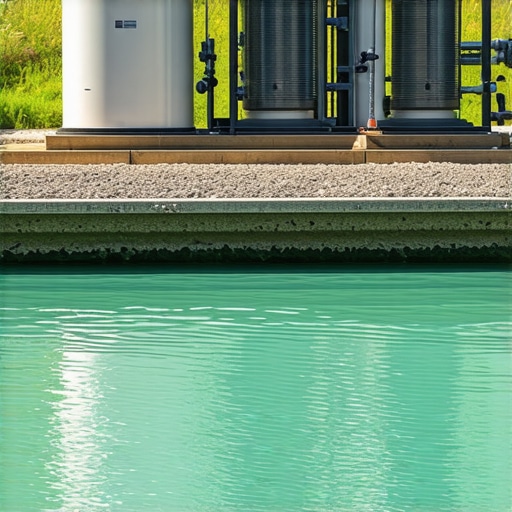
The Forensic Autopsy of a Green Pond Disaster
Pea soup pond water is a symptomatic failure of the biological nitrogen cycle caused by an overabundance of single-cell planktonic algae. To fix this, a 2026 UV clarifier must be integrated into the filtration loop to achieve germicidal irradiation of the water column. This process effectively destroys the DNA of the algae, forcing it to clump together (flocculate) so the mechanical filter can remove it from the system. It is not a chemical fix; it is a physical intervention.
I recently got called out to tear up a $30,000 hardscape and pond installation that was sinking into a biological abyss. The previous contractor had sold the homeowner on a ‘natural’ system with no UV-C sterilization. Within six months, the water was so thick with algae that you couldn’t see the $500 koi six inches below the surface. The client was dumping gallons of liquid algaecide into the water, which only created a toxic cycle of algae die-off, ammonia spikes, and further blooms. I had to explain that they weren’t just fighting plants; they were fighting a structural engineering failure in their filtration design. We had to excavate the secondary filtration line, resize the pump for proper dwell time, and install a 2026-spec high-output UV clarifier to regain control of the water chemistry.
“A pond is a closed biological system where the input of nutrients must be balanced by the output of mechanical and biological filtration. Without UVC intervention, planktonic algae will dominate any system with high nitrate levels.” – Aquatic Ecosystems Management Manual
Why Your Landscape Cleanup is Feeding the Algae
Yard cleanup activities often inadvertently trigger algae blooms by introducing a massive nutrient load of organic debris and nitrogen-rich runoff into the pond. When you perform a sod install or heavy landscaping near a water feature, the loose soil and fertilizers often migrate into the basin during the first rain or irrigation cycle. This influx of phosphates acts as high-octane fuel for single-cell algae. If your pond lacks a UV clarifier, there is nothing to stop these organisms from replicating exponentially. The 2026 models of UV-C units are designed with higher-intensity quartz sleeves that can handle the increased turbidity following a major yard cleanup. We are talking about 30,000 microwatts per square centimeter of UVC energy. That is enough to shatter the cellular wall of Chlorella on a single pass.
How do I choose the right UV clarifier for my pond size?
Selecting a UV clarifier requires calculating the total water volume, the pump flow rate in GPH (Gallons Per Hour), and the fish load to ensure the dwell time is sufficient for pathogen and algae sterilization. A common mistake is buying a unit with a wattage too low for the GPH passing through the chamber. If the water moves too fast, the UVC radiation cannot penetrate the algae cells. For a 2,000-gallon pond, you need at least a 40-watt high-output bulb and a pump that cycles the entire volume every two hours. Don’t guess. Measure your flow. If the water velocity exceeds 5 feet per second through the clarifier, it will fail. It is pure physics.
| Pond Volume (Gallons) | UV-C Wattage Required | Max Flow Rate (GPH) | Recommended Dwell Time |
|---|---|---|---|
| 500 – 1,000 | 18 Watts | 500 GPH | 2.5 Seconds |
| 1,000 – 2,500 | 40 Watts | 1,200 GPH | 3.0 Seconds |
| 2,500 – 5,000 | 80 Watts (Dual) | 2,500 GPH | 3.0 Seconds |
| 5,000 – 10,000 | 120+ Watts | 4,500 GPH | 3.5 Seconds |
The Mechanics of the 2026 UV Clarifier Installation
Installation is not just about plugging in a cord. You must plumb the unit after the mechanical filter but before the biological filter. Why? Because the UV light needs the water to be as clear as possible of large particulates. If the water is ‘chunky,’ the algae cells hide behind the debris, shielded from the UVC rays. This is called ‘shadowing.’ We use 2-inch PVC piping with sweep elbows to minimize head pressure loss. The 2026 units feature electronic ballasts that monitor bulb intensity. When that bulb drops below 80% efficiency, the system sends an alert. Most homeowners let their bulbs run for three years, not realizing that a UV bulb loses its germicidal wavelength efficacy after 9,000 hours, even if it is still glowing blue. That blue glow is just visible light; the UVC part of the spectrum is long gone.
What causes green pond water after a yard cleanup?
Green pond water following a landscape cleanup is usually caused by phosphates leaching from disturbed soil and decaying organic matter that bypassed the skimmer basket. When you prune trees or mow near the pond, microscopic clippings enter the water, decompose, and release ammonia. The algae react to this nutrient spike faster than your beneficial bacteria can. This is why irrigation systems should be directed away from the pond. If your sod install includes high-nitrogen fertilizers, a single heavy rain can turn a clear pond into a swamp overnight. The UV clarifier is your insurance policy against these environmental variables.
“Effective pond sterilization is a function of UVC dose, which is the product of light intensity and exposure time. Increasing flow rate without increasing wattage leads to total system failure.” – ICPI Hardscape & Water Feature Standards
- Step 1: Test water parameters (Ammonia, Nitrite, Nitrate, pH, KH).
- Step 2: Clean the mechanical filter pads to reduce turbidity.
- Step 3: Install the UV unit on a bypass manifold to control flow.
- Step 4: Check the quartz sleeve for calcium scaling every 30 days.
- Step 5: Replace the UV lamp annually, regardless of the ‘glow.’
Managing Hydrostatic Pressure and Grading
If your landscaping design doesn’t account for soil grading, you are doomed. I’ve seen irrigation lines installed uphill from a pond that caused hydrostatic pressure to lift the EPDM liner. When the liner floats, the biological balance is destroyed. Ground runoff carries tannins and silt into the water, making the UV clarifier work ten times harder than it should. You need a French drain or a retaining wall with a modified gravel base to divert that water. Don’t skip the drainage. It is the backbone of any hardscape and water feature project. If you don’t fix the grade, you are just buying an expensive light bulb to watch your pond die. Fix the soil first. Install the UV second. Clear water follows science, not luck.