
The Fundamentals of Boxwood Restoration
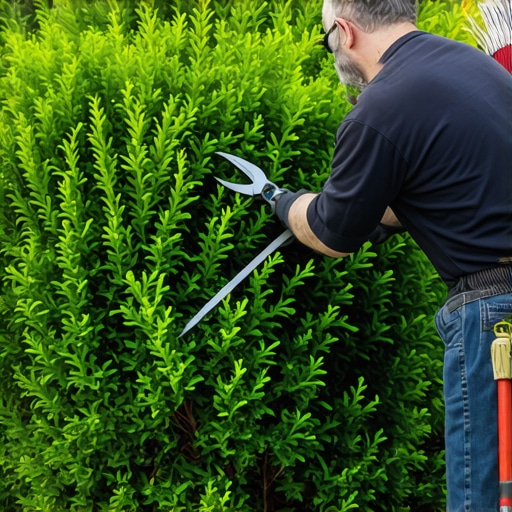
To trim overgrown boxwoods into a clean hedge, you must prioritize structural thinning over surface shearing to ensure UV light and atmospheric oxygen reach the plant’s interior. This technical approach prevents fungal pathogens and stimulates latent buds to fill in the hollow, woody core typical of neglected specimens.
I always drill into my new crew members: if you don’t fix the soil grading first, every plant you put in the ground is just expensive compost. I’ve seen rookies spend four hours shaping a Buxus sempervirens into a perfect sphere, only to have the entire root ball rot three months later because they ignored the hydrostatic pressure of the adjacent lawn. We don’t just cut plants; we manage biological systems. When you approach an overgrown boxwood, you aren’t just looking for a shape. You are looking for the skeleton. Most homeowners reach for the electric trimmers first. That’s a death sentence for an old hedge. You’re essentially vacuum-sealing the plant. Without airflow, the humidity levels inside that dense canopy spike, creating a laboratory for Cylindrocladium buxicola (Boxwood Blight). You have to be surgical. You have to understand apical dominance. If you don’t cut deep enough to break that dominance, the plant will never rejuvenate from the center.
“Boxwoods (Buxus spp.) require thinning to allow sunlight and air to penetrate the center of the plant, which keeps the inner branches productive and reduces the risk of disease.” – Virginia Cooperative Extension
The Anatomy of a Neglected Hedge
An overgrown boxwood is characterized by a ‘shell’ of green foliage about two to four inches thick. Inside that shell is a dead zone. This happens because boxwoods are incredibly efficient at capturing light; the outer leaves shade out everything beneath them. If you simply shear the outside, you make that shell even denser. To fix this, you need to perform what we call ‘thinning cuts.’ This involves reaching into the canopy and removing entire branches at their point of origin. It feels counterintuitive to the amateur. You’re making holes. But those holes are windows. They are the only way the interior of the plant will ever see the sun again. Don’t skip this. It is the difference between a hedge that looks good for a week and one that lives for fifty years.
How do I fix a boxwood that is too tall?
Reducing the height of a boxwood hedge requires a multi-year strategy where you remove no more than one-third of the vertical biomass per season. Using bypass pruners, cut the tallest leaders back to a lateral branch inside the canopy to hide the pruning scars and encourage outward growth.
The Tool Kit for Professional Results
Forget the cheap gear. If your pruners aren’t sharp enough to shave with, they are crushing the plant tissue instead of slicing it. A crushed stem is an open door for infection. You need high-carbon steel bypass pruners, a sharp folding saw for branches over one inch in diameter, and a bottle of 70% isopropyl alcohol. We dip our tools between every single plant. Why? Because if one boxwood has a sub-clinical infection, you’re just a delivery service for pathogens if you don’t sanitize. It’s basic yard cleanup hygiene. We also look at the irrigation. If your sprinklers are hitting the foliage directly every morning, you’re begging for leaf spot. We switch our clients to drip irrigation or modify the zones to ensure the water stays at the root flare, where it belongs.
| Pruning Method | Execution Tool | Resulting Plant Health | Best Use Case |
|---|---|---|---|
| Shearing | Electric Trimmers | Low (Dense Outer Shell) | Formal Topiary Maintenance |
| Thinning | Bypass Pruners | High (Internal Airflow) | Restoration of Overgrown Hedges |
| Heading Back | Hand Shears | Moderate (Increased Density) | Filling in Sparse Gaps |
| Renewal | Folding Saw | High (New Structural Growth) | Reclaiming 10+ Year Neglect |
The Step-by-Step Restoration Protocol
- Inspect the Root Flare: Remove any ‘mulch volcanoes.’ The flare must be visible to prevent bark rot.
- Sanitize Your Equipment: Use alcohol or a 10% bleach solution between every plant.
- Interior Thinning: Remove 10-15% of the outer branches by cutting them back 6-8 inches into the canopy.
- Lower the Canopy: If height reduction is needed, cut the main leaders back to a strong lateral branch.
- Clear the Base: Remove any dead leaves or debris trapped in the lower interior to stop rot.
- Soil Check: Apply a slow-release, low-nitrogen fertilizer if the soil pH is below 6.5.
“A retaining wall doesn’t fail because of the stone; it fails because of the water trapped behind it.” – Hardscape Engineering Axiom
While that axiom refers to stone, the principle applies to hedges. A hedge fails because of the micro-climate trapped within it. You have to think like an engineer. You are managing the flow of light and moisture. If you live in an area with heavy clay, your boxwoods are already stressed by poor drainage. Adding a dense, un-thinned canopy to that stress is a recipe for disaster. We often recommend a sod install around the perimeter to stabilize the soil, but we keep the sod at least 12 inches away from the boxwood stems. Competition for nitrogen is real. Your grass will win, and your boxwoods will starve. You need that mulch ring, but it has to be flat, not mounded. We use double-shredded hardwood mulch, never the dyed stuff. The dyed mulch can alter soil chemistry in ways that make boxwoods brittle.
What is the best time of year to prune boxwoods?
The optimal window for heavy pruning is late winter or very early spring before the first flush of new growth appears. Avoid pruning in late summer or fall, as this stimulates succulent growth that will be killed by the first hard frost, leading to winter burn and dieback.
Long-Term Maintenance and Soil Health
Once you’ve done the heavy lifting of restoration, the job isn’t over. You’ve essentially performed surgery. Now comes the recovery. We monitor the irrigation cycles religiously. Boxwoods need about one inch of water per week, delivered deeply and infrequently. This forces the roots to dive deep into the soil profile rather than staying on the surface where they can bake in the summer heat. If you’ve just done a yard cleanup, don’t throw those clippings in the compost if you suspect blight. Bag them and get them off the property. Soil pH is the final piece of the puzzle. Boxwoods like it slightly acidic to neutral (6.5 to 7.2). If your soil is too acidic, they can’t uptake the nutrients they need, no matter how much fertilizer you throw at them. It’s simple chemistry. If you don’t measure, you’re just guessing. And in high-end landscaping, guessing is the fastest way to go out of business. It will rot. Don’t skip the soil test.