
The Easiest Way to Find a Leaking Irrigation Pipe
Finding a subsurface irrigation leak is a diagnostic puzzle that requires more than just looking for a wet spot. I have spent twenty years remediating failed landscapes where a simple $2 coupling failed because the previous contractor didn’t understand soil expansion or pipe bedding. Irrigation is the circulatory system of your yard; when it bleeds, your soil chemistry shifts, your root zones suffocate, and your hardscape integrity is compromised. Most homeowners see a swampy area and start digging blindly, which is the fastest way to slice through your electrical lines or hit your main water feed. We don’t do that. We use physics and forensic indicators to pinpoint the breach.
The Diagnostic Blueprint: How to Locate a Leak Without Destroying Your Yard
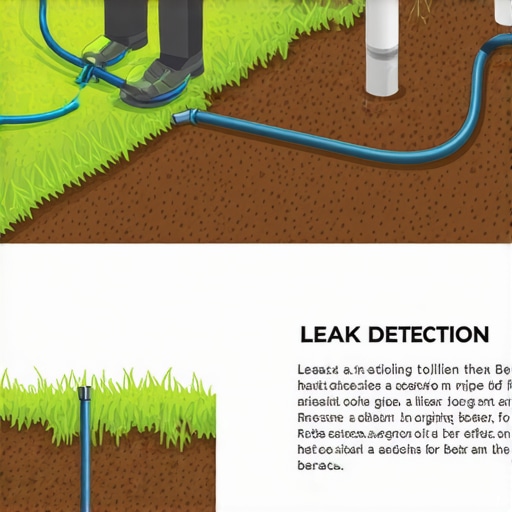
To find a leaking irrigation pipe, monitor for localized wet spots, drop in nozzle pressure, or unexplained water bill spikes. Use a soil moisture probe or the air-pressure method to isolate the breach within specific zones before excavating to prevent unnecessary damage to your turf or hardscape.
I recently got called out to tear up a $30,000 patio that was sinking because the previous contractor ignored a slow drip from a lateral line buried beneath the base layer. The water had been slowly washing away the fines in the modified gravel base for eighteen months. By the time I arrived, the pavers had settled three inches, and the hydrostatic pressure had started pushing the retaining wall out of plumb. This wasn’t a ‘leak’ problem; it was an engineering failure. Water is the universal solvent. It doesn’t care about your budget. If you have a leak under a hardscape, you aren’t just losing water; you are losing the structural foundation of your property.
“Irrigation systems should be designed to apply water uniformly, but a single leak can drop system pressure by 20% or more, leading to localized dry spots and plant stress.” Texas A&M AgriLife Extension
How can I tell where my sprinkler line is leaking?
The first step is a zone-by-zone pressure test. Turn on your irrigation controller and watch the head height. If Zone 1 has heads that are barely popping up while Zone 2 is firing at 40 PSI, your leak is in Zone 1. Look for the ‘low head drainage’ phenomenon versus a true line break. A true break will usually manifest as a bubbling spring or a soft, spongy area that persists long after the system has shut down. If the soil feels like a sponge, stop. You are looking at a saturated soil profile where the oxygen has been displaced. If this happens near a new sod install, the roots will rot within 48 hours due to anaerobic conditions. Roots need to breathe. Waterlog them, and they die. Period.
Can I use air pressure to find a water leak?
Professional crews use an air compressor and a specialized manifold to blow air into the lines. You shut off the water, purge the system, and pump in about 30 to 50 PSI of air. You then walk the line with a stethoscope or even a piece of PVC pipe held to your ear. You are listening for the hiss. This is the only way to find a leak under a concrete driveway or a thick landscaping bed without turning the yard into a muddy trench. It is precise. It is clean. It saves your back.
| Symptom | Likely Root Cause | Required Action |
|---|---|---|
| Soggy turf after zone is off | Leaking valve diaphragm | Replace valve internals |
| Low pressure at last head | Lateral line crack/puncture | Excavate and splice pipe |
| Geyser at head base | Broken riser or swing joint | Replace with flex-pipe |
| High water bill, dry lawn | Main line leak (pre-valve) | Immediate shutoff at backflow |
The Soil Science of a Leak
When water escapes a pipe under pressure, it doesn’t just go up. It follows the path of least resistance. In heavy clay soils, water can travel 20 feet horizontally along a trench line before surfacing. This is why the ‘wet spot’ isn’t always where the break is. You must account for the yard cleanup process; if you have heavy thatch layers, the water might be trapped beneath the organic mat, masking the leak until the soil reaches total saturation. Once saturation occurs, the soil loses its shear strength. This is how landslides start on a micro-scale.
“Hydrostatic pressure from a subsurface leak can undermine the structural integrity of pavers and retaining walls by washing away the fine particles in the bedding layer.” ICPI Technical Manual
Pre-Excavation Checklist
- Mark all heads in the affected zone with flags.
- Check the water meter’s leak indicator dial with all indoor water off.
- Probing the soil with a 1/4 inch steel rod to feel for soft voids.
- Call 811 before you put a shovel in the ground. No excuses.
- Locate the zone valves to ensure they are closing completely.
Maintaining the Integrity of the Repair
Once you find the leak, don’t just slap a ‘mow-and-blow’ hack fix on it. Use Schedule 40 PVC or high-density polyethylene (HDPE). Avoid the thin-walled Class 200 pipe often found in big-box stores; it’s brittle and prone to longitudinal cracking. When you backfill, you must compact the soil in 4-inch lifts. If you just throw the dirt back in the hole, it will settle, creating a trip hazard and a low spot where water will pool, further damaging your irrigation efficiency. If you are working near a sod install, hand-tamp the soil until it is firm enough that your thumb doesn’t leave an impression. That is the standard. Anything less is just expensive compost.