
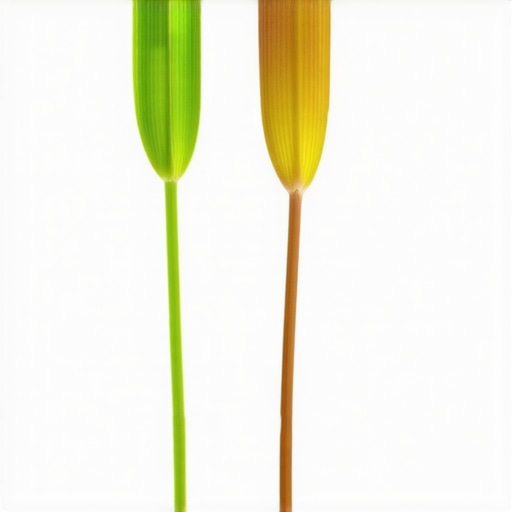
The Forensic Autopsy of a Dying Lawn
You walk onto the turf and it doesn’t spring back. It crunches. The color isn’t the straw-tan of a dormant Kentucky Bluegrass; it is a sickly, ashen grey-brown that smells like cooked organic matter. I have spent two decades looking at failing yards, and 2026 has been the most brutal year for sod installs in recent memory. A homeowner called me in a panic last month after they completely torched their front lawn by applying a high-nitrogen ‘turf builder’ in the middle of a 98-degree heatwave. They thought the yellowing was a nutrient deficiency. It wasn’t. They essentially salted the earth, accelerating the thermal breakdown of the plant’s cellular walls. The result was a $12,000 yard cleanup and re-install because they couldn’t tell the difference between a plant that was sleeping and a plant that was dead.
Diagnostic Signs: Green vs Brown Stems
Distinguishing between green and brown stems determines if your sod install is salvageable or if it requires a total replacement. Green stems near the crown indicate the plant is in a protective state of dormancy, while brown, brittle stems signify total vascular failure due to heat burn and a lack of deep irrigation.
When you get down on your knees and pull back the blades, you are looking for the ‘crown’—the white, fleshy part where the blades meet the roots. If the stems are brown from the tip all the way into the crown, the vascular system is fried. The xylem and phloem, the plant’s internal plumbing, have collapsed. At this point, no amount of water will bring it back. It will rot. However, if the blades are brown but the stems retain a supple, lime-green tint near the soil line, the plant is likely in summer dormancy. It has shut down to protect its vital organs from the 2026 heat spikes. Stop fertilizing. Start deep-soaking.
“Turfgrass reaches a critical physiological threshold when soil temperatures exceed 85 degrees Fahrenheit at a two-inch depth, leading to a cessation of root elongation.” – Penn State Center for Turfgrass Science
The Physics of Heat Burn in New Sod
The 2026 climate patterns have forced landscaping professionals to rethink irrigation timing because of transpiration rates. In a new sod install, the roots are only 0.5 to 1 inch deep. They are sitting in the hottest part of the soil profile. When the air temperature hits 95 degrees, the surface temperature of the sod can hit 120 degrees if it is not properly hydrated. The water inside the plant cells literally boils, or more accurately, creates enough internal pressure to rupture the cell membranes. This is why you see ‘flash burn’ on the edges of sod rolls that weren’t tightly knitted together.
How much water does new sod actually need in a heatwave?
During a 2026 heat event, new sod requires 0.5 inches of water twice daily to maintain evaporative cooling. This isn’t just about hydration; it is about lowering the temperature of the leaf tissue. Once the roots reach a 4-inch depth, you can transition to 1 inch of water every three days. Don’t skip the screwdriver test. If you can’t push a 6-inch screwdriver into the soil with one hand, your irrigation is failing and your yard cleanup will eventually involve a dumpster.
| Symptom | Heat Burn (Dead) | Drought Dormancy (Alive) | Nitrogen Burn (Chemical) |
|---|---|---|---|
| Stem Color | Brittle Brown/Grey | Pale Green/Tan | Dark Brown/Black |
| Root Texture | Shriveled/Paper-like | Firm/White Core | Slimy or Desiccated |
| Tug Test | Blades pull out easily | Resistant to pulling | Blades break mid-stem |
| Recovery Time | None (Replace) | 14-21 Days after water | 30+ Days (If flushed) |
Can you save sod once the stems turn brown?
If the stems are brown and the crown is mushy, the sod install is a total loss and must be removed during a yard cleanup. If the stems are brown but the crown remains firm and white, there is a 10% chance of recovery through aggressive irrigation and the application of seaweed-based biostimulants to reduce oxidative stress. Don’t bet on it. Usually, brown stems mean you are looking at expensive compost.
The Role of Soil Grading in Sod Survival
Proper soil grading prevents localized dry spots and ‘hot spots’ where water runs off before penetrating the root zone. In 2026, many landscaping failures were attributed to poor yard cleanup and grading, leaving sod vulnerable to uneven thermal desiccation. If you have a high spot in your yard, the water runs away, the soil dries out faster, and the sun bakes the exposed edges of the sod. I tell my crew: if the grade isn’t flat, the grass is dead. Period.
“A retaining wall doesn’t fail because of the stone; it fails because of the water trapped behind it, just as sod fails when the grade prevents uniform moisture infiltration.” – Hardscape Engineering Axiom
Remediation Checklist for Heat-Stressed Sod
- Perform a ‘tug test’ on 20 random spots in the lawn.
- Check the soil moisture depth using a 6-inch screwdriver or soil probe.
- Measure water output with the ‘tuna can’ test to ensure 1 inch of coverage.
- Inspect the crown for green tissue remnants at the soil level.
- Evaluate irrigation overlap to eliminate ‘donut’ patterns of dry grass.
- Check for hydrophobic soil conditions where water beads on the surface.
The Maintenance Path to Recovery
If you’ve identified that you have green stems, you’re in the clear, but you’re on probation. You must increase your irrigation frequency but keep it early in the morning—between 3:00 AM and 7:00 AM. Watering at night in 2026 is a death sentence because it invites Pythium blight and Brown Patch fungus in the high humidity. You’ve already stressed the plant; don’t give it a fungal infection to deal with too. If the stems are brown, stop wasting water. Cut your losses, strip the dead mat, and wait for the fall temperatures to drop below 75 degrees before you attempt another sod install. Soil chemistry doesn’t care about your weekend plans. It follows the laws of thermodynamics. Respect the heat or the heat will respect your wallet.