
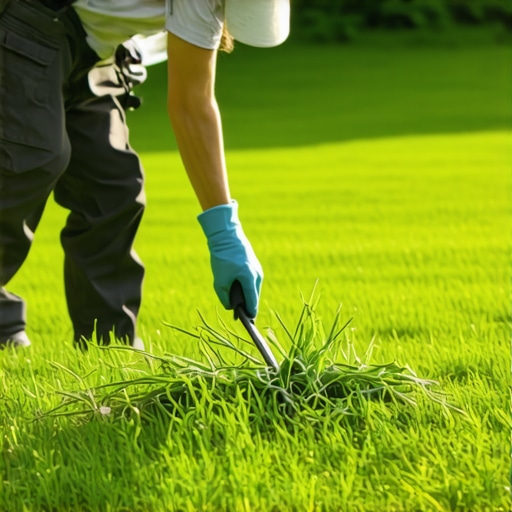
The Anatomy of a Dying Lawn: The Summer Crabgrass Invasion
The first sign of failure is usually a pale, lime-green sprout that looks like a miniature octopus emerging from the edges of your driveway. Within two weeks, those sprouts thicken into coarse, sprawling mats that choke out your high-maintenance fescue or Kentucky bluegrass. Killing 2026 crabgrass before the heat spike requires a precise application of pre-emergent herbicides like Prodiamine or Dithiopyr when soil temperatures consistently hit 55 degrees Fahrenheit but before the first 85-degree day. Once the heat spike hits, the crabgrass enters a rapid C4 metabolic state, making chemical control significantly more difficult without damaging the surrounding turf.
The Chemical Nightmare: A Cautionary Tale
A homeowner called me in a panic after they completely torched their front lawn by applying a massive dose of post-emergent weed killer during a 95-degree heatwave in July. They thought they were being aggressive. Instead, they increased the chemical volatility and caused a massive soil burn that killed the beneficial microbes and the turf grass, while the crabgrass actually seemed to thrive on the sudden lack of competition. I had to tell them the truth: their soil was now toxic for at least 60 days, and the only fix was a full sod install after a heavy flush of the topsoil. It was an expensive $8,000 lesson in why you never fight biology with blind aggression. You have to respect the nitrogen cycle and the ambient temperature limits of the chemicals you put on your property.
“A lawn is not a static carpet; it is a complex biological system where the timing of nutrient and chemical intervention is more important than the volume of product used.” – Agricultural Extension Handbook
The Science of Germination: Why the 2026 Heat Spike is Dangerous
Crabgrass is an annual weed, meaning every single plant you see this year grew from a seed dropped the previous fall. To stop it, you must understand Growing Degree Days (GDD) and how they trigger the germination of Digitaria sanguinalis. These seeds are opportunistic. They wait for the soil to hit that magic 55-degree mark for three consecutive days. If you miss that window, the plant begins its journey. The 2026 heat spike is particularly dangerous because it shortens the window of effective pre-emergent barriers. Once the soil warms up too fast, the chemical barrier breaks down through microbial degradation or photodegradation, leaving your lawn wide open for an invasion. You need to be checking soil thermometers, not calendars.
What kills crabgrass but not grass in summer?
To kill crabgrass in the summer without harming your lawn, you must use a selective herbicide containing Quinclorac while ensuring the turf is well-hydrated and ambient temperatures are below 85 degrees. If you spray when the turf is under drought stress, the grass will absorb the chemical too quickly, leading to yellowing or death. Always apply during the cooler evening hours to maximize foliar absorption on the weed while minimizing evaporation. It is a game of precision, not power.
The Operational Lane: Turf Care and Irrigation Logic
If you want a lawn that resists crabgrass, you have to stop thinking like a gardener and start thinking like an engineer. Most people think irrigation is just about getting things wet. It is not. It is about hydrostatic pressure and root depth. If you water every day for 10 minutes, you are essentially training your grass to keep its roots at the surface. That is exactly where the crabgrass seeds are waiting. When the heat spike hits, those shallow roots cook. The grass dies. The crabgrass wins.
Irrigation and Sod Comparison for 2026
| Method | Root Depth Target | Water Frequency | Crabgrass Resistance |
|---|---|---|---|
| Deep Infrequent Watering | 6-8 inches | 2x Per Week | High (Competitive Turf) |
| Shallow Daily Misting | 1-2 inches | Daily | Low (Surface Thirst) |
| New Sod Install | N/A (Immediate) | Daily (First 14 days) | Moderate (Physical Barrier) |
The goal is to force the roots to chase the water down. This requires a deep soak of at least 1 inch per week, delivered in one or two sessions. This keeps the top half-inch of soil—the germination zone for weeds—dry while the deeper rhizosphere stays moist for the grass. Landscaping success is 90% water management.
The Yard Cleanup Checklist: Pre-Heat Preparation
Before the 2026 temperatures climb, a professional yard cleanup is mandatory to remove the thatch layer. Thatch is a spongy layer of dead organic matter between the grass blades and the soil. While a little is good, more than a half-inch acts as a nursery for crabgrass seeds. It prevents your pre-emergent from reaching the soil and traps moisture at the surface, which leads to fungal pathogens like Brown Patch or Pythium.
- Core Aeration: Pull 3-inch plugs to relieve soil compaction and allow oxygen to reach the root zone.
- De-thatching: Use a power rake to pull up the horizontal stems that block nutrient absorption.
- Edge Trimming: Crabgrass loves the heat coming off concrete. Keep your edges tight to maintain the chemical barrier.
- Mower Height Adjustment: Set your blades to 3.5 or 4 inches. Tall grass shades the soil, keeping it cooler and preventing seed germination.
When is it too late to put down crabgrass preventer?
It is generally too late to apply a pre-emergent preventer once the Forsythia blooms have fallen or when soil temperatures exceed 65 degrees, as the seeds have already germinated and are in the two-leaf stage. At this point, the pre-emergent will not stop the plants that have already sprouted. You must pivot to post-emergent strategies or focus on mechanical removal and overseeding to crowd out the remaining invaders.
“Effective weed control in turfgrass systems is predicated on the maintenance of a dense, healthy sod that can out-compete opportunistic annual species for light and nutrients.” – Agronomy Field Manual
The Sod Install: The Nuclear Option
When the crabgrass has taken over more than 50% of the yard, I stop recommending chemicals. It is a waste of money. At that point, you need a sod install. But don’t just throw the green side up. You have to excavate the top 2-3 inches of weed-choked soil and organic debris. If you leave the old crabgrass underneath, the decomposing matter will create methane gas and heat that will literally cook the roots of your new sod from the bottom up. We call this a failed subgrade. It is the most common mistake