
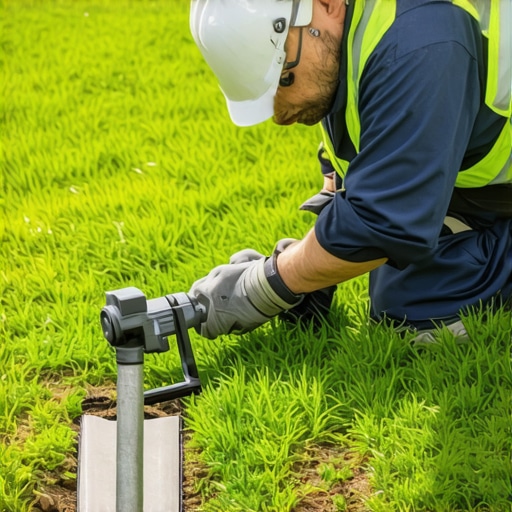
The Forensic Reality of Buried Irrigation Infrastructure
I recently got called out to a property where a homeowner had spent $15,000 on a premium sod install, only to realize two weeks later that their lawn was turning brown because they couldn’t find the valves to manual-start a failing zone. The previous contractor, in a rush to finish the yard cleanup and grading, had simply laid the new turf directly over four buried valve boxes without marking them or installing extensions. This isn’t just a minor oversight; it is a fundamental failure in landscaping ethics. When you bury a valve, you aren’t just hiding a plastic lid; you are sealing off the hydraulic heart of the system from necessary maintenance. My crew had to spend six hours with a wire tracer and a probes to find what should have been visible. It was an expensive lesson for the client that could have been avoided with a simple 12-inch stake and some flagging tape.
“A retaining wall doesn’t fail because of the stone; it fails because of the water trapped behind it.” – Hardscape Engineering Axiom
Why Irrigation Valve Boxes Disappear During Landscaping
Irrigation valve boxes vanish most frequently during sod install or heavy yard cleanup projects when grade levels are raised without adjusting the height of the irrigation housing. Contractors often prioritize a flat visual surface over long-term system accessibility, leading to buried solenoids that eventually fail and become impossible to find without specialized electronic locating equipment.
How do I find a lost irrigation valve box?
Finding a lost irrigation valve box requires a wire tracer or a valve locator that sends a high-frequency signal through the solenoid wires. By tracking the electromagnetic field generated along the wire path, a technician can identify the exact point where the signal ‘blooms,’ indicating the presence of the solenoid and the buried box. You can’t just guess; you need to track the current.
The Physics of Electronic Wire Tracing
To understand how to find a buried valve box, you have to understand electromagnetism. A wire tracer consists of a transmitter and a receiver. The transmitter connects to the irrigation controller (timer) and sends a specific frequency (usually around 2kHz to 33kHz) down the field wires. As this current moves through the copper, it creates an electromagnetic field. The receiver, or wand, detects this field. When the wand is directly over the wire, the signal is strongest. When the wire reaches the solenoid, the coil of wire inside the valve creates a massive increase in surface area, causing the signal to ‘null’ or ‘bloom’ significantly. This is your ‘X’ on the map. Don’t be fooled by cheap residential testers; in heavy clay soils or deep burials, you need a high-power output to penetrate the earth’s resistance.
| Tool Type | Detection Depth | Primary Use Case | Professional Grade |
|---|---|---|---|
| Basic Wire Tracer | 6-12 Inches | Residential wire breaks | No |
| Pro Valve Locator | 3-8 Feet | Buried valve boxes/Deep wires | Yes |
| Multimeter | N/A | Electrical continuity/Ohms | Essential |
| Ground Probe | 18 Inches | Physical verification | Yes |
The Step-by-Step Forensic Recovery Process
Before you start digging up your client’s new landscaping, you need a surgical plan. First, disconnect the common wire and the specific zone wire from the irrigation controller. This is critical. If you leave them connected, the signal will bleed into the controller’s internal circuitry and give you a false reading across every zone. Connect the red lead of your transmitter to the zone wire and the black lead to a grounding stake driven into the soil. Do not ground it back to the controller’s ground bar. You want the signal to go out into the yard, through the solenoid, and ‘leak’ into the earth to complete the circuit. This is how you generate a trackable path.
What is the ‘chatter’ method for finding valves?
The chatter method involves rapidly cycling the solenoid on and off using a specialized diagnostic tool or by quickly tapping the zone wire against a power source. This creates a distinct mechanical clicking sound—the ‘chatter’—that can be heard through the soil with a mechanic’s stethoscope or a shovel handle pressed against your ear. It is a secondary verification technique used after wire tracing narrow down the dig site.
“Soil moisture significantly affects the conductivity of a tracer signal; dry, sandy soils may require supplemental wetting to establish a reliable ground return for the locator.” – Irrigation Association Technical Manual
- Safety First: Always call 811 before using a ground probe to ensure you aren’t hitting gas or power lines.
- Frequency Selection: Use a low frequency to stay on the wire path and a high frequency to jump gaps or find nicked wires.
- Null Point: Watch for the ‘null’ on your receiver’s meter; this indicates you are directly over the buried valve.
- Verification: Once located, use a thin soil probe to feel for the plastic lid before using a spade.
Avoiding the ‘Mow-and-Blow’ Trap
The biggest mistake in landscaping is ignoring irrigation during the design phase. If you are doing a yard cleanup and removing three inches of mulch, those boxes are now trip hazards. If you are doing a sod install and adding soil, they are now buried. A professional always uses box extensions. These are stackable plastic rings that sit on top of the existing valve box to bring the lid flush with the new grade. It’s a $15 part that saves a $500 service call. If your contractor doesn’t mention valve height during a quote for new turf, they aren’t a pro; they’re a laborer with a truck. Demand better. Your landscaping depends on the irrigation system’s ability to be serviced. It will fail. Every solenoid has a lifespan. Make sure you can find it when that day comes.