
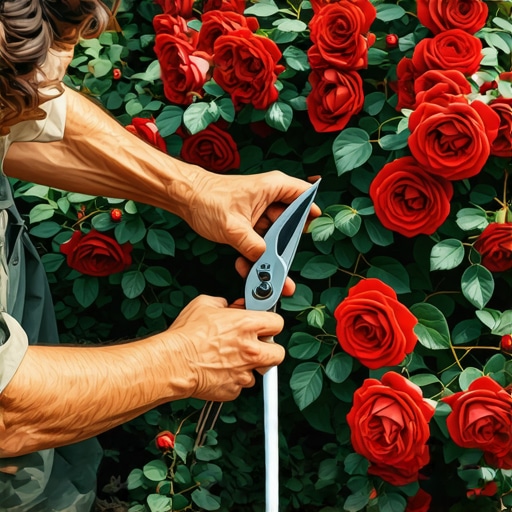
The Foundation of the 2026 Rose Season
I always drill into my new crew members: if you don’t fix the soil grading first, every plant you put in the ground is just expensive compost. It is a lesson learned from twenty years in the dirt. You can buy the most expensive 2026 rose cultivars, but if your site prep is garbage, your pruning cuts won’t matter. Landscaping is not about aesthetics; it is about engineering biological success. We start with the soil because that is where the vascular system begins. If the roots are suffocating in compacted clay, the canes will be weak, and your 45-degree cuts will just be an autopsy of a dying plant. Stop thinking like a gardener and start thinking like a structural engineer. Your shears are your primary tool for managing the structural load of the plant. A rose bush is a living machine that requires precise calibration to handle the upcoming growing season.
Why the 45-Degree Angle Rule is Essential for Rose Health
The 45-degree angle rule in rose pruning is a mechanical requirement to divert moisture away from the latent bud and ensure rapid callus formation over the vascular cambium. By cutting at this specific pitch, you prevent water from pooling on the open wound, which significantly reduces the risk of fungal pathogens like Botrytis or black spot from colonizing the stem. It is about surface tension. Water must roll off. If it sits, it rots. The cut should be exactly 1/4 inch above an outward-facing bud. Too close and you kill the bud; too far and you leave a dead snag that becomes an entry point for borers. Precision is not optional.
“Pruning is more than just removing wood; it is a surgical intervention that redirects the plant’s hormonal energy from apical dominance to lateral branching.” – Horticultural Science Manual, 4th Edition
How much modified gravel do I need for a patio base?
To calculate the amount of modified gravel (2A or 2B) needed, multiply the square footage of your patio by the depth of the base (usually 4 to 6 inches for residential) and divide by 27 to get cubic yards. A standard 10×10 patio with a 6-inch base requires approximately 1.85 cubic yards of material. Factor in a 20% compaction rate. Do not skip the plate compactor. If the base isn’t solid, the stone will shift within two seasons.
What is the best time of year for a sod install?
The optimal window for a sod install is during the early spring or early autumn when soil temperatures are between 50 and 65 degrees Fahrenheit. This allows for rapid root expansion without the high-stress heat of summer. Avoid installing sod in the dead of winter or mid-July. If you must lay sod in summer, your irrigation schedule must be relentless, often requiring 1 inch of water daily for the first 14 days to prevent the seams from shrinking and the roots from desiccation.
The Microscopic Reality of the Pruning Cut
When you make a 45-degree cut, you are interacting with the xylem and phloem. These are the plant’s plumbing. A clean cut with sharp, bypass pruners ensures these channels remain open. Crushing the stem with dull blades or anvil pruners is a death sentence. It creates ragged tissue that the plant cannot easily wall off. In 2026, we are seeing more virulent strains of fungal infections, making the hygiene of your tools and the precision of your angles more critical than ever. We measure our success in the rate of compartmentalization. If the cut hasn’t started to callus within ten days, the plant’s immune system is lagging. This is often a sign of nutrient deficiency or poor yard cleanup practices from the previous fall.
Integrated Landscape Management: Pruning and Yard Cleanup
A proper yard cleanup is the first step in a professional landscaping program. You cannot prune effectively if the base of the plant is buried in moldy mulch or debris. We clear a 12-inch radius around the root flare of every rose bush before we even pull out the shears. This exposure allows us to inspect for crown gall and ensure the irrigation emitters are not buried. Sod install projects nearby should never encroach on the rose bed’s drainage zone. We often see hacks bury the root flare of roses when they lay new sod, leading to stem rot. Don’t let it happen. Keep the grass and the roses separate with a clean, spade-cut edge.
| Tool Type | Ideal Use Case | Required Maintenance |
|---|---|---|
| Bypass Pruners | Live wood, precise 45-degree cuts | Sharpen daily with whetstone |
| Anvil Pruners | Dead wood only; never use on roses | Discard if blade pits |
| Loppers | Canes over 1 inch in diameter | Check pivot bolt tension |
| Pruning Saw | Old, woody structural stems | Clean with 70% isopropyl alcohol |
“A retaining wall doesn’t fail because of the stone; it fails because of the water trapped behind it.” – Hardscape Engineering Axiom
The 2026 Rose Pruning Checklist
- Sterilize all blades with alcohol between every single bush to prevent disease spread.
- Identify the outward-facing bud to direct growth away from the center of the plant.
- Position the blade 1/4 inch above the bud at a 45-degree angle.
- Ensure the slope of the cut leads away from the bud.
- Remove any ‘dead, damaged, or diseased’ wood (the 3 Ds).
- Clear all clippings from the site; never compost diseased rose wood.
- Seal large cuts (over 1/2 inch) with a thin layer of wood glue if borers are prevalent in your region.
Irrigation Logic for Pruned Roses
After pruning, your irrigation needs change. The plant has less leaf surface, meaning it transpires less water. Over-watering a freshly pruned rose bush is a common mistake that leads to root rot. You want the soil to be moist but not saturated. We recommend a drip system with 0.5 GPH (gallons per hour) emitters. This delivers water directly to the root zone without wetting the foliage. Wet foliage is a playground for spores. If you just finished a sod install nearby, ensure the overspray from the turf sprinklers isn’t hitting your roses. The physics of water delivery is just as important as the chemistry of the fertilizer. Keep your landscaping zones distinct. Turf needs high nitrogen; roses need a balanced 10-12-12 NPK ratio with micronutrients like magnesium and sulfur for cane strength. Use a soil test to confirm your pH is between 6.0 and 6.5. Anything higher and your roses will suffer from iron chlorosis, making all your pruning work irrelevant.