
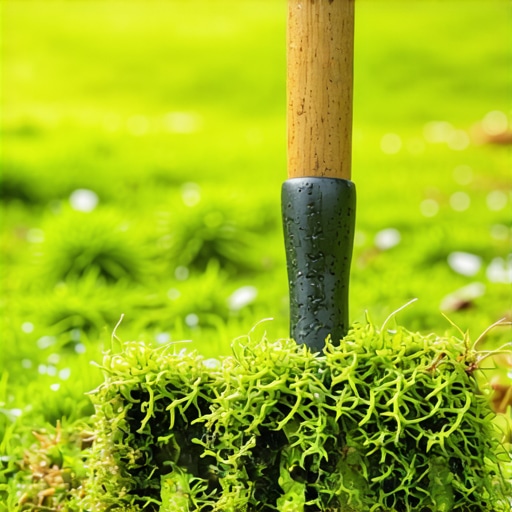
The Anatomy of a Moss Takeover on Northern Exposures
Moss thrives in north-facing lawns because these areas suffer from reduced sunlight, lower soil temperatures, and chronic moisture retention. Solving this requires more than a chemical spray; it demands mechanical aeration, pH adjustment to 6.5, and strategic irrigation management to eliminate the anaerobic conditions moss loves. I have spent two decades looking at these green carpets, and they are always a symptom, never the root cause. If you see moss, your soil is screaming for air and light. It is not a decorative choice by nature; it is a failure of the turf to compete. North-facing yards are the most difficult because the sun angle rarely hits the soil directly, especially in late autumn and early spring. This creates a micro-climate of persistent dampness that favors bryophytes over Poaceae. I recently went to a site where a homeowner had spent thousands on sod install projects every spring, only to have the moss swallow it by winter. He was trying to outspend a biological reality. You cannot buy your way out of a shade and drainage problem with new grass. You have to change the environment first.
The Chemical Nightmare: A Cautionary Tale
A homeowner called me in a panic after they completely torched their front lawn by applying three times the recommended dose of iron sulfate moss killer. They thought if a little bit worked, a lot would be better. The result was a blackened, acidic wasteland where even the moss died, but the soil was so poisoned that nothing else could grow for a full season. This is what happens when you treat the symptom instead of the system. We had to excavate the top three inches of soil, perform a massive lime application to neutralize the acidity, and then start over with a proper soil grading plan. It was a $12,000 mistake that could have been avoided with a $20 soil test. Do not dump chemicals on your yard hoping for a miracle. Understand the chemistry of your dirt first. Moss loves a pH below 5.5. Most turf grasses need 6.2 to 7.0. If you do not close that gap, the moss will win every single time.
“Moss is an opportunistic colonizer that signals poor drainage, low fertility, or high acidity rather than a primary cause of turf death.” – Oregon State University Extension Service
Why Moss Keeps Returning to Your North-Facing Property
Recurring moss growth is caused by a combination of high soil compaction and excessive moisture that stays trapped in the shade of the house. To fix this permanently, you must increase the soil’s percolation rate and reduce the humidity at the surface level. We use a penetrometer to measure soil resistance; if you are hitting over 300 PSI in the top four inches, your grass roots cannot breathe. That is where the moss moves in. It does not need deep roots. It just sits on the surface, soaking up the water that cannot drain through your compacted clay. This is especially true on the north side where the sun never gets a chance to bake the moisture out of the ground. Yard cleanup is not just about raking leaves; it is about removing the organic debris that traps moisture against the soil surface. If you have a layer of thatch thicker than half an inch, you are basically building a nursery for moss spores.
| Condition | Moss Preference | Turf Grass Requirement |
|---|---|---|
| Sunlight | Low (less than 2 hours) | High (4 to 6+ hours) |
| Soil pH | Acidic (4.5 – 5.5) | Neutral (6.2 – 7.0) |
| Drainage | Poor/Saturated | Well-Drained |
| Soil Structure | Compacted/Anaerobic | Aerated/Porous |
How much irrigation do I need for a north-facing lawn?
North-facing lawns require 50% less irrigation than south-facing lawns due to the lack of evapotranspiration caused by direct sunlight. Over-watering is the number one reason moss takes over these areas. Most homeowners set their irrigation controllers to run the same amount of time for every zone. This is a massive mistake. The north side stays wet. If you keep adding water, you are literally drowning your grass and feeding the moss. You should only water when the soil is dry to the touch at a depth of two inches. Use a soil probe. If the probe comes up muddy, turn the water off. You want deep, infrequent watering cycles to force grass roots to grow down toward the water table. Shallow watering keeps the surface wet, which is exactly where moss lives.
Is sod install the best way to fix a mossy area?
A sod install will fail within twelve months if you do not address the underlying shade and drainage issues that caused the moss to grow in the first place. You are essentially laying a fresh carpet over a moldy floor. Before you even think about sod, you need to thin out the canopy of any overhanging trees to let more UV light reach the ground. If you cannot get at least four hours of dappled sunlight, you should not be planting grass. You should be looking at shade-tolerant groundcovers or a hardscape solution. If you insist on grass, you must use a fescue blend specifically rated for high shade, and you must core aerate the area to a depth of four inches before the sod goes down. Do not skip this. It will rot.
The Professional Remediation Checklist
- Test soil pH and adjust with pelletized lime to reach a 6.5 target.
- Perform core aeration to a depth of 4 inches to relieve compaction.
- Apply a top-dressing of 70/30 masonry sand and compost mix to improve drainage.
- Overseed with a creeping red fescue or a high-quality shade-tolerant mix.
- Adjust irrigation schedules to reduce moisture on the north side by 50 percent.
- Prune tree limbs up to 10 feet to increase airflow and light penetration.
“A retaining wall or a graded slope doesn’t fail because of the stone; it fails because of the water trapped behind it, and lawns are no different; hydrostatic pressure in the soil kills roots.” – Hardscape Engineering Axiom
Execution: The Foreman’s Method for Permanent Removal
Start by physically removing the moss with a power rake or a heavy-duty thatch rake. You need to get down to the bare soil. Once the moss is out, do not just throw seed down. You need to fix the grade. If water pools in that north-facing corner, you have a drainage problem that needs a French drain or a catch basin. Use 4-inch perforated pipe wrapped in filter fabric, buried in a trench filled with 3/4-inch clean crushed stone. This moves the water away from the root zone. After the drainage is set, apply your lime. Most soils in the northern hemisphere are naturally acidic, and moss loves it. You need to bring that pH up to make the nutrients in the soil available to the grass. Nitrogen, phosphorus, and potassium are chemically locked in the soil when the pH is too low. You can fertilize all day, but if the pH is 5.0, the grass cannot eat. It is like trying to eat through a straw that is pinched shut. Once the chemistry is right, then and only then do you seed. Use a starter fertilizer with a high phosphorus count to encourage root development. Cover with a light layer of peat moss to retain just enough moisture for germination, but do not let it get soggy. This is a game of inches and precise timing. Do it right, or do it twice. [{“@context”: “https://schema.org”, “@type”: “HowTo”, “name”: “How to Remove Moss from North-Facing Lawns”, “step”: [{“@type”: “HowToStep”, “text”: “Test soil pH and apply lime to reach 6.5.”}, {“@type”: “HowToStep”, “text”: “Power rake the area to remove existing moss bodies.”}, {“@type”: “HowToStep”, “text”: “Perform core aeration to improve soil oxygen levels.”}, {“@type”: “HowToStep”, “text”: “Adjust irrigation to reduce watering frequency on the north side.”}, {“@type”: “HowToStep”, “text”: “Overseed with shade-tolerant fescue mixes.”}]}]