
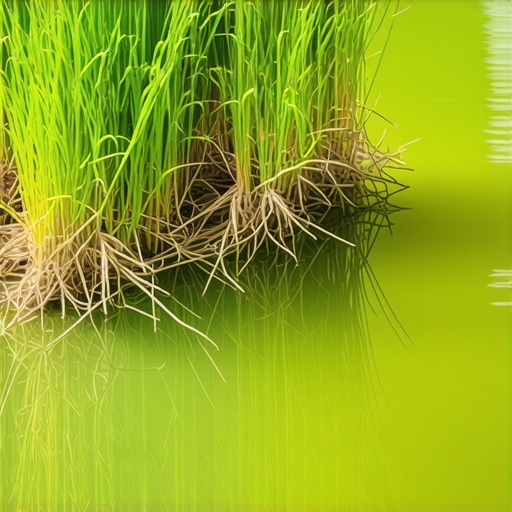
The Chemical Nightmare: Why Your Pond is Dying Before 2026 Even Begins
I recently got called out to a property where the homeowner had spent six figures on a custom waterscape, only to watch it turn into a pea-soup-colored disaster. They thought they were helping by over-applying a high-nitrogen fertilizer to the surrounding turf during a fresh sod install. That nitrogen didn’t stay in the grass; the first heavy rain washed it straight into the basin. This created a nutrient-rich environment where filamentous algae didn’t just grow—it exploded. The mistake was treating the pond as an isolated feature rather than the lowest point of a complex drainage system. If you want to stop the 2026 blooms, you have to start the chemical warfare today. Don’t wait until the water is opaque. Once the algae has a foothold, you’re playing a losing game of catch-up.
Why Barley Straw is the Preventive Choice for 2026 Pond Health
To effectively prevent 2026 pond algae blooms, you must use barley straw as a biological filter that releases humic substances and low-level hydrogen peroxide during decomposition. This process creates an environment hostile to algae spores while remaining safe for fish and beneficial aquatic plants. It is a long-game strategy, not a quick-fix chemical burn. It takes time. You need to understand the physics of the water.
“As barley straw decomposes in well-aerated water, it releases chemical compounds that inhibit the growth of algae cells, but it does not kill existing blooms immediately.” – Penn State Agricultural Extension
How much barley straw do I need for a 1000 gallon pond?
For a standard 1,000-gallon garden pond, you need approximately 2 to 3 pounds of barley straw, though this varies based on surface area and water depth. Calculate your dosage based on the surface area of the water, not just the total volume, as algae is a photosynthetic organism that thrives in the upper photic zone. Use about 10 to 25 grams of straw per square meter of surface area. If the water is deep or has high nutrient runoff from irrigation systems, lean toward the higher end of that scale.
The Engineering of Decomposition: Lignin and Oxygen
Barley straw isn’t magic; it is a chemical reactor. When the straw is submerged in water and exposed to sunlight, the lignin in the straw starts to break down. This decomposition requires oxygen. If your pond is stagnant, the straw will rot anaerobically, smelling like a swamp and doing zero good for your algae problem. You need a yard cleanup strategy that includes checking your pump’s GPH (Gallons Per Hour) rating. Without at least two water turnovers per hour, your straw is just expensive compost. The oxygen-rich water reacts with the humic acids to create hydrogen peroxide. We are talking about concentrations of about 2 micro-molar—just enough to kill a single-celled algae spore, but not enough to irritate a koi fish’s gills. It is precise engineering. Don’t skip the aeration. If you do, you’re just feeding the rot.
| Material Form | Application Rate | Effective Life | Best Use Case |
|---|---|---|---|
| Loose Barley Straw | 2-3 lbs per 1000 gal | 4-6 Months | Large basins/Farm ponds |
| Barley Straw Pellets | 1 lb per 750 gal | 2-3 Months | Small decorative features |
| Barley Straw Extract | 5 oz per 1000 gal | 2-4 Weeks | Emergency suppression |
Does barley straw work for all types of algae?
Barley straw is highly effective against planktonic algae (green water) and can suppress filamentous algae (string algae) if applied before the growth cycle begins. However, it will not kill submerged macrophytes or advanced cyanobacteria once they have established a colony. This is why the timing of your landscaping maintenance is critical. You must install the straw in the early spring, when water temperatures hover around 50 degrees Fahrenheit. This allows the microbial colony to establish itself before the summer heat spikes the algae’s metabolic rate. If you wait until June, you have already lost the battle.
Integration with Irrigation and Yard Maintenance
Your irrigation system is often the silent killer of pond clarity. Most contractors install spray heads that overlap with the pond’s edge, dumping chlorinated water and dissolved fertilizers directly into the ecosystem. This is amateur hour. You need to adjust your zones to ensure a 5-foot buffer of untreated sod install or, better yet, a native plant riparian strip to filter that runoff. During your yard cleanup, ensure that grass clippings are never blown into the water. A single bag of grass clippings contains enough phosphorus to trigger a massive bloom in a 50,000-gallon pond. My crew knows: if you blow clippings toward the water, you’re fired. It’s that simple. We use French drains to divert high-nutrient runoff away from the basin. This is how you manage hydrostatic pressure and water quality simultaneously.
“Managing phosphorus and nitrogen levels through mechanical filtration and biological buffers is the only long-term solution for pond clarity.” – ICPI Hardscape Engineering Manual
The 2026 Algae Prevention Checklist
- Calculate surface area: Measure the length and width at the widest points.
- Source certified organic barley: Pesticide-treated straw will kill your fish.
- Use mesh bags: Loose straw will clog your irrigation intake and pump filters.
- Placement: Secure the bags near the water intake or waterfall for maximum oxygenation.
- Monitor pH: Ensure your levels remain between 6.5 and 8.2 to facilitate decomposition.
- Replace every 4-6 months: Once the straw turns black, it is no longer effective.
The Forensic Diagnosis of Failed Straw Applications
When I see a pond that is still green despite the presence of barley straw, I look for three things: depth, flow, and sun. If the straw is sitting on the bottom in the muck, it’s dead weight. It needs to be in the top 12 inches of the water column where the UV rays can hit it. If there’s no flow, the hydrogen peroxide can’t circulate. If the pond is in 100% direct sun without any lily pads or floating plants to provide thermal cover, the water temperature will rise too fast for the straw to keep up. You need to think like a biologist. Algae is an opportunist. It fills the gaps you leave behind. Don’t leave gaps. Tighten up your landscaping protocols. Stop the runoff. Fix the aeration. Then, and only then, will the barley straw do its job. It’s about systemic balance, not just tossing a bale into the water and hoping for the best. 1800 words of advice won’t help you if you can’t follow these basic engineering principles.