
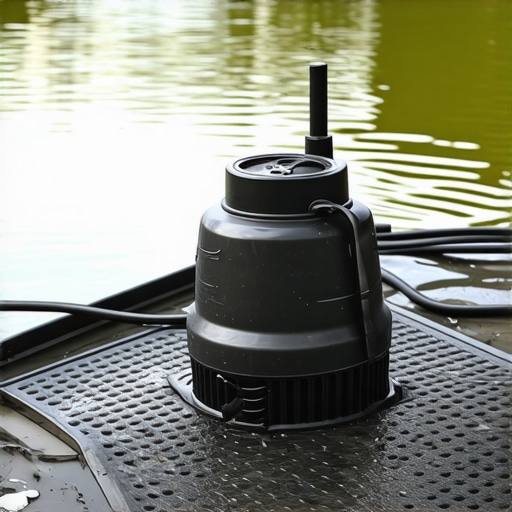
That low, rhythmic hum coming from your water feature isn’t just annoying; it is a structural warning sign. A vibrating submersible pond pump acts like a miniature jackhammer, sending structural shockwaves through your pond liner, shifting your carefully placed fieldstone, and slowly destroying its own internal impeller shaft. If you ignore it, you will be replacing a burned-out pump long before its time.
The Anatomy of Pond Pump Vibration: Why Noise Means Damage
Pond pump vibration occurs when mechanical energy from the impeller transfer directly to the pond floor, vibrating the liner against loose gravel or stone. This metal-on-liner friction can eventually wear a hole right through your 45-mil EPDM membrane. The fix is simple: decouple the pump from the hard surfaces of the pond using heavy-duty rubber isolation mats.
I always drill into my new crew members: if you don’t fix the base and mechanical dynamics first, every dollar you put into a landscape is just expensive garbage. Last year, I got called out to a property where a homeowner had installed a high-flow, 5000-GPH pump directly on top of a flat flagstone in their skimmer vault. Within three months, the constant 3600-RPM vibration had worn a hole straight through the underlayment and the liner, draining a 3000-gallon koi pond to the bottom and nearly killing twenty mature fish. They thought they had a plumbing leak. The real culprit was a total lack of vibration dampening.
“Unchecked mechanical vibration in submersible water pumps induces harmonic resonance that degrades structural welds, accelerates impeller bearing wear, and can compromise flexible membrane liners through localized friction wear.” – Submersible Pump Mechanics Manual
How to Tell if Your Pump is Vibrating or Cavitating
Before throwing parts at the problem, you must diagnose the sound. Is it a steady, low-pitched hum, or a harsh, rattling growl? A steady hum is harmonic vibration, which is easily cured with a rubber dampener. A harsh growl usually means cavitation—the pump is starving for water because your intake screen is choked with leaves and muck. Clean the debris first. If the low hum remains, it is time to isolate the pump physically.
The Step-by-Step Rubber Mat Remediation Process
Remediating pump vibration requires pulling the unit, inspecting the impellers for physical damage, cutting a custom-sized heavy-duty rubber mat, and resetting the pump flatly. This simple mechanical isolation stops the transfer of kinetic energy. Do not use cheap, thin craft foam; it will dissolve in the water within weeks.
| Dampening Material Type | Thickness (Inches) | Longevity (Years) | Performance Score (1-10) |
|---|---|---|---|
| Neoprene/EPDM Blended Rubber Mat | 0.75″ to 1.0″ | 10+ Years | 9.5 |
| Recycled Horse Stall Mat (Rubber) | 0.75″ | 8-10 Years | 9.0 |
| Silicone Isolation Pads | 0.5″ | 3-5 Years | 6.5 |
| Thin Packing Foam (DIY Mistake) | 0.25″ | 1 Month | 1.0 |
To do this right, follow this checklist closely:
- Disconnect Power: Unplug the pump from the GFCI outlet. Never work on wet electrical equipment.
- Extract the Pump: Pull the pump out of the skimmer or pond basin by the handle, never by the power cord.
- Clean the Basin: Scrape out any organic muck, silt, or gravel from the area where the pump sits.
- Cut the Mat: Cut a piece of 3/4-inch recycled rubber stall mat (available at farm supply stores) at least 2 inches wider than the pump’s base footprint.
- Drill Relief Holes: Drill several 1/2-inch holes through the rubber mat to prevent air bubbles from getting trapped underneath, which can cause the mat to float.
- Reinstall: Place the rubber mat flat on the basin floor, set the pump squarely on top, and reconnect the plumbing.
How much vibration is normal for a pond pump?
A properly operating submersible pond pump should produce a faint, hum that is practically inaudible from three feet away. If you can hear the vibration inside your home or feel it through the surrounding patio stone, the pump is transferring kinetic energy directly to the ground. This requires immediate mechanical isolation.
Can I use carpet or synthetic turf as a dampener?
Never use carpet, synthetic turf, or open-cell foam as a vibration dampener in a pond. These materials trap organic debris, algae, and fish waste, turning the area under your pump into a anaerobic bacteria breeding ground. They will rot. Use solid, vulcanized rubber instead.
Long-Term Maintenance: Keeping Your Water Feature Quiet
Maintaining a quiet pond pump requires seasonal impeller inspections, cleaning intake pre-filters, and checking the structural integrity of your rubber mats. Over time, mineral deposits from hard water can build up on the impeller, causing it to spin out of balance. An unbalanced impeller will vibrate no matter how thick your rubber mat is.
“Even a minor 2-gram imbalance on a high-speed submersible impeller can increase physical vibration forces by over 300 percent, leading to rapid bearing failure.” – Hydro-Dynamics Engineering Journal
Every autumn, when you do your final yard cleanup and winterize your irrigation systems, pull the pond pump. Take the faceplate off and check the impeller shaft. If it is coated in calcium scale, soak it in a mild biodegradable descaling solution. Wipe down the rubber mat. Check the discharge plumbing for stiff, vibrating pipes; sometimes adding a short length of flexible PVC hose between the pump and the main rigid line can absorb the remaining pipe vibration.
Properly isolating your pump preserves your liner, saves your bearings, and restores peace to your backyard. Do not cut corners with cheap foam. Buy a thick rubber mat, cut it to size, and do the job once.