
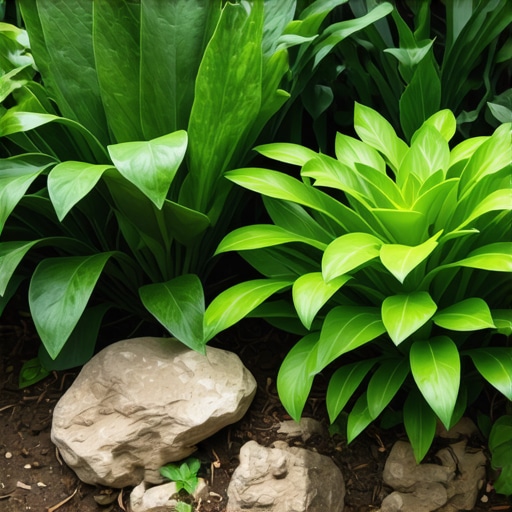
The Anatomy of a Dying Corner: A Forensic Autopsy
Walk into any backyard and you will likely find it: the ‘dead zone’ where the turf is thin, the soil smells like rotten eggs, and a layer of slick green moss has claimed the territory. To fix a soggy, low-light corner, you must first address soil compaction and grading before installing water-tolerant species like Cinnamon Fern, Sweetspire, or River Birch. Success depends on selecting plants adapted to anaerobic soil conditions and specific USDA Hardiness Zones. It is a failure of engineering, not just a lack of sunlight. I always drill into my new crew members: if you don’t fix the soil grading first, every plant you put in the ground is just expensive compost. I have seen guys throw $5,000 worth of nursery stock into a hole that has the drainage capacity of a concrete bowl. Within three months, the root flares are rotted, and the homeowner is left with a muddy pit. We do not plant until we understand the hydrology of the site. If the bulk density of your soil is too high, those roots cannot breathe.
“A retaining wall doesn’t fail because of the stone; it fails because of the water trapped behind it.” – Hardscape Engineering Axiom
The Physics of Saturated Shade
When you have low light combined with standing water, you are dealing with a microscopic oxygen crisis. Most plants require pore space in the soil to be filled with 50% water and 50% air. In a soggy corner, that ratio shifts to nearly 100% water. This leads to anaerobic respiration, which produces toxic byproducts like hydrogen sulfide. You can smell it. It is that swampy, metallic scent. If you are planning a yard cleanup or landscaping overhaul, you have to start by testing the percolation rate. Dig a hole 12 inches deep, fill it with water, and see how long it takes to drain. If it is still full after four hours, you have a drainage emergency, not a planting opportunity. You might need to install a French drain or a dry creek bed using #57 clean stone before you even think about sod install. Do not skip the 811 call before you dig. It is the law.
How do I fix a muddy corner in my yard?
To fix a muddy corner, you must implement subsurface drainage or soil amendment techniques like incorporating expanded shale to increase macropore space. Surface grading should move water away from structures at a minimum 2% slope. If the soil is heavy clay, tilling in organic matter alone will not work; it creates a ‘bathtub effect’ where water sits in the amended hole. You need a structural solution. Check your irrigation system for leaks or over-saturation in these low-velocity zones. Sometimes the fix is as simple as adjusting a zone timer or swapping out a high-flow nozzle for a pressure-compensating head. Proper landscaping requires balancing the hydro-regime of the entire property.
| Itea virginica (Sweetspire) | Part Shade to Shade | Fibrous/Spreading | 3-5 ft | 5.0 – 6.5 |
| Osmunda cinnamomea (Cinnamon Fern) | Full Shade | Rhizomatous | 2-4 ft | 4.5 – 6.0 |
| Cephalanthus occidentalis (Buttonbush) | Part Shade | Deep Woody | 6-12 ft | 6.0 – 7.5 |
| Carex pennsylvanica (Sedge) | Shade | Clumping/Fibrous | 6-12 in | 5.5 – 7.0 |
What plants survive standing water and shade?
Plants that survive standing water and shade possess aerenchyma, specialized tissues that allow for internal gas exchange between the shoots and the submerged roots. Species like Ilex glabra (Inkberry Holly) and Lobelia siphilitica (Great Blue Lobelia) are built for these hypoxic environments. Avoid the ‘big box’ impulse to buy generic hydrangeas; most will fail if their ‘feet’ stay wet. Instead, look for native riparian species. These plants evolved in floodplains and can handle the fluctuations of a wet backyard. When planting, never bury the root flare. I see this mistake daily. If you hide the flare under a mulch volcano, you are suffocating the tree’s primary gas-exchange site. Keep mulch two inches away from the trunk. Use hardwood mulch, not that dyed recycled pallet junk.
“Soil compaction is the single most overlooked factor in urban plant mortality, reducing infiltration rates by up to 90%.” – Penn State Agricultural Extension
The Step-by-Step Remediation Checklist
- Analyze the Grade: Use a transit level to find the low spots and ensure water moves at 1 inch of drop per 10 feet.
- Decompact the Subgrade: Use a broadfork or mechanical aerator to break up the hardpan at least 8 inches deep.
- Incorporate Mineral Amendments: Add coarse sand or expanded shale to heavy clay—never just peat moss.
- Select Site-Specific Cultivars: Choose plants based on the USDA Hardiness Zone and local soil pH.
- Install Irrigation Management: Use drip lines for the wet zone to prevent further saturation from overhead spray.
- Monitor for 12 Months: Watch the area during a heavy rain event (1 inch+ per hour) to verify the drainage holds up.
It will rot. That is what happens when you ignore the biology of the root zone. You can spend $20,000 on fancy stonework and sod install, but if the water has nowhere to go, your yard will revert to a bog. A professional yard cleanup should include the removal of invasive species like English Ivy, which can hide drainage issues under a carpet of green. Once the site is cleared, look at the soil color. Gray or mottled blue soil indicates ‘gleying,’ a sure sign of long-term saturation. If you see this, you are in the forensic autopsy phase of the project. Fix the water, then fix the plants. There are no shortcuts in soil science.