
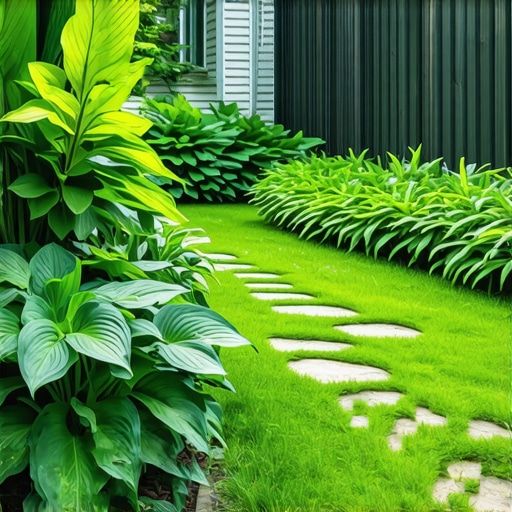
The Architectural Challenge of Shady Side Yards
Choosing the best plants for shady side yards involves identifying species like Hellebores, Hostas, and Japanese Forest Grass that tolerate low photosynthetic active radiation (PAR). These plants must be paired with soil amendments and proper grading to survive the unique environmental stressors of narrow, shaded corridors. I always drill into my new crew members: if you don’t fix the soil grading first, every plant you put in the ground is just expensive compost. Most homeowners see a bare, muddy strip on the side of their house and think they just need a shade-tolerant groundcover. They are wrong. Usually, the issue is a combination of 100 percent soil compaction from construction traffic, poor effluent drainage from the gutters, and a complete lack of airflow. I’ve seen $15,000 worth of Japanese Maples and high-end ferns turn into grey mush in three months because the contractor didn’t account for the hydrostatic pressure coming off the neighbor’s elevated lot. Landscaping in a side yard is not about decoration; it is about managing water and light physics in a confined space.
The Science of Shade and Soil Microbiology
Shade is not a uniform lack of light but a complex gradient that affects the metabolic rate of every organism in the soil. Dry shade occurs when large canopy trees or house eaves block rainfall, while their roots aggressively scavenge for any remaining moisture in the soil.
“Plants grown in shade have a lower compensation point, meaning they require less light to maintain a positive carbon balance than sun-loving species.” – University of California Division of Agriculture and Natural Resources
This metabolic reality means shade plants grow slower and recover from stress less effectively. If you scalp them during a yard cleanup or mess up the irrigation timing, they don’t have the energy reserves to bounce back. You have to understand the bulk density of your soil. In most side yards, the soil is so packed that the roots cannot penetrate more than two inches. I use a penetrometer to check this. If I can’t push a steel rod into the ground with 200 PSI of force, your plants are going to suffocate. We use core aeration or deep tilling with expanded shale to break that up before a single root hits the dirt.
How do I fix poor drainage in a shady side yard?
To fix poor drainage in a shady side yard, you must establish a two percent minimum slope away from the foundation and install a French drain or dry creek bed if the area remains saturated. Proper landscaping requires diverting gutter runoff via underground 4 inch PVC piping rather than letting it pool near plant root zones. Don’t skip the transit level. You can’t eyeball a one percent grade. If the water sits, the roots rot. It is that simple.
Hardy Plant Selections for the Shadow Zone
Selecting the right cultivars requires looking at the USDA hardiness zones and the specific moisture profile of the site. For deep shade where the sun never hits, you need plants that have evolved for the forest floor. Helleborus orientalis (Lenten Rose) is a workhorse because its leathery leaves resist desiccation and it blooms when everything else is dormant. Heuchera (Coral Bells) offers various foliage colors without needing the sun to stay bright. However, if you buy the cheap varieties from a big-box store, expect them to die. They are often pushed with high-nitrogen fertilizers that make them look good on the shelf but leave them with a weak cellular structure. We source from local nurseries where the plants are hardened off to local conditions. Sedge (Carex) is another elite choice for these areas, especially if you want a grass-like look without the high maintenance of sod install projects that often fail in the dark.
Does sod grow in full shade?
No sod install will thrive in total shade, as even shade-tolerant varieties like Fine Fescue or St. Augustine require at least 4 hours of filtered sunlight to maintain photosynthesis. If your side yard receives zero direct sun, you should pivot to shade-tolerant perennials, moss, or decorative stone aggregates rather than attempting to maintain a failing lawn. Turf is a high-energy plant. It needs fuel. No light means no fuel. Don’t waste your money on ‘Shade Mix’ seed if you are under a dense oak canopy.
The Technical Installation Process
When we start a yard cleanup and install phase, we follow a strict engineering protocol. We excavate to a depth of 8 inches, mix in 3 inches of organic leaf compost, and check the pH. Most shade plants prefer a slightly acidic environment, around 6.0 to 6.5.
“In narrow side yards, the ‘canyon effect’ can restrict airflow, leading to increased humidity and fungal pathogens like powdery mildew.” – Cornell Cooperative Extension
We space plants to allow for maximum gas exchange. If you crowd them, you get fungus. Use a 2 inch layer of double-shredded hardwood mulch, but keep it away from the root flare. Mulch volcanoes kill trees and shrubs by trapping moisture against the bark and inviting boring insects.
| Plant Name | Light Requirement | Moisture Level | Primary Benefit |
|---|---|---|---|
| Hellebore | Deep Shade | Moderate/Dry | Winter Interest |
| Japanese Forest Grass | Dappled Shade | High | Erosion Control |
| Tiarella | Partial Shade | Moderate | Pollinator Support |
| Oakleaf Hydrangea | Part Sun/Shade | Consistent | Structural Height |
- Perform a percolation test: Dig a 12-inch hole, fill with water, and ensure it drains within 4 hours.
- Call 811 before digging: Side yards are primary corridors for gas and water lines.
- Verify the soil pH: Adjust with sulfur or lime before planting.
- Install irrigation: Use Netafim drip tubing rather than overhead sprays to prevent leaf spot.
- Check the root flare: Ensure the topmost root is at or slightly above the soil surface.
Irrigation and Long-Term Maintenance
Watering in the shade is a different beast than watering in the sun. The evaporation rate is significantly lower. If you run your irrigation on the same schedule as your front lawn, you will drown your side yard. We use smart controllers with soil moisture sensors. You want deep, infrequent watering. This forces the roots to grow downward into the cooler, moister subsoil. Shallow watering creates weak plants. During the first year, check the soil moisture with your finger. If it feels damp two inches down, don’t water. If it is dry, soak it. Monitor for pests like slugs and snails, which thrive in the damp, dark microclimate of a side yard. Diatomaceous earth or copper tape can help, but the best defense is proper spacing and airflow. Your landscape is a living system. Treat it like one. Get the engineering right, and the biology will follow. Build it wrong, and you are just throwing money into a hole in the ground.