
The Best Way to Handle Heavy Snow Removal on Steep Lampe Driveways
Winter in the Ozarks is a season of striking contrasts. While the frost-covered bluffs overlooking Table Rock Lake in Lampe offer breathtaking views, the reality of managing a “mountain-side” property becomes a daunting challenge when the clouds turn gray. For homeowners in Lampe, Reeds Spring, and Branson West, a heavy winter storm – often dropping 12 to 15 inches of wet, heavy snow – isn’t just an inconvenience; it is a significant safety hazard. Navigating a steep, winding driveway that has been transformed into a sheet of ice requires more than just a shovel and good intentions. It requires a technical understanding of the terrain.
I am Luis Romero, and throughout my career in landscape construction and hardscaping, I have seen firsthand how the geography of the Ozarks dictates the success or failure of winter maintenance. At sharper edge landscaping, we approach snow removal not as a chore, but as an engineering problem. Managing heavy snow on a steep incline requires specialized equipment, precise timing, and a strategy that protects both your property and your person. Before the next “Big One” hits, it is essential to understand how How to Build a Branson Rock Wall That Actually Handles Heavy Rain relates to your winter safety, as the same drainage principles that protect your soil also prevent your driveway from becoming a dangerous luge track.
Why Steep Driveways in the Ozarks Require a Specialized Approach
The physics of snow removal changes the moment an incline is introduced. On a flat surface, snow is a weight to be moved. On a steep Lampe driveway, snow is a lubricant that reduces friction to near-zero levels. When you have a 12% or 15% grade – common in the lakeside communities of Reeds Spring and Branson West – gravity becomes your primary adversary. Standard landscaping services that focus on flat-land techniques often fail here because they do not account for the “slide factor.”
Traction is the most critical element. Whether it is foot traffic or a vehicle, the downward force of gravity on a slope constantly tries to overcome the grip of your tires or boots. When 15 inches of snow is compressed, it creates a slick interface. This is why maintaining a sharp lawn and clear driveway borders is so important; any organic debris left over from the fall can trap moisture, creating hidden “ice pockets” beneath the snow. High-end landscaping isn’t just about the aesthetic of a sharp lawns finish; it’s about the structural integrity of the transition between your driveway and your landscape. Without a professional approach, a simple attempt to clear the drive can result in equipment sliding off the embankment, leading to costly property damage or injury.
Pre-Winter Preparation: The Foundation of Snow Safety
The secret to effective snow removal on steep inclines actually begins in the spring and summer. The way your property is graded and the quality of your hardscaping determine where meltwater goes. In the Ozarks, we often deal with “freeze-thaw” cycles where snow melts during the day and refreezes at night. If your driveway lacks proper drainage, that meltwater will pool and turn into black ice, making even a light dusting of snow impassable.
This is why we emphasize that hardscaping and landscaping are year-round considerations. A well-designed retaining wall or a strategic drainage system can divert water away from the driving surface. If you’ve ever wondered Why Reeds Spring Hardscaping Projects Fail Without Proper Drainage, winter provides the most brutal answer. When water gets behind a wall or under a paver driveway and freezes, it expands, causing “heave.” This creates uneven surfaces that make plowing or snowblowing nearly impossible without catching an edge. At sharper edge landscaping, we ensure that the foundation of your driveway is prepared to handle the thermal expansion and contraction unique to our Missouri climate.
Before the first snowflake falls, homeowners should:
- Mark driveway edges with high-visibility stakes (essential for curved Ozark drives).
- Clear all debris from drainage grates and culverts.
- Apply a pre-emergent brine if a storm is forecasted, which prevents the snow from bonding to the pavement.
Professional Equipment vs. DIY: What Works on an Incline?
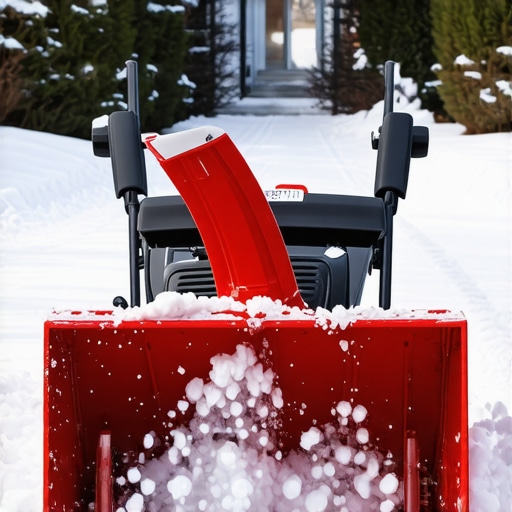
When the snow reaches double digits in depth, the average big-box store snowblower will likely struggle on a steep Lampe incline. Most residential units lack the weight and the engine torque to climb a grade while simultaneously throwing heavy, wet snow. Furthermore, using a standard snowblower on a slope can be dangerous. The industry-standard safety technique for steep paths is to clear across the slope rather than up and down. This prevents the machine from slipping backward onto the operator or running away down the hill.
For long, winding driveways in Branson West and Reeds Spring, professional-grade plows are often the only viable solution. At sharper edge landscaping, we utilize heavy-duty vehicles equipped with Western snowplows and, crucially, specialized tire chains and weighted ballasts. The weight is the key; without enough down-force, a plow will simply “ride up” over the snow rather than scraping the surface clean.
There is a trend in DIY circles to use “triangular racks” or “angle irons” attached to ATVs for plowing. While these might work on a flat suburban lot, I strongly caution against using them on steep Lampe inclines. These light-duty setups lack the hydraulic down-pressure needed to clear 15 inches of heavy Ozark snow and can easily cause the vehicle to jackknife on an icy curve. Professional lawncare and snow removal experts use equipment specifically calibrated for the local topography, ensuring the job is done without destroying your sharp lawn edges or scuffing your hardscaping.
Step-by-Step Guide to Clearing a Steep Driveway Safely
If you are tackling the removal yourself, or if you want to know what to expect from professional lawn care services, follow this strategic “Sharp Edge” technique:
- The Pre-Treatment: Before the storm, apply a liquid brine or a granular rock salt mixed with sand. The sand provides immediate grit for traction, while the salt lowers the freezing point of water.
- The Top-Down Pass: Always start clearing from the highest point of the driveway. If you start at the bottom, you risk getting stuck as you try to push uphill. By starting at the top, you are working with gravity, and you ensure that you always have a cleared, treated surface behind you for traction.
- The First Cut: Make a single pass down the middle to create a “relief” path. This allows subsequent passes to be pushed into the open space, reducing the load on the equipment.
- Maintaining the Borders: Use the sharp edge landscaping method of clearing slightly wider than the driveway itself. This prevents “snow creep,” where the melting banks encroach on the driving surface and refreeze. It’s a similar concept to How to Lay Sod on a Slope Without It Sliding – you must create a stable “anchor” at the edges to manage the weight of the material.
- The Final Scrape: Once the bulk is moved, a final pass with a salt-spreader ensures that the remaining “skim” of snow melts away, leaving a bare, safe surface.
Long-Term Solutions: Beyond the Shovel
For homeowners who want to eliminate the stress of winter entirely, there are several high end landscaping solutions that can be integrated into your property. Landscape design services in the Reeds Spring and Branson West areas have evolved significantly to address our specific climate challenges.
Heated Driveway Systems: This is the gold standard for steep inclines. By installing electric or hydronic heating coils beneath the surface of the driveway, the pavement stays just above freezing, melting snow on contact. While the initial investment is higher, it eliminates the need for plowing and prevents salt damage to your concrete or pavers.
High-Friction Paver Installations: If a full heated system isn’t in the budget, we often recommend replacing slick poured concrete with permeable pavers or textured stone. These materials provide naturally higher “grip” for tires. When combined with proper sub-base engineering, these systems also handle drainage much better than solid slabs.
Re-Grading and Switchbacks: Sometimes, the original path of a driveway is simply too steep for safety. Our landscape design services can often re-route a driveway, adding subtle “switchbacks” or landing zones that break up the incline, making it much easier to manage during a 15-inch snow event.
Conclusion: Prioritizing Safety in Lampe
A steep driveway in Lampe is a beautiful architectural feature in the summer, but it is a liability in the winter if not managed correctly. Attempting to clear heavy snow without the right equipment or strategy can lead to more than just a sore back – it can lead to dangerous accidents. By focusing on long-term solutions, proper drainage, and professional-grade removal techniques, you can ensure your home remains accessible and safe all year long.
At sharper edge landscaping, we pride ourselves on providing the professional lawn care services and snow management expertise that Ozark homeowners depend on. Whether you need a one-time clearing after a massive storm or a complete landscape redesign to improve your property’s winter resilience, we are here to help. Don’t wait until you’re “snowed in” on the side of a hill. Contact us today for a consultation and keep your sharp lawns and driveways in peak condition. For more tips on maintaining your property’s edge, check out The Simple Trick for Keeping Sharp Lawn Edges in the Branson West Heat.