
The Physiological Collapse of Turfgrass under Thermal Stress
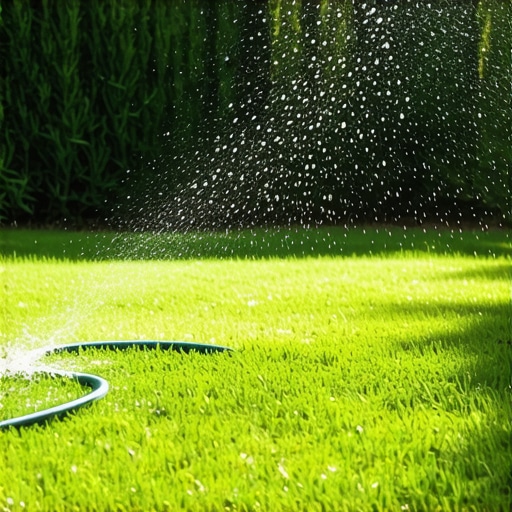
In a heatwave, you must provide 1.5 to 2 inches of water per week, delivered in deep, infrequent sessions to reach the 6-inch root zone. Daily light sprinkling encourages shallow roots and increases fungal risk. Target the hours between 3:00 AM and 8:00 AM to maximize absorption and minimize evaporation. Most homeowners see their lawn turning brown and assume it needs more ‘stuff’—more fertilizer, more seed, more chemicals. They are wrong. What they are seeing is either dormancy or a slow death caused by cellular dehydration. When the ambient temperature exceeds 90 degrees Fahrenheit, cool-season grasses like Kentucky Bluegrass or Tall Fescue enter a state of metabolic preservation. The stomata close to prevent water loss. Photosynthesis slows to a crawl. If you don’t manage the soil moisture correctly during this window, the plant won’t just go dormant: it will die. This isn’t about aesthetics. This is about protecting a multi-thousand-dollar asset from systemic failure.
The Forensic Autopsy: Why Your Lawn is Actually Dying
I recently got called out to a property where the homeowner had completely torched their front lawn. It was a chemical nightmare. They saw the grass yellowing in the July sun and panicked. They went to a big-box store, bought a high-nitrogen ‘summer’ fertilizer, and spread it at double the recommended rate. Then, they watered for ten minutes every evening. When I walked onto that site, the smell of ammonia and rot was unmistakable. The high nitrogen had forced the grass to try and grow when it should have been resting. Without enough water to flush those salts through the soil, the fertilizer essentially became a desiccant, sucking the remaining moisture out of the roots. The evening watering kept the blades wet just long enough for Brown Patch fungus to take hold in the humidity. The lawn wasn’t thirsty: it was being suffocated and poisoned simultaneously. We had to strip the entire top three inches of soil and start over. It was an expensive lesson in hubris. Don’t be that homeowner. Understand the chemistry of your yard before you intervene.
“Turfgrasses require about 1 inch of water per week to maintain growth. During heat stress, this requirement can double as the plant loses moisture through transpiration faster than roots can replace it.” – Penn State Extension Agronomy Manual
Soil Composition and Infiltration Rates
Your soil type dictates your irrigation strategy. If you have heavy clay, you cannot dump two inches of water at once. It won’t sink in. It will run off into the gutter, taking your topsoil with it. Conversely, sandy soil drains so fast the roots can’t grab the moisture. You have to know your infiltration rate. I tell my crew to use the screwdriver test. If you can’t push a standard screwdriver six inches into the ground, your soil is compacted and hydrophobic. You need to break that tension before the water can do its job. This is where yard cleanup and aeration become critical. Removing a thick thatch layer allows water to actually reach the soil surface rather than getting caught in a sponge of dead organic matter. [IMAGE_PLACEHOLDER]
| Soil Type | Intake Rate (Inches/Hour) | Total Weekly Target (Heatwave) |
|---|---|---|
| Heavy Red Clay | 0.1 to 0.2 | 1.5 Inches |
| Silty Loam | 0.5 to 0.7 | 1.8 Inches |
| Sandy Soil | 1.0 to 1.5 | 2.2 Inches |
How long should I water my lawn in 90 degree heat?
The duration depends on your irrigation head’s precipitation rate. A standard fixed spray head might put out 1.5 inches per hour, while an MP Rotator might only put out 0.4 inches. You must conduct a catch-can test. Place empty tuna cans across your lawn and run the zone for 15 minutes. Measure the depth. If you find half an inch in the can, you know you need to run that zone for 45 minutes to reach a 1.5-inch weekly goal. During a heatwave, split this into two sessions to prevent runoff. This is called the ‘Cycle and Soak’ method. Run it for 22 minutes, wait an hour, then run it for another 23 minutes. This allows the water to penetrate deep into the subsoil.
Is it better to water at night or in the morning?
Morning is the only acceptable time. Specifically between 3:00 AM and 8:00 AM. If you water mid-day, you lose up to 40 percent of the volume to evaporation before it hits the ground. If you water at night, the water sits on the blades for 8 to 10 hours. This creates a petri dish for fungal pathogens. You want the sun to dry the blades quickly while the roots drink the water from the soil. Professional irrigation systems are programmed for early morning for a reason. It is the peak of efficiency.
“Watering in the late evening increases the leaf wetness period, which directly correlates to the proliferation of fungal pathogens like Pythium blight and Brown Patch.” – Texas A&M AgriLife Extension
The Mechanics of New Sod and Heat
If you just did a sod install during a heatwave, you are in a race against time. New sod has no root system to pull moisture from the deep soil. It is entirely dependent on the moisture in the top inch. For the first 14 days, you must water new sod 3 to 4 times a day for short bursts. You are keeping the ‘mat’ wet. Once you can no longer pull the sod up by hand, you shift to the deep and infrequent schedule. Many hacks will tell you to just ‘keep it soaked.’ That’s wrong. You want the soil to be moist, not a swamp. Over-saturation leads to root rot, and once the roots rot, the sod is dead. There is no middle ground. You have to monitor the edges. The seams of the sod are the first to dry out and shrink. If you see the gaps widening, you are failing.
The Heatwave Survival Checklist
- Raise your mower deck to 4 inches to shade the soil and reduce evaporation.
- Stop all fertilization once temperatures stay above 85 degrees.
- Check your irrigation heads for clogs or broken seals.
- Use a soil probe to verify water is reaching the 6-inch mark.
- Avoid heavy foot traffic on dormant, brown grass.
- Wait for the morning to water. Every time.