
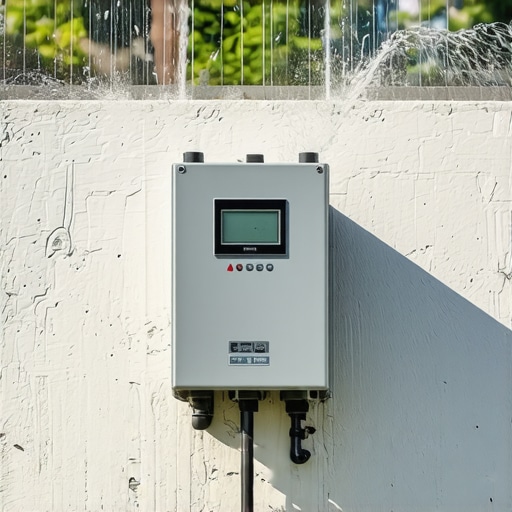
The Forensic Autopsy of a Resetting Irrigation Controller
You walk out to the garage and the irrigation display is flashing 12:00 or a generic ‘OFF’ message. You re-program it, and three days later, it is back to zero. Most homeowners and ‘mow-and-blow’ laborers assume the controller is defective and throw it in the trash. This is a massive waste of money. In 90 percent of cases, the controller is not the problem. It is the victim. The real culprit is usually hiding in the wet soil of your valve box or buried beneath your sod install where a shovel nicked a wire three months ago. When a solenoid fails or a wire is exposed to moisture, it creates a spike in amperage. The controller, sensing this thermal load, performs a hard reset to prevent its internal transformer from melting. It is a self-preservation mechanism.
Why does my sprinkler timer keep resetting?
The primary reason an irrigation controller resets is an electrical short or a faulty solenoid that exceeds the amperage limits of the station output. When the controller attempts to send 24 volts to a damaged valve, the resulting resistance drop triggers a safety reboot of the internal microprocessor to prevent circuit board combustion.
I recently got called out to a job where a homeowner had spent $30,000 on a high-end backyard patio and a fresh sod install. Within two weeks, the lawn was browning. The previous contractor had replaced the controller three times, blaming ‘bad hardware.’ I performed an autopsy on the wiring and found that during the yard cleanup and grading, they had stretched a multi-strand wire until the insulation cracked. Every time the soil reached a specific saturation level, the electricity jumped from the hot wire to the common wire. The controller did exactly what it was engineered to do: it shut down. If I had not found that short, the homeowner would have spent thousands more on dead plants and useless plastic boxes. Precision diagnostics matter more than parts swapping.
“Irrigation control systems rely on a consistent 24-volt AC signal; any deviation in resistance beyond the standard range of 20 to 60 ohms per zone indicates a failing solenoid or compromised field wiring.” – Texas A&M AgriLife Extension Service
How much voltage should an irrigation controller produce?
To diagnose this properly, you need a multimeter. Set it to VAC (Voltage Alternating Current). A healthy controller should output between 24 and 28 volts at the terminal strip when a zone is active. If you see 30+ volts or a fluctuating number, your internal transformer is likely failing. However, if the voltage at the controller is steady but the screen blanks out the moment the ‘Zone 1’ solenoid clicks, you have a field issue. The solenoid is drawing too much current. This is usually due to a ‘short to ground’ or an internal coil failure within the solenoid itself. Do not just buy a new timer. Buy a $20 solenoid and a pack of waterproof wire nuts.
The Impact of Improper Yard Cleanup on Irrigation Integrity
During a heavy yard cleanup, crews often use power rakes or heavy aerators. If your irrigation lines and wires are not buried to a minimum depth of 8 to 12 inches, these machines will scalp the insulation off your wires. You won’t notice it immediately. It takes weeks for the copper to oxidize and the resistance to climb. Once that oxidation reaches a critical point, the controller will start resetting. This is why I drill into my crew: if you are not checking the depth of the wire path before you start a renovation, you are just creating a ticking time bomb for the client.
Troubleshooting Electrical Resistance (Ohms)
| Symptom | Probable Electrical Cause | Required Action |
|---|---|---|
| Flashing 12:00 / Resetting | Short in Solenoid or Field Wire | Test Ohms at the terminal strip for each zone. |
| Blank Screen (No Power) | Blown Internal Fuse or Dead Transformer | Check 120V input and 24V output from transformer. |
| Specific Zone Won’t Fire | Open Circuit (Broken Wire) | Locate the break using a wire tracer or ‘thumper’. |
| Intermittent Reboots | Loose Common Wire Connection | Tighten all common wire lugs at the controller. |
How do I test my irrigation solenoid with a multimeter?
To test a solenoid, turn off the controller and disconnect the zone wire and the common wire from the terminal strip. Set your multimeter to the Ohms (Ω) setting. Touch the probes to the two wires. A functional solenoid should read between 20 and 60 ohms. If the reading is below 10 ohms, the solenoid is shorted and will cause the controller to reset. If the reading is ‘OL’ (Open Loop), the wire is severed somewhere between the garage and the valve box. This is basic civil engineering for the yard. You cannot guess. You have to measure.
“A retaining wall doesn’t fail because of the stone; it fails because of the water trapped behind it, and an irrigation system fails not because of the timer, but because of the environment attacking the electrical connections.” – Hardscape Engineering Axiom
Common Mistakes in Landscaping and Irrigation Repair
- Using standard wire nuts: Never use dry-location wire nuts in a valve box. They will corrode in six months. Use grease-filled, waterproof connectors only.
- Ignoring the Common Wire: If every zone is acting up, the problem is your common wire. Check the connection at the controller and the first valve in the series.
- Over-fusing: Never replace a 1-amp fuse with a 5-amp fuse to ‘stop the tripping.’ You will literally set the circuit board on fire.
- Shallow Wiring: When doing a sod install, ensure wires are trenched deeper than the sod cutter blades.
The Master Landscaper Checklist for Controller Stability
If your system is resetting, follow this rigorous protocol before calling a technician. First, visual inspection of the transformer. Is it hot to the touch? If so, it is overworked. Second, check the backup battery. Modern controllers use non-volatile memory, but older units rely on a 9V battery. If that battery is dead, a micro-flicker in your home’s power will wipe the programming. Third, inspect the valve box for standing water. If your solenoids are submerged, the water can bridge the electrical contacts at the wire nuts. This creates a low-resistance path that shorts the system. Don’t skip these steps. It will rot if you don’t fix the drainage. Every landscape is a system of hydrology and physics. Treat it that way.