
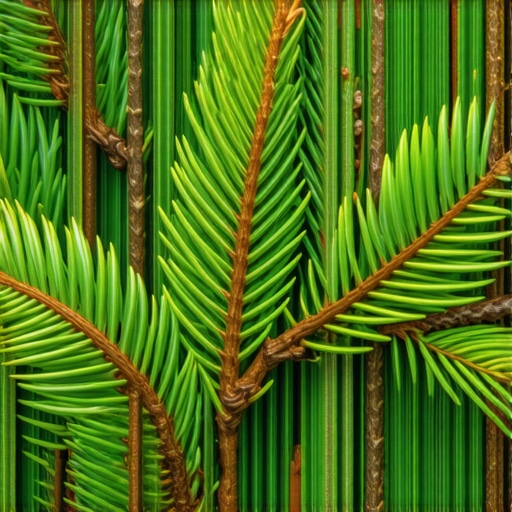
Diagnosing the Skeleton Inside Your Hedge
Browning inside a cedar hedge is usually natural senescence, but excessive needle drop indicates water stress, root rot, or spider mite infestation. Fixing irrigation schedules and ensuring proper soil grading during landscaping projects is the only way to prevent permanent foliage loss and maintain structural integrity. You peel back the outer green curtain of your Thuja hedge and see a skeletal, brown wasteland. It is dry. It is brittle. To the homeowner, it is a crisis. To a professional, it is a diagnostic map. Most of the time, you are not looking at a dying plant; you are looking at a plant trying to survive a landscaping error. I always drill into my new crew members: if you do not fix the soil grading first, every plant you put in the ground is just expensive compost. I once saw a $50,000 privacy screen rot in three months because the grader did not account for the clay shelf underneath. The water sits. The roots drown. The plant dies. Simple physics. [IMAGE_PLACEHOLDER]
Natural Flagging vs. Pathogenic Browning
Not every brown needle is a death sentence. Conifers like the Eastern White Cedar (Thuja occidentalis) shed their oldest, innermost needles every 2 to 3 years. This is natural flagging. The tree is simply reallocating resources to the outer growth that catches the most sunlight. If the browning is uniform, deep inside the branch structure, and occurs in late summer or fall, do not panic. However, if the browning is patchy, moving toward the tips, or accompanied by white spotting, you have a fight on your hands.
“Conifers require well-drained soils; chronic saturation leads to anaerobic conditions and rapid root-pathogen proliferation.” – Texas A&M AgriLife Extension
How much water do cedar hedges need?
Cedar hedges require approximately 1 inch of water per week delivered directly to the root zone via irrigation to maintain deep soil moisture. During a new sod install or a dry summer, the demand increases as the competition for surface-level moisture intensifies. If your soil feels like a sponge, you are over-watering. If it is hard as a brick, you are underwatering. There is no middle ground in the dirt. Most people rely on overhead sprinklers. That is a mistake. Overhead watering increases humidity within the tight foliage, inviting Passalora needle blight. Use drip lines. Keep the foliage dry.
The Hidden Enemy: Soil Grading and Hydrostatic Pressure
If your hedge is browning from the bottom up, your problem is likely below the surface. High-density landscaping often ignores the reality of hardpan clay. When you dig a trench for a hedge in heavy clay, you are essentially building a bathtub. Water pools at the bottom, the roots lose oxygen, and the plant suffocates. This is where hydrostatic pressure becomes your enemy.
“A retaining wall doesn’t fail because of the stone; it fails because of the water trapped behind it.” – Hardscape Engineering Axiom
The same logic applies to your root balls. If water cannot escape, the roots will rot. You must ensure the grade slopes away from the planting line. Dig a test hole. Fill it with water. If it is still there in four hours, your drainage is a failure. You need a French drain or a serious regrading before you plant another shrub.
Can a brown cedar hedge be saved?
A cedar hedge can be saved if the cambium layer is still green and the browning is limited to the interior foliage. Once the branch tips turn brittle and snap, that section of the hedge is dead and will not regrow from old wood. Check the tips. Scratch the bark with your thumbnail. If you see green, there is hope. If it is brown and dry, it is over. You need to focus on yard cleanup. Remove the dead debris from the interior of the plant. This debris traps moisture and fungus. Clean it out. Let the plant breathe.
| Condition | Visual Indicator | Required Action |
|---|---|---|
| Natural Flagging | Uniform interior browning | Routine yard cleanup |
| Spider Mites | Fine webbing, stippling | Miticide or neem oil |
| Phytophthora | Bottom-up browning, mushy roots | Improve drainage, fungicides |
| Winter Burn | One-side browning (windward) | Anti-desiccant spray |
The Spider Mite Test
Do not guess. Take a white piece of paper, hold it under a brown branch, and tap the branch sharply. If you see tiny specks moving, you have mites. These arachnids suck the life out of the needles. They thrive in hot, dry conditions. A heavy stream of water can knock them off, but a severe infestation requires a specialized miticide. Do not use generic insecticide; you will kill the predatory insects and make the mite problem worse. Precision matters.
The Root Flare: Stop Building Mulch Volcanoes
I see it every day. Homeowners pile mulch six inches deep against the trunk. This is a mulch volcano. It is a slow-motion guillotine. The bark at the base of the tree needs to stay dry. When you bury it in mulch, you keep it wet, which invites rot and girdling roots. The root flare, where the trunk widens at the base, must be visible. If you cannot see the flare, your landscaping crew failed you. Pull the mulch back. Give the tree some air. Don’t skip this. It is the difference between a hedge that lasts 5 years and one that lasts 50.
Checklist for Hedge Recovery
- Verify 811/Dig Safe markers before adjusting any underground irrigation lines.
- Perform a soil pH test; aim for a range of 6.0 to 7.0 for optimal nutrient uptake.
- Remove all dead interior needles to increase airflow and reduce fungal load.
- Apply a slow-release conifer fertilizer (30-10-10) only in early spring.
- Inspect the root flare and ensure no soil or mulch is touching the bark.
- Adjust irrigation to 1 inch of water per week, delivered at the soil level.
The Long-Term Forecast
Cedar hedges are not set-it-and-forget-it plants. They are living engineering projects. If you ignore the soil chemistry and the moisture levels, they will fail. It is that simple. Keep the interior clean, keep the roots drained, and watch the water. A brown interior is a warning. Listen to it.