
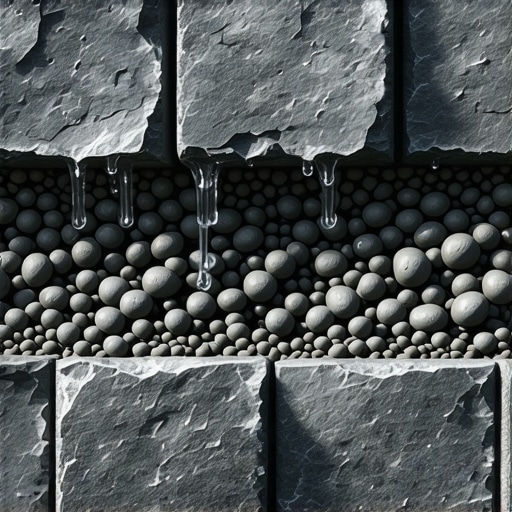
The Forensic Autopsy of a Failed Wall
I recently got called out to tear up a $30,000 patio and retaining wall system that was sinking and leaning like a drunk sailor because the previous contractor decided to save a few hundred bucks on materials. The homeowner saw the cracks first, then the bulge. When we got the excavator in there and peeled back the block, the problem was immediate: they had backfilled with the same heavy clay they dug out of the trench. That clay was a saturated, heavy mess that had nowhere to go but forward, pushing the entire wall into the yard. It was a textbook case of structural negligence. In this business, you don’t fight physics; you plan for it. If you don’t fix the drainage at the start, you’re just building a very expensive pile of debris. This is why we don’t just ‘stack rocks’ anymore.
The Critical Role of Hydrostatic Pressure in Wall Failure
Hydrostatic pressure is the force exerted by water at rest against a retaining wall, which can exponentially increase the lateral load beyond the wall’s design capacity. Using 3/4-inch clean angular gravel backfill creates a porous zone that allows water to fall vertically toward a drainage pipe, effectively neutralizing this pressure before it causes structural bulging or collapse.
Water is the enemy of every hardscape project. When soil gets wet, it expands. When it stays wet behind a wall, it exerts thousands of pounds of pressure. This is called hydrostatic pressure. If you have solid soil or clay against the back of your blocks, that water is trapped. It sits there, building force, until the wall gives way. Gravel is the only solution that works because it provides ‘pore space.’ It creates a chimney effect. Water hits the gravel and drops straight down to your perforated pipe. It’s simple engineering that most ‘mow-and-blow’ guys ignore because it involves more digging and more material costs. Don’t be that guy. Water always wins if you don’t give it a path out. We see this often during a standard yard cleanup where we find walls leaning because the landscaping was done without a thought for what’s behind the stone.
“A retaining wall doesn’t fail because of the stone; it fails because of the water trapped behind it.” – Hardscape Engineering Axiom
How much gravel backfill is needed for a 4-foot wall?
For a standard 4-foot gravity wall, you need a minimum of 12 inches of clean angular stone backfill directly behind the block. This drainage column must extend from the leveled base all the way to within 6 inches of the surface, where it is capped with a geotextile fabric and topsoil to prevent sod install issues later. Anything less than a foot of gravel is asking for trouble.
The Anatomy of a Properly Backfilled Retaining Wall
Proper wall construction requires a multi-layered approach including a compacted 2A modified gravel base, a perforated PVC drain tile, and a non-woven geotextile fabric to separate soil from the drainage stone. This system ensures that sediment migration does not clog the 3/4-inch clean stone, maintaining long-term porosity and drainage efficiency.
| Material Property | Standard Native Soil | 3/4″ Clean Angular Stone |
|---|---|---|
| Drainage Capacity | Very Low (Hydraulic Lag) | High (Instantaneous) |
| Compaction Stability | Variable (Settles over time) | Self-consolidating / High Friction |
| Weight (Wet) | 120-140 lbs/cu. ft. | ~105 lbs/cu. ft. |
| Hydrostatic Risk | High | Minimal |
The type of stone matters. Don’t use pea gravel. Pea gravel is round and acts like ball bearings; it won’t lock together. You need angular, crushed stone. When you compact angular stone, the jagged edges lock into one another. This provides lateral stability and ensures the backfill doesn’t settle. We also use a filter fabric (geotextile) between the gravel and the dirt. Why? Because over time, the ‘fines’ (tiny dirt particles) from the yard will wash into your gravel. Eventually, those fines clog the gaps in the stone. Once the gaps are gone, the drainage is gone. The fabric keeps the dirt out and the water moving. It’s a small detail that determines if a wall lasts 5 years or 50 years.
What happens if you don’t use gravel behind a retaining wall?
Without gravel, the wall faces surcharge loads and soil saturation, leading to efflorescence (white salt stains), joint separation, and eventually total structural failure. In cold climates, the trapped water will freeze and expand, pushing the blocks out of alignment during every freeze-thaw cycle, which ruins the irrigation and landscaping above.
“Standard practice for segmental retaining walls requires a drainage zone of at least 1 foot in width behind the units to manage water and reduce lateral earth pressure.” – ICPI Tech Spec Number 15
The Installation Checklist for Maximum Longevity
- Excavate the Base: Dig deep enough for 6 inches of compacted modified stone.
- Set the Drain Pipe: Level the pipe to daylight or a storm drain. Use hard pipe, not the cheap corrugated stuff.
- Layer the Fabric: Line the back of the wall and the soil cut with non-woven geotextile.
- Backfill in Lifts: Add 6 inches of gravel at a time and compact it. Don’t dump 3 feet of stone at once.
- Cap it Right: Stop the gravel 6 inches from the top to allow for sod install or mulch.
Compaction is another area where contractors fail. You can’t just throw dirt back in the hole and hope for the best. We use a plate compactor every 6 inches. If you don’t compact in ‘lifts,’ the soil will eventually settle on its own, creating a sinkhole behind your wall. This ruins your irrigation lines and creates puddles in your lawn. It’s a chain reaction of failure. Do it right the first time. The tamper should literally bounce off the compacted base when it’s ready. If it feels soft, keep going. There is no ‘close enough’ in hardscaping. If the base isn’t 98 percent Proctor density, your wall is going to move. Period.
Maintenance and the Settlement Period
During the first year, your wall will settle slightly. This is normal. However, if you see large cracks or the sod install behind the wall is pulling away, your drainage is failing. Keep an eye on the ‘weep holes’ or the end of your drain pipe. After a heavy rain, water should be flowing out of that pipe. If it’s dry and your wall is wet, you have a clog. Regular yard cleanup should include clearing debris from drainage exits to ensure the system works as intended. Remember, a retaining wall is a dam that is designed to leak. If it doesn’t leak water through the drainage system, it will eventually leak the soil through the front of the wall. That’s a mess nobody wants to clean up.