
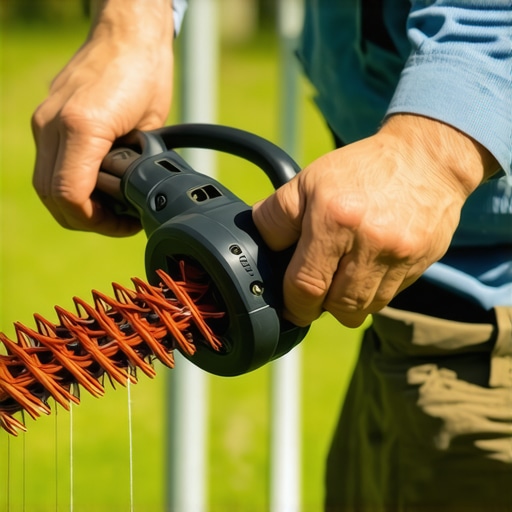
The Science of Line Failure: Why Your Trimmer is Failing You
String trimmer line snaps primarily due to polymer dehydration, excessive friction heat which causes line welding, and incorrect line diameter for the vegetation density. When nylon line loses moisture, it becomes brittle and shatters upon impact; conversely, running the engine at partial throttle causes the line to weld itself inside the spool head. This is a physics problem, not just a nuisance.
I always drill into my new crew members: if you do not fix the soil grading first, every plant you put in the ground is just expensive compost. The same logic applies to your equipment. You can buy the most expensive commercial-grade trimmer on the market, but if you do not understand the mechanical properties of the nylon copolymer you are spinning at 7,000 RPM, you are going to spend more time reloading the head than actually performing a yard cleanup. I have seen guys lose an entire afternoon of landscaping productivity because they stored their line in a hot truck bed, effectively baking the moisture out of the plastic until it had the structural integrity of a dry noodle.
Why Does Nylon Line Get Brittle?
Nylon is a hygroscopic material. This means it behaves like a sponge on a molecular level, absorbing and releasing moisture based on its environment. When the line is ‘fresh,’ it has a specific level of flexibility that allows it to absorb the shock of hitting a fence post or a thick stalk of crabgrass. Once that moisture evaporates, the polymer chains become rigid. Instead of bending, they snap. This is why professional sod install crews often keep their bulk spools in a bucket of water during the peak of summer. It is not a myth; it is chemistry. If your line feels like it is shattering the moment it touches a blade of grass, it is dehydrated.
“The mechanical properties of polyamide filaments are significantly influenced by their moisture content, which acts as a plasticizer, increasing impact strength and elongation at break.” – Nylon Engineering Manual
The Forensic Autopsy: Diagnosing Line Welding
Line welding occurs when the layers of line on your spool fuse together into a solid plastic lump. This is almost always caused by ‘feathering’ the trigger. When you run a trimmer at half-throttle while moving through thick brush, the centrifugal force is insufficient to keep the line taut, but the friction against the weeds generates immense heat. This heat travels back up the line and melts the top layer to the layer beneath it. You should run wide open or not at all. If you are worried about delicate irrigation heads, adjust your distance, not your RPM.
| Line Shape | Best Use Case | Durability Level |
|---|---|---|
| Round | Basic grass trimming | High (Less prone to fraying) |
| Square/Star | Thick weeds and stalks | Medium (Higher snap risk) |
| Twisted | Professional edging | High (Reduced noise/vibration) |
| Serrated | Heavy brush/Woody stems | Low (Aggressive but brittle) |
How much modified gravel do I need for a patio base?
While often asked during landscaping overhauls, the physics of weight distribution requires a minimum of 4 to 6 inches of compacted 21A or 57 stone for any area where you will be using heavy equipment like a commercial trimmer or mower. Subgrade stability prevents the very ruts that make trimming difficult. If your terrain is uneven, you are more likely to ‘scalp’ the dirt, which sends abrasive grit into the trimmer head, accelerating line wear through sheer friction.
The Technical Fix: A Step-by-Step Recovery
To stop the snapping, you must address the material state of the line and your operational technique. Follow this checklist to ensure your equipment survives the next yard cleanup:
- Rehydrate the Spool: Submerge your trimmer line in a bucket of water for 24 to 48 hours before use. This restores the plasticizers.
- Check the Eyelets: Inspect the metal exit points on the trimmer head. If they are notched or have sharp burrs, they will slice the line.
- Match Gauge to Task: Use .080 for light grass and .095 or .105 for thick weeds. Too thin and it snaps; too thick and the engine bogs down.
- Clean the Head: Grass juice and silt act like glue. Disassemble the bump head and scrub it every 10 hours of use.
“A retaining wall doesn’t fail because of the stone; it fails because of the water trapped behind it.” – Hardscape Engineering Axiom
Similarly, a trimmer line doesn’t fail because of the grass; it fails because of the heat trapped in the spool. Heat is the enemy of all mechanical systems in landscaping. If you are doing a massive sod install and need to trim the edges, keep the head moving. Static friction is a killer. Also, be mindful of your irrigation zones. Hitting a PVC riser with a .105 line at full throttle will not just snap the line; it will snap the pipe. I have seen more yard cleanup jobs turn into plumbing nightmares because of an over-eager operator with a fresh spool of serrated line.
How do I prevent the line from tangling inside the head?
Internal tangling is usually a result of poor winding tension. When you reload your spool, you must maintain constant, heavy tension on the line. If it is wound loosely, the centrifugal force will cause the underlying layers to ‘jump’ over the top layer, creating a bird’s nest that prevents the bump-feed mechanism from working. It will jam. It will snap. You will be frustrated. Wind it tight, wind it clean, and never cross the strands. It is basic engineering. If the line is overlapping itself like a messy fishing reel, it cannot exit the eyelet. Don’t skip this step. Maintenance is the difference between a pro and a hack.
The Long-Term Maintenance Schedule
Do not leave your trimmer in a shed that reaches 120 degrees in the summer. Store your line in a climate-controlled environment. If you buy a 5-pound spool of line, it might last you three years, but by year three, it will be garbage unless you keep it hydrated. Every spring, soak the entire spool. It is a simple habit that saves hours of labor. Your equipment is an extension of your hands. Treat it with the respect that 20 years of experience demands. Clean the debris, check the fuel lines, and for the love of the trade, stop scalping the turf. Your grass needs that leaf surface for photosynthesis. A clean cut with a hydrated line is the only way to ensure the health of the plant. Anything else is just hacking away at the dirt.