
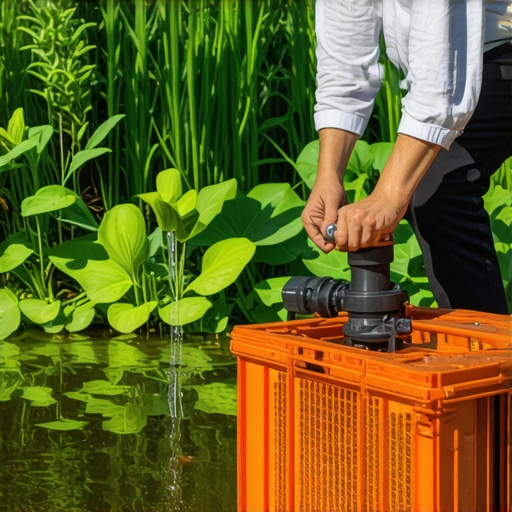
The sound of a struggling pond pump is a death rattle for your backyard ecosystem. When that steady hum turns into a high-pitched whine or a stuttering gargle, your system is failing because of mechanical starvation. Pond pumps clog because of suspended solids like fish waste, decaying leaves, and filamentous algae that overwhelm the intake screen. This lack of flow leads to cavitation, where vacuum bubbles form and collapse against the impeller, literally pitting the metal and melting the motor seals. If you do not address the filtration at the source, you are essentially asking your $400 submersible pump to act as a garbage disposal. It will fail. It is not a matter of if, but how soon. To prevent this, we look toward the milk crate filter hack—a rugged, high-volume pre-filtration method that uses engineering principles to bypass the puny factory screens that are designed to fail.
The Anatomy of Pond Pump Failure and the Forensic Fix
Most homeowners assume a pump stops because it is ‘old.’ In 20 years of hardscaping, I have seen that 90% of pump deaths are actually caused by thermal overload. When the intake screen on a 3000 GPH pump gets matted with hair algae or sludge from a recent yard cleanup, the water flow drops. Water is the coolant for a submersible pump. No water means the internal heat rises until the copper windings in the motor expand and short out. I always drill into my new crew members: if you do not fix the soil grading and filtration first, every water feature you build is just a hole for rotting organic matter. We recently pulled a pump from a client’s pond that had been installed by a ‘mow-and-blow’ crew. The pump was buried in six inches of anaerobic muck because they did not understand how a lack of yard cleanup leads to phosphorus spikes and massive algae blooms. We did not just replace the pump; we re-engineered the intake using a heavy-duty HDPE crate to ensure it never suffocated again.
“Submersible pumps require a constant, unobstructed flow of water to dissipate heat generated by the motor windings.” – Irrigation & Hydraulics Review
How do I stop my pond pump from clogging every day?
To stop daily clogging, you must increase the surface area of the intake by using a larger pre-filter housing, such as a milk crate lined with specialized pond mats. By spreading the suction across a 12-inch by 12-inch surface rather than a 4-inch factory screen, the velocity of the water at any single point decreases, preventing debris from being ‘vacuumed’ onto the mesh. This is basic fluid dynamics. When you reduce the intake velocity, smaller particles stay in suspension or settle elsewhere, while the pump remains clear. This is especially critical during a new sod install or after heavy landscaping work where loose soil and dust are prone to washing into the basin. If your yard cleanup is not thorough, that debris ends up in your pump vault.
What is the best pre-filter for a submersible pump?
The best pre-filter for a submersible pump is a mechanical-biological hybrid that uses graduated density mats to trap large debris while providing a substrate for nitrifying bacteria. The milk crate hack excels here because it allows you to layer different densities of Matala mats. You start with a coarse green mat on the outside and a finer blue mat on the inside. This prevents ‘blinding,’ which is when the entire filter surface clogs at once. Instead, the debris is trapped deep within the fibers, allowing water to pass through for weeks instead of hours. This is why we avoid cheap big-box store foam; it is too dense and collapses under the PSI of a high-power pump.
| Filter Media Type | Debris Capacity | Maintenance Frequency | PSI Resistance |
|---|---|---|---|
| Factory Plastic Screen | Very Low | Daily | Low |
| Fine Foam Sponge | Medium | Weekly | Poor (Collapses) |
| Coarse Matala Mat | High | Monthly | Excellent |
| Lava Rock (in Crate) | Very High | Bi-Annually | Highest |
The Engineering Logic of the Milk Crate Hack
A milk crate provides a structural skeleton that can withstand the hydrostatic pressure of being submerged at the bottom of a four-foot pond. The hack involves placing the pump inside a heavy-duty plastic crate, surrounding it with filter media, and securing the top. This creates a massive ‘buffer zone’ around the impeller. When you consider that a standard pond pump might move 50 gallons per minute, you realize that a tiny 5-inch screen is a bottleneck. By using a crate, you increase the intake surface area by over 500%. This is not just a ‘hack’; it is an engineering upgrade. During any yard cleanup, you should also check the pond perimeter. If you have mulch or soil from a recent sod install washing in, even the best filter will eventually fill. You must ensure your landscaping is graded away from the pond edges to prevent nutrient loading from fertilizer runoff, which feeds the very algae that clogs your system.
“Proper pre-filtration reduces the frequency of pump maintenance by 75% while extending the operational life of the motor bearings.” – Pump Mechanics Manual Vol 4.
Materials for the Milk Crate Filter Hack:
- Heavy-duty HDPE Milk Crate (Standard 12×12 or 12×18).
- Roll of Matala filter matting (Coarse and Medium densities).
- Industrial-grade UV-resistant zip ties (12-inch).
- Stainless steel hose clamps for the discharge pipe.
- A 2-inch bulk-head fitting or a simple notch cut in the crate side.
Step-by-Step Installation: The Forensic Autopsy Blueprint
First, remove the pump and inspect the impeller. If there is hair or fishing line wrapped around the shaft, remove it with needle-nose pliers. Check the volute for any pitting. Next, cut your Matala mats to fit the internal dimensions of the crate. You want a tight fit with no gaps. Place the pump in the center of the crate. If the pump is too small, it may vibrate; secure it to the bottom of the crate with zip ties to prevent mechanical wear. Route the power cord and the discharge hose through a notch cut in the top edge of the crate. Fill the remaining voids with bio-balls or additional coarse matting. This adds weight and further filtration. Secure the lid of the crate with zip ties. When you submerge the unit, do not drop it; lower it slowly to allow air to escape. If air is trapped in the impeller chamber, the pump will air-lock and run dry. It will burn out in minutes if this happens. Always verify flow at the waterfall or discharge point immediately after power-up. This setup is a game-changer for systems plagued by irrigation runoff or heavy organic loads from nearby trees.
Long-Term Maintenance and Yard Integration
Do not think this filter makes you immune to maintenance. Every autumn, as part of your yard cleanup, you must pull the crate and spray it down with a high-pressure hose. If you leave the organic sludge to sit over winter, it will harden into a cement-like crust. Furthermore, if you are performing a sod install near the pond, use silt fencing or straw wattles to prevent clay particles from entering the water. Clay is the enemy of pump seals; the fine grit acts like sandpaper on the ceramic shafts. Irrigation systems should also be checked to ensure they aren’t spraying directly into the pond, as city water often contains chlorine or chloramines that can disrupt the beneficial bacteria living in your crate filter. A healthy pond is a balance of biology and mechanical engineering. Use the crate to handle the physics, and keep your yard cleanup tight to handle the chemistry.