
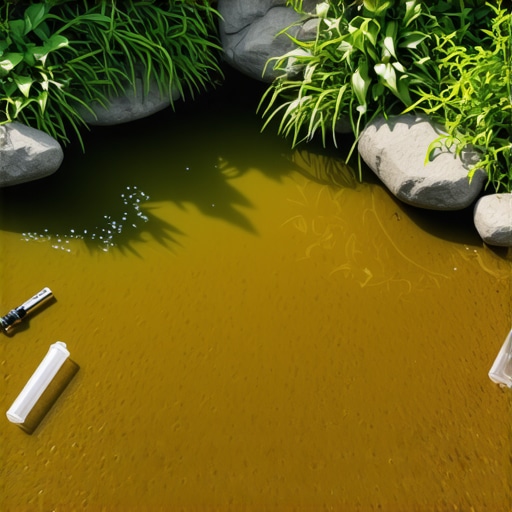
What Causes Brown Pond Water?
Brown pond water is primarily caused by dissolved organic carbon (tannins) from decaying leaf litter or suspended inorganic solids (sediment) resulting from poor soil stabilization and drainage. Identifying the source requires a simple jar test to distinguish between chemical staining and physical turbidity which dictates the specific remediation protocol needed for your ecosystem.
The Forensic Autopsy: The Case of the $40,000 Mud Hole
I recently got called out to tear up a $30,000 patio and pond install that was sinking because the previous contractor ignored the basic laws of hydrology. The homeowner was staring at a pond that looked less like a feature and more like a construction runoff pit. The issue wasn’t the filter. It was the fact that the contractor had graded the surrounding landscaping toward the water. Every time the irrigation kicked on or a storm hit, it washed two pounds of fine silt and yard debris directly into the basin. The pond wasn’t dirty; it was being buried alive by the landscape. If you don’t fix the soil grading first, every plant you put in the ground is just expensive compost. You cannot out-filter a bad grade. It took us three weeks to excavate the muck and install a proper French drain system to divert that surface water. Stop thinking about the pond as an isolated bucket; it is the lowest point in your yard’s hydraulic system.
“A retaining wall doesn’t fail because of the stone; it fails because of the water trapped behind it. Similarly, a pond’s clarity fails not at the pump, but at the perimeter.” – Hardscape Engineering Axiom
Identifying the Culprit: Tannins vs. Sediment
Before you dump a gallon of pond clarifier into the water, you need to know what you’re fighting. This is the difference between biology and physics. Tannins are the result of organic matter (leaves, acorns, twigs) breaking down. The lignin and cellulose release a tea-colored stain. This is a chemical change in the water. Sediment, on the other hand, is physical matter like clay or silt suspended in the water column. You can tell the difference with a ‘Jar Test.’ Scoop a jar of the brown water and let it sit for 24 hours. If the brown stuff settles to the bottom and the water on top is clear, you have a sediment problem. If the water remains tea-colored even after 24 hours, you are dealing with tannins. Don’t waste money on flocculants if your water is stained by oak leaves.
How much modified gravel do I need for a pond base?
For a standard residential pond, you need a minimum of 4 to 6 inches of compacted 2A modified gravel if you are building a structural shelf or a surrounding hardscape. This base prevents the settling that leads to liner punctures and subsequent soil intrusion. If your base is soft, the liner will shift, allowing groundwater to seep up and mix with your pond water, often bringing dark anaerobic mud with it. Use a plate compactor. Do not hand-tamp. It will fail.
The Impact of Poor Yard Cleanup on Pond Clarity
Neglecting your yard cleanup is the fastest way to turn a clear pond into a stagnant brown bog. When leaves fall and are left to rot on the lawn, the wind eventually deposits them into the pond. Once submerged, they begin anaerobic decomposition. This process sucks the oxygen out of the water and releases tannins. Furthermore, the buildup of ‘muck’ (organic sludge) at the bottom acts as a battery for algae. This muck can be several inches thick and will perpetually stain the water regardless of how much you run your pump. You need to be aggressive with your fall cleanup. If you have deciduous trees within 50 feet of the pond, you must use a heavy-duty pond net during the autumn months. No excuses. It is easier to move a leaf with a rake than to pump it out as liquid sludge later.
Why Your New Sod Install Might Be Turning the Pond Brown
If you just did a fresh sod install, you’ve introduced loose soil and high-nitrogen fertilizers to the environment. Sod requires heavy initial watering, which often leads to runoff that carries fine particulates into the pond basin. Until the roots of that sod knit into the soil, the perimeter is vulnerable. I always recommend installing a 12-inch wide border of river rock or a structural cobble edge between the sod and the pond. This acts as a sediment trap. If you see brown runoff, check your irrigation timing. You are likely over-saturating the soil to the point of liquefaction. Water for shorter durations multiple times a day to allow infiltration rather than runoff.
| Water Color | Primary Cause | Detection Method | Professional Solution |
|---|---|---|---|
| Tea/Dark Brown | Organic Tannins | Jar Test (No settling) | Activated Carbon/Water Changes |
| Cloudy/Milky Brown | Clay/Silt Sediment | Jar Test (Settling) | Flocculants/Fine Filter Mats |
| Pea Soup Green/Brown | Planktonic Algae | Visual Inspection | UV Sterilizer/Nutrient Control |
| Black/Oily Brown | Anaerobic Muck | Odors (Rotten Eggs) | Bottom Aeration/Muck Digesters |
Technical Remediation: The Professional Process
Clearing a pond is a mechanical and chemical process. First, address the mechanical filtration. Most big-box store filters are undersized for the biological load of a real backyard. You need a filter with a high surface area for beneficial bacteria. If you have sediment, you must use a ‘polishing’ mat. These are 10-micron pads that catch the fine silt that standard sponges miss. You will need to clean these pads daily until the water clears. They will clog fast. That is the point.
“High turbidity levels in small impoundments are often the result of clay particles held in suspension by electrostatic charges. Proper pond management requires neutralizing these charges to allow for precipitation.” – Penn State Agricultural Extension
How do I stop erosion from my landscaping into the pond?
To stop erosion, you must stabilize the bank with a combination of hardscape and deep-rooted vegetation. Use a geotextile fabric under any rock or boulders to prevent soil from migrating through the cracks. In the landscape beds surrounding the pond, avoid using wood mulch. Wood mulch floats and will end up in your skimmer. Use a heavy stone mulch like 1-3 inch river stone. It stays put during heavy rain and doesn’t break down into tannins. Check your 811 markings before digging any drainage trenches. Don’t be the guy who cuts his own internet line while trying to save a pond.
The 5-Step Pond Clearing Checklist
- Perform a Jar Test: Determine if the issue is tannins (organic) or sediment (physical).
- Check the Grade: Ensure no surface water from the lawn or landscaping is flowing into the pond.
- Install Activated Carbon: If tannins are present, use 2 lbs of high-grade carbon per 1,000 gallons of water.
- Apply a Flocculant: If sediment is the issue, use a polymer-based clarifier to clump particles together for the filter.
- Clean the Mechanical Filter: Rinse your filter mats every 24-48 hours during the clearing phase.
The Long Game: Maintenance for Permanent Clarity
Once you get the water clear, the job isn’t over. Landscaping is a living system. It changes every season. You need to manage the nutrient load. If you have an irrigation system, ensure the heads are not spraying directly into the water, as this adds tap-water chemicals and moves debris. If you are doing a yard cleanup, use a blower to move leaves away from the water, never toward it. Finally, maintain your muck-eating bacteria. These are aerobic microbes that consume the organic sludge at the bottom. Without them, the brown cycle starts over next spring. Keep the water moving. Oxygen is the best cleanser. If the water is still, it will rot. Professional pond management isn’t about the ‘quick fix’ bottle of blue dye; it’s about engineering a system where the biology does the work for you. Stick to the measurements. Watch your pH. Don’t let the yard take over the pond.”, “image”: {“imagePrompt”: “A high-end backyard pond with a professional technician using a Secchi disk to measure water clarity. The background shows a properly graded landscape with river rock borders and healthy vegetation, focusing on the interface between the water and the stone edging.”, “imageTitle”: “Professional Pond Clarity Testing and Grading”, “imageAlt”: “Technician checking water turbidity in a landscaped pond”}, “categoryId”: 0, “postTime”: “”}