
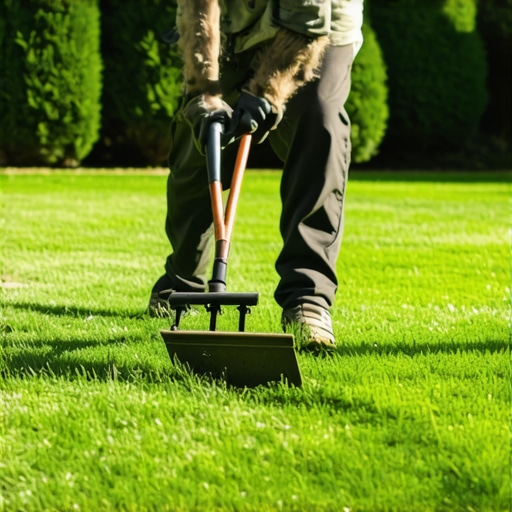
The Pro Way to Edge Your Lawn for a Clean Finish
Most homeowners think a clean lawn edge is a cosmetic luxury, but in the world of professional horticulture, it is a structural necessity for turf health and irrigation efficiency. I have spent 25 years watching amateurs hack away at their sod with string trimmers, only to leave the root system exposed to desiccation and disease. A professional edge provides a physical barrier that prevents grass stolons from migrating into garden beds while maintaining the integrity of your soil grading.
Why Edging Is a Structural Engineering Task, Not a Cosmetic One
The pro way to edge your lawn involves creating a clean, vertical 90 degree cut between the turf and the adjacent surface to prevent root migration and soil erosion. This process requires precision tools, a deep understanding of sod physiology, and consistent maintenance of the soil-to-turf interface.
I always drill into my new crew members: if you don’t fix the soil grading first, every plant you put in the ground is just expensive compost. I remember an apprentice named Miller who thought he could hide a 4 inch grade disparity with a thick layer of mulch. Within two weeks, the first heavy rain washed that mulch across the driveway and exposed the raw, unprotected roots of the new sod install. We had to excavate the entire perimeter, regrade the base with a transit level, and recut the edges. It was a 2,000 dollar mistake that could have been avoided with 15 minutes of proper site prep. If the foundation is wrong, the finish will fail. Period.
“A crisp edge serves as the primary defense against invasive stoloniferous growth and ensures that irrigation water remains contained within the root zone rather than shedding onto impervious surfaces.” – Penn State Department of Plant Science
How deep should a professional lawn edge be?
A professional turf edge should be exactly 2 to 3 inches deep. This depth is critical because most cool-season grass roots and warm-season rhizomes reside in the top 4 inches of soil. Cutting shallower than 2 inches allows the grass to hop the gap. Cutting deeper than 4 inches risks damaging the lateral root structure and interfering with buried irrigation lines or utility cables. Don’t guess. Measure it.
The Hardware: Pro-Grade Tools vs. Big-Box Hacks
You cannot get a professional finish with a 40 dollar string trimmer from a department store. Those machines lack the torque and the blade stability to create a true vertical shear. You need a dedicated stick edger or a manual half-moon spade for smaller residential footprints. We use gas-powered units with 8 inch steel blades that can slice through compacted clay without deviating from the line.
| Tool Type | Ideal Use Case | Mechanical Advantage |
|---|---|---|
| Manual Half-Moon Spade | Small beds, tight curves | Zero fuel cost, maximum precision |
| Gas-Powered Stick Edger | Long straight driveways, sidewalks | High torque, consistent depth |
| Vertical Power Rake | Large estate yard cleanup | Rapid debris removal, deep channel |
The blade must be sharp. A dull blade doesn’t cut; it tears. Tearing leads to jagged cell walls in the grass blades, which invites fungal pathogens like pythium blight or brown patch. We sharpen our blades every morning. It takes five minutes. It saves hours of remediation later.
What is the best tool for a crisp lawn edge?
For a homeowner looking for a professional result, a straight-shaft gas edger with a 10 inch blade is the gold standard. It provides the necessary rotational speed to achieve a clean shear without scalping the crown of the grass. If you prefer manual labor, a heavy-duty forged steel half-moon edger with a wide foot tread is the only way to go. Avoid plastic handles. They flex. Flexing ruins lines.
The Step-by-Step Execution: Excavating the Vertical Cut
Before you start the engine, you must clear the path. Yard cleanup is the precursor to a good edge. Stones, twigs, and excessive mulch will deflect the blade, causing a “jump” that leaves a permanent scar in the turf. If you are working on a new sod install, wait at least three weeks for the roots to knit into the native soil before attempting a heavy mechanical edge.
- Identify the utility lines. Call 811. Don’t be the person who kills the neighborhood internet.
- Mark your line with a high-visibility layout string or marking paint for long runs.
- Set the edger depth to 2.5 inches.
- Walk forward slowly. Do not pull the machine backward.
- Maintain a consistent walking speed to ensure the blade doesn’t dwell and create a hole.
- Clear the debris immediately with a stiff broom or blower.
“Proper edging reduces the need for chemical weed control by providing a physical gap that prevents the spread of invasive species through underground runners.” – Texas A&M Agrilife Extension
How much modified gravel do I need for a patio base?
While often asked during landscaping projects, this is about structural integrity. For a standard residential patio, you need 4 to 6 inches of 21A or 3/4 inch modified crushed stone. This must be compacted in 2 inch lifts using a plate compactor with a minimum of 3,000 lbs of centrifugal force. If you don’t compact the base, your edge will heave within one freeze-thaw cycle. Soil mechanics don’t care about your DIY budget.
Irrigation and Post-Edge Maintenance
Once the edge is cut, your irrigation system becomes the primary life support. A fresh edge exposes the soil profile, increasing the rate of evaporation at the turf’s perimeter. If you don’t adjust your zones, the edges will brown out first. I see it every summer. People spend thousands on landscaping and then forget that an exposed edge is a thirsty edge. You need to ensure your sprinkler heads are adjusted for head-to-head coverage. No gaps.
Water deep and infrequent. One inch per week is the rule. This forces the roots to chase the moisture downward into the subsoil, making the edge more resilient against heat stress. Shallow daily watering creates lazy roots that sit on the surface, making them prime targets for your edger blade next month. Don’t cultivate lazy grass. Work the soil.
Check your pH levels. If your soil is too acidic, the grass at the edge will struggle to recover from the stress of the cut. Aim for a 6.5 to 7.0 range. Use pelletized lime if you’re low. Avoid the cheap powder; it blows away and does nothing for the microbial life in the rhizosphere. Details matter. They always do. Your yard is a biological system, not a painting.