
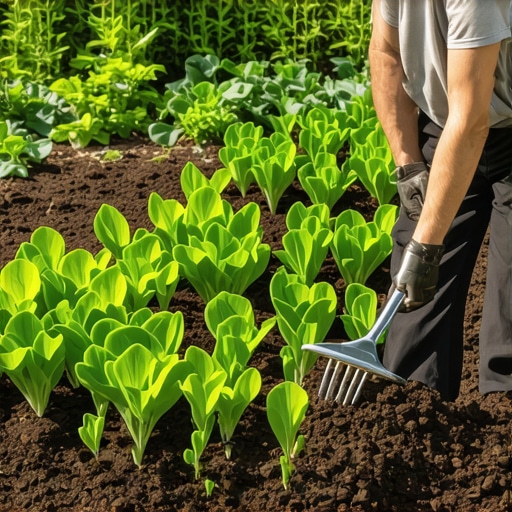
The Foundation of Engineering: Why 2026 Starts Today
I always drill into my new crew members: if you don’t fix the soil grading and biology first, every plant you put in the ground is just expensive compost. You see, most homeowners think they can buy a flat of perennials in April 2026 and call it a day. That is how you waste three grand. My crew knows that real landscaping happens two years before the first flower blooms. We do not just ‘dig holes.’ We manage hydrostatic pressure, soil gas exchange, and microbial density. If the soil is a compacted, anaerobic mess of clay, your 2026 garden is dead on arrival. We are building a biological engine, not a decorative display.
“Soil health is the capacity of a soil to function as a vital living ecosystem that sustains plants, animals, and humans.” – NRCS Soil Health Principles
Why No-Till Tilling is the Future of Sustainable Landscaping
No-till soil preparation is a method of building organic matter and soil structure by layering amendments on the surface rather than mechanically churning the earth. This technique preserves the mycorrhizae fungal networks and prevents the germination of dormant weed seeds buried deep in the soil profile. It is the only way to avoid the ‘hardpan’ layer created by the blades of a heavy rototiller. When you till, you are effectively smashing the pore spaces that allow for oxygen and water infiltration. Stop it. You are killing the soil’s ability to breathe.
How long does it take for sheet mulch to decompose?
For a full conversion of turf to planting-ready loam, sheet mulching generally requires 12 to 18 months depending on moisture levels and microbial activity. Starting in late 2024 or early 2025 ensures that the carbon-to-nitrogen ratio has stabilized and the cellulose in your cardboard barrier has been fully processed by detritivores like earthworms. This lead time allows the soil to reach a structural equilibrium before you introduce high-value nursery stock.
The Physics of Soil: Why Traditional Tilling Fails
Traditional tilling is a mechanical assault on the soil aggregates. Imagine a skyscraper where you decide to replace the steel beams with sawdust; that is what you do when you pulverize soil structure. You create a fine powder that looks good for ten minutes but turns into concrete after the first heavy rain. This leads to poor irrigation efficiency because the water cannot penetrate the surface. Instead, it runs off, taking your nutrients with it. We call this ‘surface crusting,’ and it is the primary reason why new sod installs fail within three years. By using no-till methods, you maintain the capillary pathways that pull water down into the root zone.
“A well-structured soil with 5 percent organic matter can hold up to 20,000 gallons of water per acre.” – USDA Agronomy Manual
The No-Till Blueprint: Materials and Execution
Success in no-till landscaping requires high-quality inputs. Forget the big-box store mulch that is half-dyed construction debris. You need clean, arborist wood chips and high-nitrogen compost. The layering process, often called lasagna gardening, must be executed with precision. We start with a yard cleanup that involves scalping the existing vegetation, followed by a heavy application of pelletized lime if your pH is below 6.0. Then, we layer 40-pound-grade cardboard with a 6-inch overlap. This is your primary weed barrier. It will rot. That is the point.
| Material Type | Function in No-Till | Decomposition Rate | Recommended Depth |
|---|---|---|---|
| Cardboard | Weed Suppression | 6-12 Months | 1 Layer (Overlapped) |
| Aged Compost | Nitrogen/Microbiology | 3-6 Months | 2-4 Inches |
| Arborist Chips | Moisture/Carbon | 18-36 Months | 4-6 Inches |
| Leaf Mold | Fungal Activation | 4-8 Months | 2 Inches |
Is no-till gardening better for clay soil?
No-till methods are superior for heavy clay because they prevent the soil from becoming a compacted slurry. By adding organic matter to the surface, you encourage earthworms to tunnel through the clay, creating natural drainage channels. This process, known as biopore creation, is significantly more effective than mechanical aeration which only penetrates the top 3 inches of the soil. Over two years, these biological tunnels will transform heavy red clay into friable, dark loam without you ever lifting a shovel.
Integrating Irrigation and Hardscape Pre-Planning
Do not even think about 2026 planting without considering your irrigation lines. In a no-till system, we often install drip irrigation directly on top of the cardboard before the mulch goes down. This keeps the emitters clean and puts water exactly where the roots will be. If you are planning a future sod install adjacent to your no-till beds, you must ensure the soil grading slopes away from the garden at a minimum 2 percent grade. This prevents the garden’s high-moisture sponge from flooding your turf’s root zone and causing root rot or fungal pathogens like Pythium.
- Conduct a professional soil test for NPK and pH levels.
- Execute a thorough yard cleanup of all invasive species.
- Mow existing grass to the lowest possible setting.
- Lay heavy-duty cardboard without gaps.
- Apply 3 inches of high-quality compost.
- Top with 4 to 6 inches of wood chip mulch.
- Install a temporary header or border to contain the organic matter.
The Information Gain: Why Nitrogen Drawdown Matters
Here is something the internet won’t tell you: if you use fresh, ‘green’ wood chips as your bottom layer, you will trigger a nitrogen drawdown. The bacteria trying to break down that high-carbon wood will steal all the available nitrogen from the soil. This is why we always put the compost *under* the mulch. We want the decomposition to happen from the top down. If you screw this up, your plants will turn yellow and stunted in 2026. This is the difference between a pro job and a DIY disaster. We measure C:N ratios because physics and chemistry don’t care about your feelings.
Conclusion of the Preparation Phase
By the time 2026 rolls around, those layers of cardboard and mulch will have transformed into a rich, worm-filled substrate. You won’t need a tiller. You will be able to pull back the mulch and plant directly into the soil with a hand trowel. This is how you build a landscape that lasts 50 years instead of 5. It takes patience. It takes 20 inches of organic material over two years. But it works. Don’t skip the prep. Your future garden depends on the work you do this weekend.
[{“@context”:”https://schema.org”,”@type”:”FAQPage”,”mainEntity”:[{“@type”:”Question”,”name”:”How long does it take for sheet mulch to decompose?”,”acceptedAnswer”:{“@type”:”Answer”,”text”:”It takes approximately 12 to 18 months for sheet mulch to fully decompose into plantable soil, depending on moisture, temperature, and the specific materials used.”}},{“@type”:”Question”,”name”:”Is no-till gardening better for clay soil?”,”acceptedAnswer”:{“@type”:”Answer”,”text”:”Yes, no-till is superior for clay as it relies on biological aeration from earthworms and root decay rather than mechanical tilling, which often leads to further compaction and hardpan formation.”}}]}]