
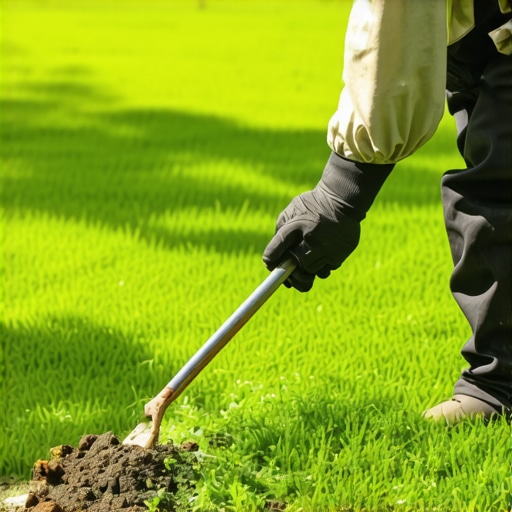
Applying 2026 Lime to Shady Lawns: The Soil pH Hack
The visual evidence of a failing shady lawn is unmistakable: a thin, sickly yellowish-green carpet that feels more like wet sponge than turf. Most homeowners see this and immediately dump a bag of high-nitrogen fertilizer on it. This is a fatal error. If your soil pH is sitting at a 5.2, you could dump a truckload of nitrogen on that yard and the grass wouldn’t see a drop of it. You aren’t feeding the lawn; you are just salting the earth. Shady areas are notoriously prone to high acidity because of moisture retention and the decomposition of leaf litter from overhanging oaks or maples. Without intervention, your 2026 spring growth will be dead on arrival. We need to perform a forensic overhaul of your soil chemistry starting right now.
The Chemical Nightmare: Why Your Shady Lawn is Failing
A homeowner called me in a panic last season after they completely torched their front lawn by applying three bags of triple-19 fertilizer to a shaded patch under a stand of mature pines. They thought the yellowing was a nutrient deficiency. It wasn’t. The soil was so acidic that the fertilizer caused a massive salt-burn reaction. By the time I arrived, the soil was literally crusting over, and the roots of their fescue were shriveled like burnt hair. They had turned their yard into a chemical wasteland because they didn’t understand the fundamental rule of horticulture: chemistry precedes biology. If the pH isn’t right, the biology cannot exist. We spent two weeks just flushing the soil before we could even think about a yard cleanup or sod install. It was a $4,000 mistake that could have been avoided with a $20 soil test and a bag of lime.
“Soil acidity is the primary limiting factor for nutrient uptake in cool-season turfgrasses, particularly in shaded environments where metabolic rates are already suppressed.” – Agricultural Extension Agronomy Manual
The Science of Soil pH in the Shadows
Applying calcitic lime to shady lawns is the only way to neutralize the hydrogen ions that lock up your soil. In shaded areas, turf has a lower metabolic rate. It doesn’t process sunlight as efficiently, which means it has zero margin for error when it comes to nutrient uptake. When soil pH drops below 6.0, phosphorus becomes chemically bound to iron and aluminum in the soil. This makes it insoluble. Your grass literally starves to death while sitting in a bed of nutrients it cannot touch. For the 2026 season, we are looking at the Soil pH Hack: applying lime in late fall or early winter to allow the calcium carbonate to break down through the freeze-thaw cycle. This process, known as the carbonate-bicarbonate buffer system, takes time. You cannot apply lime on Friday and expect green grass on Monday. It is a slow-motion chemical war.
How long does it take for lime to work on a lawn?
Lime takes approximately 3 to 6 months to fully react with the soil and shift the pH level significantly. Because lime is relatively insoluble, it requires moisture and microbial activity to move through the soil profile. Applying it now ensures the chemistry is stabilized for the spring 2026 growing season. Don’t wait until you see the grass struggling; the damage is already done by then.
Will lime kill moss in my yard?
Lime does not directly kill moss, but it changes the soil environment to favor turfgrass over moss. Moss thrives in acidic, compacted, and damp conditions. By raising the pH to a range of 6.5 to 7.0, you create a chemical landscape where grass can out-compete the moss for space and nutrients. True moss control also requires irrigation management and yard cleanup to improve airflow.
The 2026 Soil Modification Matrix
Not all lime is created equal. If you buy the cheap, dusty bags from a big-box store, you are wasting your sweat. You need to understand the difference between Calcitic and Dolomitic lime. Shady lawns usually benefit most from Calcitic lime because they don’t need the extra magnesium found in Dolomite, which can tighten up heavy clay soils. We want the soil to breathe. We want flocculation, not compaction.
| Lime Type | Reaction Speed | Best Use Case | Calcium Content |
|---|---|---|---|
| Pulverized Ag Lime | Slow (6-12 months) | Large acreage, low budget | Moderate |
| Pelletized Calcitic | Medium (3-6 months) | Residential shady lawns | High |
| Enhanced/Solu-Cal | Fast (4-8 weeks) | Emergency pH correction | Extreme |
The Blueprint for 2026 Preparation
If you want a sod install to actually take root in a shady area, you have to follow a strict protocol. You can’t just throw seeds on top of acidic dirt. You have to prep the bed. This isn’t a suggestion; it is a requirement for anyone who wants to avoid the “mow-and-blow” hack reputation. It starts with a yard cleanup to remove the tannic acid-leaching leaves. Then, you move to mechanical intervention. The lime needs a highway to the roots. That highway is built via core aeration. If you don’t aerate, 90% of your lime stays in the top half-inch of the thatch. It is useless there.
- Step 1: The Soil Assay. Get a professional lab test. Do not trust your eyes or a cheap probe.
- Step 2: Tactical Cleanup. Clear all debris. Leaf litter creates a barrier that prevents lime-to-soil contact.
- Step 3: Core Aeration. Pull 3-inch plugs. This bypasses the thatch layer and delivers the lime to the rhizosphere.
- Step 4: Precision Application. Use a drop spreader. Shady areas often border sensitive ornamental beds; don’t broadcast lime where you want acid-loving azaleas to grow.
- Step 5: Hydration Activation. Run your irrigation for 20 minutes to settle the pellets into the aeration holes.
“A retaining wall doesn’t fail because of the stone; it fails because of the water trapped behind it, and a lawn doesn’t fail because of the shade; it fails because of the acid trapped in the soil.” – Hardscape Engineering Axiom
Hydrostatic Pressure and Soil Compaction
In many shaded yards, the problem isn’t just pH; it’s drainage. When we look at the engineering of a landscape, we have to consider how water sits in low-light areas. If your yard is flat and shaded, the water doesn’t evaporate. It sits. This increases the hydrostatic pressure on the soil particles, squeezing out oxygen. This is why irrigation timing is critical. You cannot water a shady lawn like you water a sun-drenched field. Deep, infrequent watering is the rule. Once a week, one inch of water. That is it. Forced the roots to chase the water down into the depths where we have deposited the lime. This builds a resilient root system that can survive the heat of 2026. If you water every day for 10 minutes, you are just growing fungus and shallow roots. It will rot. Don’t skip the deep soak.
The 2026 Maintenance Horizon
Remember, the goal is a 6.5 pH. This is the “sweet spot” where the CEC (Cation Exchange Capacity) of your soil is optimized. In this state, the soil acts like a battery, holding onto nutrients and releasing them only when the plant needs them. In an acidic shady lawn, that battery is dead. Applying lime is like recharging the system. As we head into the next season, monitor the turf color. If it starts to take on a bluish-gray tint, check your moisture levels first. If moisture is fine, re-test the pH. Soil is a living, breathing organism. It changes. Stay ahead of it. Don’t be the homeowner who waits for a disaster to act. Be the one who builds the foundation before the first blade of grass even breaks the surface.