
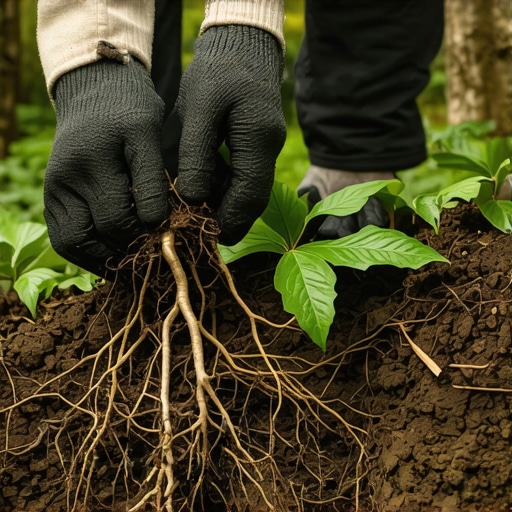
The Bio-Chemical Reality of Toxicodendron Radicans
Removing poison ivy roots without skin contact requires a complete containment strategy involving heavy-duty PPE, specialized mechanical extraction tools, and a zero-residue disposal protocol to ensure the caustic urushiol oil never touches the epidermis. You are not just gardening; you are performing hazardous waste remediation. One slip means weeks of prednisone and misery.
I once walked onto a job site where a homeowner had tried to ‘clear’ an acre of overgrown woodland using a brush hog. He thought he was being efficient. He didn’t realize that the machine was atomizing the urushiol oil and coating every surface including his lungs. He ended up in the emergency room with systemic inflammation. This is why I tell my crews that we treat poison ivy like a radioactive spill. If you do not respect the chemistry of the plant, it will break you. I have seen guys lose two weeks of work because they wiped their brow with a contaminated glove. In this business, your skin is your livelihood. Don’t gamble with it.
“Urushiol remains active on surfaces and in dead plant material for up to five years, requiring stringent decontamination of all tools and clothing after exposure.” – Penn State Extension Agronomy Manual
Why Traditional Yard Cleanup Fails Against Established Roots
Traditional yard cleanup often fails because homeowners focus on the foliage while ignoring the rhizomatous root architecture that stores carbohydrates and allows for rapid vegetative regeneration within weeks of surface cutting. If you leave a single two-inch segment of the root in the ground, the plant will push new growth. You have to be surgical. You have to go deep. It is a war of attrition against the soil bank.
How do I identify poison ivy roots in the winter?
Identify poison ivy roots by looking for hairy, fibrous aerial vines attached to tree trunks or subterranean reddish-brown rhizomes that lack the distinct odor of wild grapevine and exhibit a milky white sap when severed. These adventitious roots are designed to cling and climb. Look for the ‘hairy rope’ appearance on bark. That is the tell-tale sign of an established infestation. In the soil, the roots are surprisingly flexible but tough. They don’t snap like maple roots; they stretch and pull.
| Method | Effectiveness | Risk Level | Recovery Time |
|---|---|---|---|
| Manual Pulling | High (if complete) | Critical | Immediate |
| Glyphosate Foliar | Moderate | Low | 14-21 Days |
| Triclopyr Injection | High | Low | 7-10 Days |
| Sheet Mulching | Low | Minimal | 12-24 Months |
The Engineering of Extraction: Mechanical Protocol
Mechanical extraction of poison ivy roots involves undercutting the root zone with a sharp spade or mattock to lift the entire soil-root matrix without disturbing the plant’s surface oils or allowing contact with the operator. You must work when the soil is at field capacity. Dry soil leads to root breakage. Broken roots lead to regrowth. Moist soil allows the entire system to slide out like a surgical extraction. We use a ‘trench and lift’ method that ensures we get the crown of the plant where the highest concentration of energy is stored.
What is the best tool for removing poison ivy roots?
The best tool for removing poison ivy roots is a long-handled grubbing mattock or a sharpened drain spade which provides the necessary leverage to lift deep taproots while maintaining a safe physical distance from the toxic oils. Short tools are a death sentence. You want at least 48 inches of handle between you and the plant. I prefer a steel-handled spade because urushiol can soak into wooden handles and stay there for years. Steel is non-porous. You can wash steel with Tecnu or mineral spirits. Wood? Wood is a sponge for poison.
Landscaping and Sod Install After Remediation
After the successful removal of poison ivy roots, the soil must be mechanically tilled and amended with high-carbon compost to dilute any remaining oil before a new sod install or irrigation system is put in place to ensure no dormant buds survive. You can’t just throw grass over a dead patch of poison ivy. The oil is still in the dirt. I recommend a heavy irrigation cycle to help move the organic compounds through the soil profile before you lay down your Kentucky Bluegrass or Tall Fescue. If you’re doing a full landscaping overhaul, this is the time to check your grading. Don’t let water pool where you just dug; it will only encourage remaining weed seeds to germinate.
“A retaining wall doesn’t fail because of the stone; it fails because of the water trapped behind it.” – Hardscape Engineering Axiom
- Wear disposable Tyvek suits over your work clothes.
- Use 7-mil nitrile gloves under heavy-duty rubber gauntlets.
- Seal the gap between your boots and pants with duct tape.
- Place all extracted material into 4-mil plastic contractor bags immediately.
- Never burn the debris.
- Decontaminate tools with a dedicated grease-cutting solvent.
Professional Irrigation Considerations
When installing irrigation in a formerly infested area, ensure that trenching lines do not intersect with un-remediated root zones to prevent the spread of rhizome fragments across the entire yard. I have seen irrigation contractors drag poison ivy roots from the backyard to the front yard on the blade of a vibratory plow. It’s a disaster. You end up with a cross-contaminated lawn. Clean your equipment. Every time. No exceptions. A quick wipe-down isn’t enough; you need a surfactant that actually breaks down the oil bonds. Use Tecnu or a high-strength degreaser. If the machine looks shiny, it’s still dirty. It needs to be stripped.
How deep do poison ivy roots grow?
Poison ivy roots typically grow within the top 6 to 12 inches of soil, but in sandy or loose loam, the primary taproot can extend 20 inches deep to access groundwater during drought periods. Most of the lateral growth is shallow. That is where it spreads. But that taproot is the anchor. If you don’t get the anchor, the ship stays in the harbor. You have to dig until you see clean soil. No reddish fibers. No milky sap. Just dirt. That is when you know the job is done.