
The Hardscape Autopsy: Why Modern Patios Are Failing
If you are planning a patio for 2026, the first thing you need to do is fire any contractor who mentions bedding sand as their primary leveling agent for heavy-traffic areas. I recently got called out to tear up a $30,000 patio that was sinking because the previous contractor used a thick layer of ASTM C33 concrete sand over an uncompacted clay subgrade. Within two seasons, the sand migrated into the voids of the base gravel, the pavers dipped three inches, and the entire landscaping investment became a massive trip hazard. This wasn’t a material failure; it was a physics failure. Most contractors are still building like it’s 1995, ignoring the reality of hydrostatic pressure and soil saturation. When water gets trapped in a sand layer, it creates a slurry. That slurry moves. When the sand moves, your pavers follow.
The 2026 Standard: Why Open-Graded Bases Outperform Sand
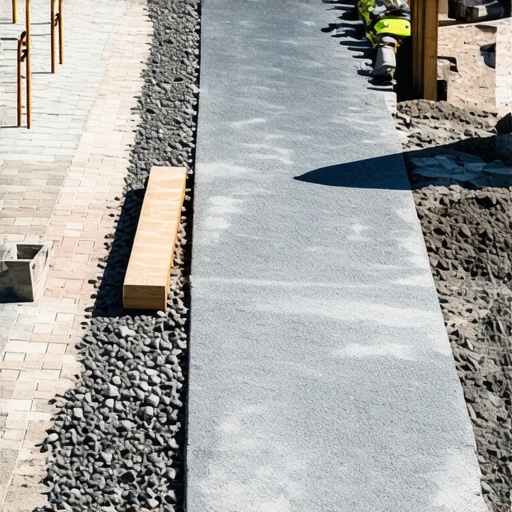
The 2026 standard for paver installations prioritizes open-graded bases over traditional sand because #8 clean stone provides superior drainage and eliminates the risk of bedding sand migration and hydrostatic pressure buildup, ensuring the landscaping project remains structurally sound for decades. Unlike sand, which holds water through capillary action, open-graded aggregates allow water to flow through the system and into the subsoil or a French drain. We are moving away from the ‘tight’ base model toward a ‘breathable’ model. Sand is an invitation for ants and weeds. Clean stone is a fortress. Stop using 19th-century tech for 21st-century outdoor living spaces. It will fail.
“A retaining wall doesn’t fail because of the stone; it fails because of the water trapped behind it.” – Hardscape Engineering Axiom
How much modified gravel do I need for a patio base?
To calculate modified gravel needs, you must account for a minimum 6-inch depth for walkways and 10-12 inches for driveways, multiplying the square footage by the depth in feet and dividing by 27 to find cubic yards, then adding a 20% compaction factor. Don’t eyeball this. If you’re short an inch, you’re short a decade of lifespan. I see guys trying to save $400 on gravel on a $20k job. It is professional malpractice. You need a vibratory plate compactor that hits at least 4,000 lbs of centrifugal force to lock those stones together. Anything less is just moving dirt around.
What is the best material for a paver base in 2026?
The best material for a 2026 paver base is a combination of #57 crushed stone for the sub-base and a 1-inch layer of #8 or #9 clean stone for the bedding layer, which provides 40% void space for water management. This is the ‘No-Sand’ method. It doesn’t wash out. It doesn’t settle. It doesn’t provide a home for organic matter to rot. When you combine this with a high-quality non-woven geotextile fabric, you create a permanent separation between the native soil and your expensive pavers. This is civil engineering 101 applied to your backyard.
| Material Property | Traditional Sand Base | 2026 Open-Graded Base |
|---|---|---|
| Drainage Capacity | Poor (Saturates) | Excellent (Rapid Infiltration) |
| Migration Risk | High (Washouts) | Zero (Interlocking Stone) |
| Weed/Ant Resistance | Low | High |
| Install Speed | Slower (Screeding Sand) | Faster (Clean Stone) |
| Freeze-Thaw Stability | Low (Heaving) | High (Expansion Voids) |
The Physics of Base Compaction: Why Your Tamper Should Bounce
If your plate compactor isn’t literally jumping off the ground by the final pass, you haven’t reached 95% Standard Proctor Density. Soil compaction is the most ignored step in landscaping. We use a jumping jack for the trenches and a heavy plate for the main field. You must compact in 2-inch ‘lifts.’ If you throw 6 inches of modified gravel in a hole and run a compactor over the top, the bottom 4 inches are still loose. This leads to the ‘teacup effect’ where water pools under your patio, softens the subgrade, and causes a total structural collapse. Dig deep. Pack hard. It is a workout, not a stroll.
“Permeable interlocking concrete pavements (PICP) are designed to minimize runoff and maximize infiltration, reducing the burden on municipal storm systems.” – ICPI Technical Manual
The Irrigation Factor: Protecting Your Base from Water
You cannot talk about a paver base without talking about irrigation. I’ve seen $50,000 patios destroyed by a single broken sprinkler head that was buried under the edge of the pavers. That constant water intrusion creates a ‘piping’ effect, where the water carves a tunnel through your base material. During any yard cleanup or sod install, you must relocate your irrigation lines at least 12 inches away from the hardscape edge. We use drip irrigation for perimeter plantings to avoid overspray on the pavers, which prevents efflorescence and calcium buildup on the stone surface. Water is the enemy of stability. Control it or it will control you.
2026 Hardscape Installation Checklist
- Utility Marking: Call 811 before the first shovel hit. No exceptions.
- Excavation: Remove all organic ‘black gold’ soil until you hit structural subsoil.
- Geotextile: Use 4oz or 6oz non-woven fabric. Do not use cheap ‘weed barrier.’
- Sub-Base: 6 inches of #57 stone, compacted in 2-inch increments.
- Bedding: 1 inch of #8 clean stone, screeded to a perfect 1/8-inch-per-foot slope.
- Edge Restraint: Use heavy-duty plastic or concrete curb. Spikes every 8 inches.
- Jointing: Use high-performance polymeric sand or #9 stone for permeable jobs.
Year One: The Settling Period and Maintenance
Your patio shouldn’t move, but your landscaping will. After a sod install around the perimeter, you need to monitor the transition zone. If the soil settles, water will track back toward the patio base. This is why grading is the first lesson I teach my apprentices. If the grade doesn’t pull water away from the house at a 2% slope, you’re just building a swimming pool under your floorboards. In the first year, check your polymeric sand joints. If you see cracks, fill them immediately. Don’t let water get under the skin. A well-built open-graded patio is a 30-year asset. A cheap sand-based patio is a 3-year liability. Choose the engineering, not the shortcut.