
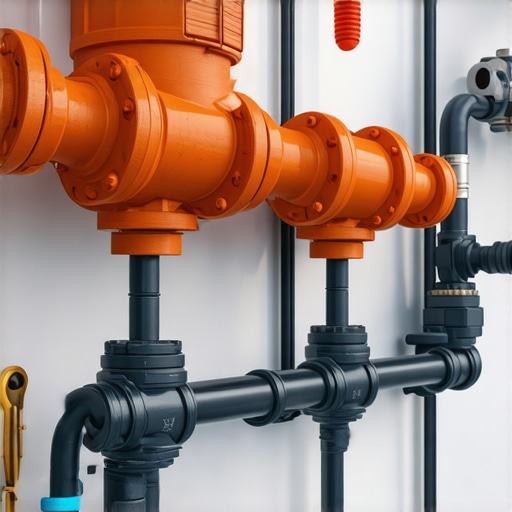
The Violent Thump: Diagnosing Irrigation Shockwaves
That rhythmic, bone-shaking ‘clunk’ echoing through your floorboards every time the irrigation zones cycle isn’t just an annoyance; it is the sound of your plumbing infrastructure failing. Water hammer occurs when the high-velocity flow of water is suddenly halted by a fast-acting solenoid valve, sending a shockwave of kinetic energy back through the pipe at speeds exceeding 4,000 feet per second. This isn’t just noise. It is a hydraulic sledgehammer hitting your joints, valves, and main line. If left unaddressed, it will eventually shear a copper fitting or crack a PVC manifold, leading to a catastrophic underground leak that can wash out a fresh sod install or undermine your foundation.
The Hardscape Autopsy: A $40,000 Lesson in Hydraulics
I recently got called out to tear up a $30,000 patio that was sinking because the previous contractor ignored a minor water hammer issue. The constant vibration of the irrigation pipes underneath the pavers had caused a hairline fracture in a Class 200 PVC pipe. Over three months, that fracture turned into a slow-motion geyser, eroding the compacted modified stone base and turning the subsoil into a slurry. By the time the homeowner noticed the ‘spongy’ feel of their expensive travertine, the structural integrity was gone. We had to excavate the entire area, replace the base, and re-grade the site. All of this could have been prevented with a fifty-dollar mechanical arrestor and a basic understanding of hydrostatic surge.
“A retaining wall doesn’t fail because of the stone; it fails because of the water trapped behind it, and irrigation leaks are the primary hidden culprit of residential slope failure.” – Hardscape Engineering Axiom
What Is a Water Hammer Arrestor and Why Do You Need One?
A water hammer arrestor is a specialized plumbing device containing a spring-loaded piston or a pressurized air bladder that absorbs the energy spike when a valve closes. By providing a ‘cushion’ for the water to push against, the arrestor dissipates the shockwave before it can travel back to your main shut-off or water heater. In modern landscaping, where high-efficiency solenoid valves shut off in milliseconds, these devices are no longer optional. They are a critical component of a professional-grade irrigation system.
| Feature | Air Chamber (Old Tech) | Mechanical Arrestor (Piston) | Bladder-Style Arrestor |
|---|---|---|---|
| Longevity | Fails as air dissolves | 10-15 years | High durability |
| Maintenance | Requires frequent draining | None | None |
| Shock Absorption | Moderate | High | Superior |
| Installation | Vertical only | Any orientation | Any orientation |
The Forensic Diagnosis: Identifying the Source
To fix the hammer, you must first locate the epicenter. Is the noise happening at the valve box, or is it echoing back into the house? Yard cleanup often reveals exposed pipes that have been vibrating against rocks or roots, which exacerbates the sound. If the noise is localized at the valve manifold, the issue is likely the closing speed of your solenoids. If the noise is rattling your water heater, you have a systemic pressure issue. You need to check your static PSI. Anything over 80 PSI is a danger zone for residential plumbing.
How much modified gravel do I need for a patio base?
For a standard pedestrian patio, you need a minimum of 4 to 6 inches of compacted 2A modified stone. If you are dealing with poorly drained clay or high-vibration environments (like those with irrigation issues), increasing that to 8 inches with a woven geotextile fabric is the professional standard to prevent settling.
Where should I install the water hammer arrestor?
The arrestor must be installed as close to the source of the shock as possible. In an irrigation context, this means installing it on the main supply line just before the valve manifold. If you have multiple zones, a single large-capacity arrestor on the manifold header is usually sufficient to dampen the energy from all downstream solenoids.
Step-by-Step Installation: Protecting Your Infrastructure
Do not attempt to install an arrestor without first shutting off the main water supply and depressurizing the system. Failure to do so will result in a high-pressure spray that can cause injury or flood your workspace.
- Step 1: Locate the Master Valve. Find where your irrigation main branches off from the house line. This is where the highest pressure spike occurs.
- Step 2: Prepare the Fitting. For copper lines, use a ‘T’ fitting. For PVC, use a Schedule 40 tee. Never use ‘Blue Glue’ on high-pressure manifold components; use a high-quality primer and heavy-duty solvent cement.
- Step 3: Install the Arrestor. Thread the mechanical arrestor into the tee. Use Teflon tape or pipe dope on the threads to ensure a watertight seal. Hand-tighten, then give it a quarter-turn with a pipe wrench.
- Step 4: Test and Calibrate. Turn the water back on slowly. Rapidly filling an empty system can actually cause a new hammer. Run the zones one by one and listen for the dampening effect.
“The kinetic energy in a moving fluid is proportional to the square of its velocity. Reducing velocity by increasing pipe diameter or installing dampening systems is the only way to ensure long-term pipe integrity.” – Irrigation Association Technical Manual
The Intersection of Irrigation and Turf Health
Excessive water hammer often stems from high velocity, which usually means your pipes are undersized for the GPM (Gallons Per Minute) you are pushing. This high velocity doesn’t just hurt the pipes; it affects your sod install. High-pressure misting at the sprinkler head (rather than large droplets) leads to evaporation and wind drift, meaning your new turf isn’t actually getting the inch of water it needs per week. While the internet tells you to water every day, turf grass actually needs deep, infrequent watering—exactly 1 inch per week—to force roots to chase the water down into the soil profile. High-velocity irrigation systems often fail to deliver this effectively because they are constantly leaking or misting. Fix the hammer, and you’ll likely fix your pressure issues, leading to a healthier root system and less yard cleanup in the long run. Don’t skip the pressure regulator. It’s the cheapest insurance policy you can buy for your lawn.