
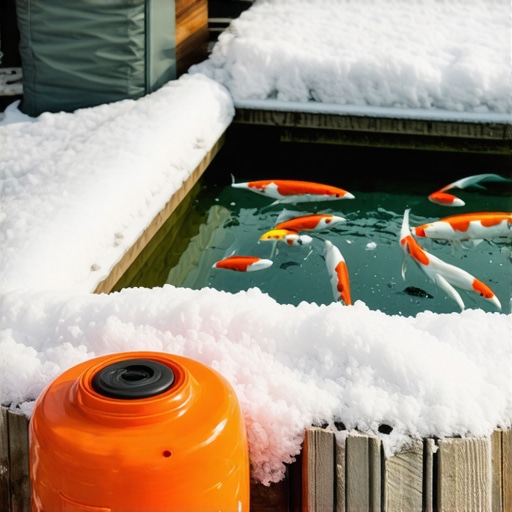
Why Most Pond Fish Die in Winter
Winter pond fish losses primarily occur due to gas entrapment, biological waste toxicity, and metabolic collapse caused by insufficient oxygen and frozen surface layers that prevent the exchange of lethal carbon dioxide and hydrogen sulfide. If the pond surface seals completely for more than 48 hours, these gases reach toxic levels that kill koi and goldfish faster than the cold ever will.
I always drill into my new crew members: if you don’t fix the soil grading first, every plant you put in the ground is just expensive compost. Ponds operate under the same brutal laws of physics. Many homeowners treat their pond like an outdoor aquarium, but it is actually a complex biological reactor. During a standard yard cleanup, I see people blowing leaves into the water or ignoring the muck at the bottom. This is a death sentence. That organic matter decomposes, uses up precious dissolved oxygen (DO), and releases methane under the ice. If you want zero losses, you have to stop thinking about the fish and start thinking about the chemistry of the water column.
The Critical Physics of the Thermocline
The thermocline in a winter pond is the layered temperature gradient where water is densest at 39.2 degrees Fahrenheit, causing the warmest water to sink to the bottom while ice forms at the surface. This layer of 39 degree water is the only reason your fish survive. If you run a standard irrigation pump or a high-volume waterfall during a deep freeze, you will mix these layers, super-cool the entire pond to 32 degrees, and kill every living thing inside. Stop the heavy flow. It is a fundamental error to keep a high-pressure pump running when the ambient air temperature drops below freezing for extended periods.
“In a pond environment, the most critical factor for overwintering fish is maintaining an opening in the ice to allow for gas exchange, rather than heating the entire body of water.” – Penn State Agricultural Extension
How much modified gravel do I need for a pond base?
For a standard 10×15 pond, you need approximately 3 to 4 tons of cleaned 3/4 inch river stone or modified gravel to provide enough surface area for beneficial bacteria to colonize while ensuring the base does not shift under ice pressure. This substrate acts as a biological filter even in low-metabolism states. Do not use limestone; it will spike your pH and stress the fish before the first freeze.
Mechanical Strategy: Aerators vs. De-icers
Selecting the proper winterization equipment involves choosing between subsurface aeration and floating de-icers to maintain a hole in the ice for gas exchange. An aerator is more efficient for oxygenation, while a de-icer is a failsafe against extreme northern freezes. In my 20 years of hardscaping and pond installs, I have found that a combination of both is the only way to guarantee safety in zones 5 and lower. You are not trying to heat the pond; you are trying to keep a 12 inch diameter hole open to let the poison out.
| Feature | Floating De-Icer | Subsurface Aerator | Heating Element |
|---|---|---|---|
| Primary Function | Melts ice hole | Gas exchange/Oxygen | Temp stabilization |
| Wattage Use | 750w to 1500w | 15w to 60w | High (2000w+) |
| Best For | Extreme Freezes | Standard Winter | Tropical Species |
| Operating Cost | High | Very Low | Extreme |
Nutritional Shutdown: The 50 Degree Rule
The 50 degree rule dictates that you must stop feeding pond fish once water temperatures consistently drop below 50 degrees Fahrenheit because their digestive systems effectively shut down. If you feed them in cold water, the food will literally rot in their gut, causing bacterial infections and systemic sepsis. Their metabolism enters a state of torpor. They don’t need the calories. They need clean, oxygenated water. This is where most novices fail. They see the fish moving slowly and think they are hungry. They aren’t. They are just trying to survive the biological slowdown.
“As water temperatures drop, the metabolic rate of ectothermic organisms like koi decreases significantly, requiring a transition to low-protein wheat germ feeds before total cessation of feeding at 10 degrees Celsius.” – Texas A&M Agrilife Extension
How deep should a pond be for winter?
To ensure fish survival in cold climates, a pond must have at least one deep zone of 3 to 4 feet to prevent the entire water column from freezing solid and to maintain the 39 degree thermal layer. If your pond is only 18 inches deep, you are essentially building an ice cube tray. You need that depth to provide a stable environment where the hydrostatic pressure and thermal mass protect the fish from rapid air temperature swings.
The Professional Winterization Checklist
Follow this step-by-step pond winterization protocol to ensure your system remains stable until the spring thaw and prevents catastrophic hardware failure.
- Perform a final yard cleanup: Remove all overhanging deciduous limbs and use a pond net to extract 100 percent of floating leaf litter.
- Drain irrigation lines: If you have an auto-fill valve tied to your irrigation, blow it out now. A cracked brass valve is an expensive mistake.
- Switch to wheat germ food: When water hits 60 degrees, move to a highly digestible protein source.
- Install the aerator: Place the stone 6 to 10 inches below the surface. Do not place it on the bottom, or it will break the thermocline.
- Check the GFCI: Ensure all heating and pumping equipment is plugged into a tested, functional Ground Fault Circuit Interrupter.
- Inspect for leaks: Check the liner around the edges. Ice expansion will exploit any existing structural weakness.
Maintenance During the Freeze
Don’t touch it. Once the equipment is set and the fish are in torpor, your job is observation. If the hole in the ice closes, do not hit it with a sledgehammer. The shockwaves can rupture a fish’s swim bladder or kill them instantly. Use a kettle of hot water to melt a new hole. It is simple physics. You are the steward of a closed system. Treat it with the engineering respect it deserves. If you skip the prep, you deserve the compost you find in April. Do it right the first time.