
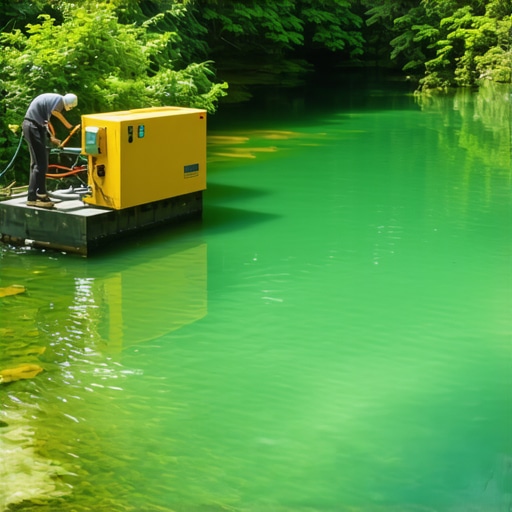
Building a high-end pond is not about digging a hole and filling it with water; it is a complex exercise in biological engineering and hydraulic management. Most contractors fail because they treat a water feature like a static landscape element rather than the living, breathing organism it is. Achieving crystal-clear water requires a deep understanding of the nitrogen cycle and the specific role of ultraviolet germicidal irradiation (UVGI). In 2026, the technology behind UV clarifiers has shifted toward high-output amalgam lamps and integrated flow-sensing modules that maximize dwell time without sacrificing head pressure. We do not build features that turn into green pea soup within three months. We build systems that stay clear because we control the microbiology.
The Hardscape Autopsy: Why Most Pond Systems Fail
A pond filtration failure typically occurs because of inadequate biological surface area or insufficient UV-C exposure times for the specific gallonage of the system. To prevent green water, you must calculate the total volume of the pond and the flow rate of your pumps to ensure every drop of water passes the UV light source at least once every two hours. I recently got called out to tear up a $30,000 ecosystem pond that had turned into a septic pea-soup swamp because the previous contractor failed to account for the hydrostatic pressure and the massive biological load from the surrounding canopy. They installed a 15-watt unit on a 4,000-gallon pond. It was like bringing a squirt gun to a forest fire. We had to excavate the entire filtration bay, increase the pipe diameter to 2 inches to reduce friction loss, and install a dual-chamber 2026-spec UV clarifier. If you do not get the flow rate and the wattage ratio right, you are just wasting electricity.
“A retaining wall doesn’t fail because of the stone; it fails because of the water trapped behind it.” – Hardscape Engineering Axiom
The Science of 254nm Wavelength and Algae Control
A 2026 UV clarifier works by exposing single-celled algae and pathogens to a specific 254nm wavelength of ultraviolet light, which destroys their DNA and prevents reproduction. This process, known as flocculation, causes the dead algae cells to clump together, allowing your mechanical filter—whether it is a bead filter or a skimmer mat—to actually catch them. Without the UV step, the algae are too small for standard landscape filtration. In 2026 models, we are seeing quartz sleeves with nanotechnology coatings that resist mineral scaling. Scaling is the enemy of clarity. If calcium deposits build up on your sleeve, the UV light cannot penetrate the water column. It stops working. You need to pull that sleeve every six months and wipe it down with a mild acid solution. No excuses.
“Ultraviolet sterilization effectiveness is a direct function of dose, which is the product of intensity and exposure time.” – Aquatic Systems Design Manual
How many watts per gallon do I need for a pond?
For standard residential ponds in partial sun, you should aim for 10 watts of UV power for every 1,000 gallons of water. If the pond is in full sun or has a heavy fish load (high nitrogen input), you must bump that to 20 or 30 watts per 1,000 gallons. Under-sizing is the most common mistake in the landscaping industry. Below is a breakdown of the 2026 standards for UV clarifier selection based on pond volume and biological load.
| Pond Volume (Gallons) | Standard UV Wattage | Heavy Bio-Load (Koi) | Maximum Flow Rate (GPH) |
|---|---|---|---|
| 1,000 | 15W Amalgam | 25W Amalgam | 1,200 |
| 2,500 | 25W Amalgam | 40W Amalgam | 2,500 |
| 5,000 | 55W Amalgam | 80W Dual-Lamp | 4,500 |
| 10,000 | 110W Industrial | 160W High-Output | 8,000 |
Installation Logic: The Ground-Up Build
Proper UV clarifier installation requires a bypass manifold to regulate water velocity, ensuring the water stays in the UV chamber long enough for the radiation to be effective. If you pump water through the unit too fast, the UV-C light does not have enough time to penetrate the cell walls of the pathogens. This is where most ‘mow-and-blow’ guys mess up. They hook the UV unit directly to the main line without a ball valve. We install our units after the mechanical filter but before the biological waterfall. This ensures the water is as clean as possible when it hits the lamp, preventing debris from shadowing the light. Also, check your local municipal codes. In many regions, you must have a dedicated GFCI outlet for water feature electronics and keep all ballast boxes at least 5 feet from the water’s edge to comply with NEC safety standards. Call 811 before you dig your trench for the conduit. One severed irrigation line can ruin a three-day project.
How long should a UV clarifier run?
A UV clarifier should run 24 hours a day during the growing season to maintain a consistent biological balance. Turning the unit on and off stresses the ballast and shortens the bulb life significantly. In 2026, many units feature smart sensors that dim the bulb at night to save energy, but the lamp should never be fully extinguished during the warm months. The nitrogen cycle does not sleep, and neither should your filtration. If you see a sudden spike in ammonia, check your bulb. They lose 20% of their effectiveness every 9,000 hours. Replace them every spring. Do not wait for them to burn out. A dim bulb is a useless bulb.
The Critical Maintenance Checklist
Maintaining a UV system is a matter of precision and consistency, focusing on quartz sleeve clarity and bulb intensity. If you ignore the maintenance, your crystal-clear water will vanish in 72 hours. Use this checklist to ensure your system operates at peak PSI and germicidal efficiency.
- Inspect quartz sleeves for lime-scale every 90 days.
- Replace UV-C bulbs every 12 months (typically every spring).
- Verify GFCI outlet operation to prevent surges from frying the ballast.
- Clean the pre-filter sponge to prevent debris from entering the UV chamber.
- Check O-rings for cracking to prevent hydrostatic leaks.
Landscape professionals know that water follows the path of least resistance. If your plumbing has too many 90-degree elbows, you are killing your pump efficiency and your UV dwell time. Use 45-degree sweeps instead. It matters. The physics of water movement dictates the success of your filtration. While the internet tells you to dump chemicals in the water to clear it up, the truth is that a properly engineered UV system and a balanced nitrogen cycle are the only ways to get lasting results. Stop buying ‘clarifier’ liquids. Fix the engineering. Install the right wattage. Keep the sleeves clean. That is how you get crystal water.