
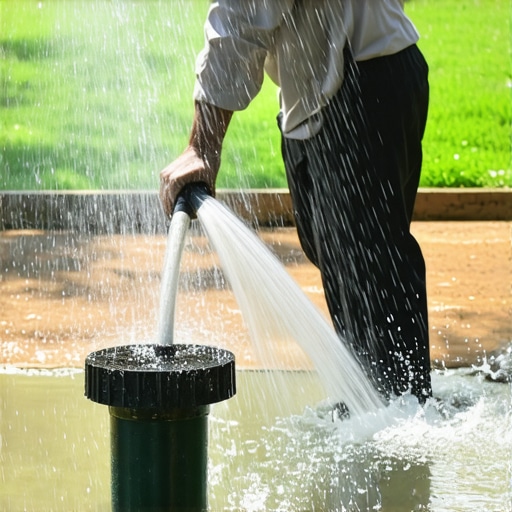
I always drill into my new crew members: if you don’t fix the filtration first, every plant you put in the ground is just expensive compost waiting to happen. It is a harsh reality of high-end landscaping that the most critical component of a system is often the one buried in a box, ignored until the lawn starts turning the color of a discarded cardboard box. I have seen $15,000 sod installs wither in seventy-two hours because a technician forgot to check the micron rating on a primary filter. You do not just ‘rinse’ a filter; you engineer a system that cleans itself through hydraulic pressure. If you are still pulling out mesh screens and scrubbing them with a toothbrush, you are wasting time and damaging the integrity of the filter weave. Professional irrigation is about managing the microscopic reality of your water source.
The Anatomy of Irrigation Filter Failure
Irrigation filters fail when suspended solids and organic biofilms reach a critical mass that creates a pressure differential exceeding the system’s operational threshold. This blockage typically manifests as low head pressure, preventing pop-up rotors from engaging and leading to localized dry spots that compromise your yard cleanup efforts. It is not just about dirt. We are talking about calcium carbonate scaling, iron bacteria slime, and microscopic silt that can bypass a coarse screen but will choke a modern drip emitter in seconds. When that pressure drops, your sod install is the first thing to suffer. It will die. Fast. You need to understand the PSI drop across that filter body before you even think about touching a wrench.
“Proper filtration is the first line of defense in micro-irrigation systems to prevent emitter plugging from physical, chemical, and biological contaminants.” – USDA National Engineering Handbook
How much modified gravel do I need for a patio base?
For a standard pedestrian patio, you require a minimum of six inches of compacted 21A or 3/4-inch modified gravel to ensure structural stability and hydrostatic drainage. This base layer must be installed in two-inch lifts, with each lift mechanically compacted to a 98% Proctor density to prevent future settling or heaving during freeze-thaw cycles.
The Backflush Hack: Reversing the Flow
The backflush hack utilizes diverted hydraulic pressure to force debris out of the filter housing via a flush valve, eliminating the need to disassemble the unit and expose the O-rings to grit. By installing a three-way bypass or a dedicated ball valve on the downstream side of the filter, you can create a high-velocity purge that scours the mesh from the inside out. This is standard practice in agricultural irrigation, but most residential ‘pros’ skip it because it adds twenty bucks to the material cost. Do not be that guy. A proper backflush setup ensures that your 2026 system remains operational even when the municipal water or well source is running heavy with sediment. It saves the pump. It saves the plants.
| Filter Type | Micron Rating | Primary Contaminant | Cleaning Method |
|---|---|---|---|
| Stainless Mesh | 130 – 150 | Sand and Grit | Manual / Backflush |
| Disc Filter | 100 – 200 | Organic Matter / Algae | Manual Scrub Required |
| Centrifugal | N/A | Heavy Silt / Gravel | Automatic Purge |
Can I clean an irrigation filter without taking it apart?
Yes, you can clean an irrigation filter without disassembly by installing a flush-port ball valve at the base of the filter housing to allow high-velocity purging. This method, known as backflushing, uses the system’s own water pressure to eject accumulated sediment through the discharge port, maintaining flow rates without compromising the housing seal.
Step-by-Step Backflush Protocol
The process of backflushing is a matter of fluid dynamics. You are creating a path of least resistance for the debris. If you follow this checklist, you will extend the life of your landscaping equipment by years. Do not skip the pressure check. It is the only way to know if you actually succeeded.
- Close the downstream isolation valve: This stops water from entering the zones.
- Open the flush port valve: Allow the water to vent to the atmosphere.
- Increase system pressure: If on a pump, run at 100% capacity.
- Monitor discharge clarity: Wait until the water runs clear of silt.
- Check pressure gauges: Ensure the differential between inlet and outlet is less than 5 PSI.
- Inspect for leaks: Verify the O-ring hasn’t been unseated by the pressure surge.
“A retaining wall doesn’t fail because of the stone; it fails because of the water trapped behind it.” – Hardscape Engineering Axiom
The Long-Term Maintenance Cycle
After a major yard cleanup or a fresh sod install, your filtration needs will spike. Disturbed soil and new connections introduce construction debris into the lines. You should be backflushing once a week for the first month. After that, move to a monthly schedule. If you ignore this, the mineral scale will calcify. Once it calcifies, the ‘hack’ won’t work, and you will be buying a new $80 filter element. I see it every day. Homeowners think the system is ‘set and forget.’ It isn’t. Soil moves. Water chemistry changes. Your irrigation system is a living machine that requires calibrated maintenance. Don’t let a ten-cent grain of sand ruin a ten-thousand-dollar landscape. Keep the pressure up. Keep the water moving.