
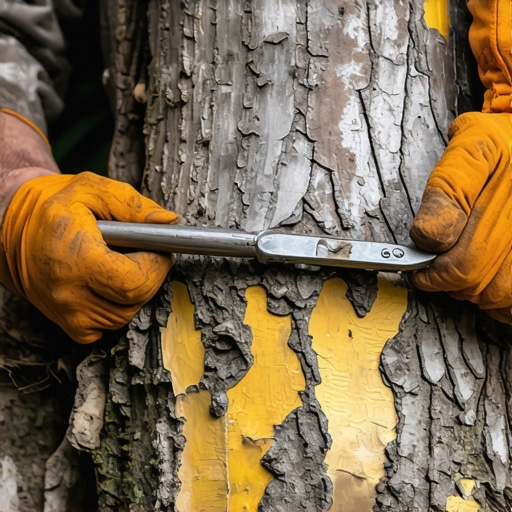
The Forensic Autopsy: A Slow Death by Mechanical Blunder
I always drill into my new crew members: if you do not fix the soil grading and protect the root flare first, every plant you put in the ground is just expensive compost. I recently stood over a mature Red Maple that was dropping leaves in July, a victim of what I call the 2026 Bark Blight: not a fungus, but a string trimmer. The homeowner had been paying a mow-and-blow outfit for three years. They had been scalping the base of that tree every Tuesday. The bark was shredded, the secondary phloem was crushed, and the tree was effectively being strangled. This is not just a cosmetic issue. It is a vascular catastrophe. When you hit a tree with a mower deck or a high-speed line, you are severing the lifelines that transport photosynthates from the canopy to the roots. Without those sugars, the roots die. When the roots die, the tree falls. It is that simple.
Understanding the 2026 Bark Damage Epidemic
Bark damage from mowers and trimmers occurs when mechanical impact crushes the vascular cambium, which is the thin layer of living tissue between the bark and the wood responsible for all new growth. Immediate remediation requires excavating the root flare, removing competing turf through sod install removal, and establishing a mulch buffer to prevent future strikes.
“Trees do not ‘heal’ in the sense that animals do; they compartmentalize wounds to prevent the spread of decay through a process known as CODIT (Compartmentalization of Decay in Trees).” – International Society of Arboriculture (ISA) Standards
How long does it take for a tree trunk to recover?
The recovery timeline depends entirely on the percentage of the circumference damaged. If the damage covers less than 25 percent of the trunk’s girth, the tree can often callus over within two to three growing seasons. However, if more than 50 percent is girdled, the tree’s structural integrity is compromised, requiring a professional landscaping assessment to determine if it is a hazard. You cannot rush biology. You can only support it.
| Damage Level | Mechanical Symptom | Primary Treatment | Prognosis |
|---|---|---|---|
| Surface Scuff | Loss of outer cork layer only | Monitor for pests | Excellent |
| Cambium Crush | Visible wetness or sap oozing | Mulch ring + Irrigation adjust | Fair |
| Girdling (50%+) | Deep wood exposure around trunk | Bridge grafting or removal | Poor |
The Restoration Protocol: Step-by-Step Recovery
Fixing this mess starts with a comprehensive yard cleanup. You have to get the grass away from the trunk. Grass and trees are natural enemies in an urban setting. The grass steals the nitrogen; the mower kills the tree.
1. Wound Debridement
Use a sterilized, sharp knife to remove loose, jagged bark. Do not go deeper into the wood. You are only removing the shredded bits that trap moisture and invite fungal pathogens. If the wound is clean, leave it alone. Never use “wound paint.” It traps moisture and accelerates rot. It is a scam sold at big-box stores. Professionals do not use it.
2. The Mulch Ring Mandate
Stop the sod install right at the edge of the root flare. I want to see a 3 to 4 foot radius of organic mulch around every tree. This is your “no-fly zone” for mowers. The mulch should be 2 to 3 inches deep, but never touching the bark. No mulch volcanoes. If the mulch touches the bark, it holds moisture against the trunk and causes the bark to rot. This is a common amateur mistake.
“Excessive mulch piled against the trunk of a tree can lead to bark moisture levels that promote fungal decay and provide cover for girdling roots.” – Purdue University Extension
3. Irrigation Recalibration
Check your irrigation heads. If a sprinkler is hitting the trunk of a damaged tree every morning, you are effectively waterboarding it. High-pressure water hitting an open wound prevents the formation of callus tissue. Redirect the nozzles. Trees need deep, infrequent watering at the drip line, not a daily shower on the trunk.
How much mulch do I need for a tree ring?
For a standard 4-foot diameter ring at 3 inches deep, you will need approximately 3 cubic feet of mulch. Use a high-quality double-ground hardwood. Avoid the dyed red mulch; it is often made from shredded pallets and contains chemicals that can mess with soil pH. Go for the natural stuff that will actually break down and feed the soil microbiology.
Long-Term Structural Support
Once the physical protection is in place, you need to manage the tree’s stress. Avoid high-nitrogen fertilizers during the first year of recovery. Nitrogen forces the tree to put energy into top growth (leaves) when it needs to be putting energy into root development and wound closure. Use a slow-release organic fertilizer with a focus on potassium and phosphorus to encourage cellular strength. Also, ensure your yard cleanup includes checking for girdling roots that might have been hidden by the grass. If a root is wrapping around the trunk, it is just as deadly as a mower blade. Cut it out.
The Maintenance Checklist
- Monthly inspection of the wound for “woundwood” (thick, rolling bark growth).
- Bi-annual mulch replenishment (keep it at 3 inches).
- Soil pH testing to ensure nutrient availability.
- Utility marking (Call 811) before any major trenching for new irrigation.
It is a slow process. It will take time. But if you stop the mechanical trauma today, the tree has a fighting chance. Don’t skip the mulch. Don’t hit it again. Stick to the plan.