
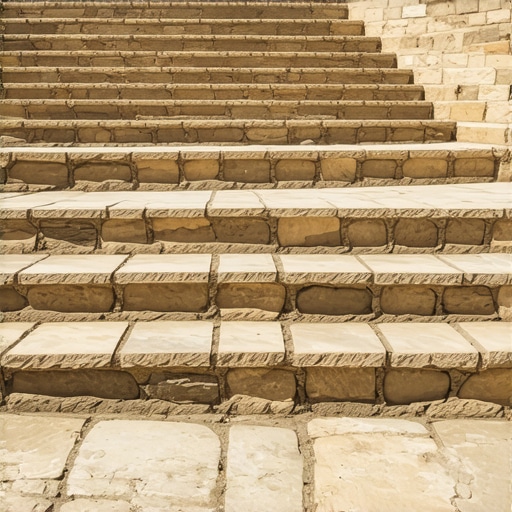
Engineering Flagstone Stairs for the 2026 Landscape
I recently got called out to tear up a $30,000 patio and staircase system that was sinking into a client’s backyard because the previous contractor thought ‘dirt’ was an acceptable base. It was a forensic nightmare. The steps had shifted three inches horizontally, and the flagstone treads were cracking under the weight of simple foot traffic. When we excavated, we found zero drainage and no compacted aggregate. It was just expensive stone sitting on top of mud. This is what happens when ‘mow-and-blow’ hacks try to play engineer. Landscaping is not about making things look pretty for a week; it is about managing the brutal physics of soil, water, and gravity. If you do not respect the rise-run ratio and the structural requirements of the earth, your investment will eventually become a hazard.
The Mathematics of the Perfect Rise-Run Ratio
The rise-run ratio for flagstone stairs determines the safety and long-term stability of the structure by managing gravitational load and ergonomic gait. By maintaining a 7-inch rise and a 14-inch run, contractors prevent base-layer shifting and ensure the hardscape integrates with the soil grading.
When we talk about the ‘rise,’ we are talking about the vertical height from one step to the next. The ‘run’ is the depth of the tread where your foot actually lands. In the hardscape world, we follow a specific formula: two times the rise plus the run should equal roughly 26 inches. This is not a suggestion; it is a physiological requirement for human movement. If your rise is too high, you are climbing a ladder. If your run is too short, you are inviting a trip-and-fall lawsuit. For natural flagstone, which often has irregular thicknesses, this math becomes even more critical. You have to account for the thickness of the stone and the mortar bed or the dry-stack setting bed. We use a laser level to ensure that every single tread maintains a 1/4 inch pitch toward the front. This prevents water from pooling at the back of the step, which would eventually lead to freeze-thaw damage and delamination of the stone. Don’t skip the level work. It is the difference between a 30-year stair and a 3-year repair job.
“A retaining wall doesn’t fail because of the stone; it fails because of the water trapped behind it.” – Hardscape Engineering Axiom
Excavation and the Forensic Failure of Poor Bases
Building 2026 flagstone stairs requires a deep understanding of what lies beneath the surface. You cannot simply lay stone on topsoil. Topsoil is organic; it decomposes, shifts, and holds water like a sponge. We excavate down to the sub-grade, which is the native, undisturbed soil. Then, we apply a layer of non-woven geotextile fabric. This fabric acts as a separation layer, preventing our expensive 2A modified stone from sinking into the clay over time. We then install the base in four-inch ‘lifts.’ Each lift is compacted using a vibratory plate compactor until it reaches 98% Proctor density. If the tamper doesn’t literally bounce off the surface, you aren’t done. The base needs to be as hard as concrete before a single flagstone is set. This is where most contractors fail. They get lazy with the compactor, and three years later, the client has a sinking staircase. We also have to look at the surrounding yard cleanup. If you leave old root systems or debris under the base, they will rot and create voids. Voids lead to settling. Settling leads to failure. It is a simple chain of causality.
How much modified gravel do I need for a patio base?
To calculate your modified gravel needs, multiply the square footage of the area by the depth of the base (usually 6 to 8 inches for stairs) and divide by 27 to get cubic yards. Adding a 10% compaction factor is essential for accuracy.
Material Selection: Why Big-Box Stone Fails
I tell every client the same thing: if you buy your flagstone from a big-box home improvement store, you are buying scrap. That stone is often thin, brittle, and prone to ‘spalling’—where the layers peel off like an onion. For 2026 builds, we only source from local quarries that provide high-density Pennsylvania Bluestone, Tennessee Quartzite, or thick-cut Oklahoma Flagstone. The stone must be at least 1.5 to 2 inches thick for a dry-stack application. Thinner stone will crack under the pressure of the freeze-thaw cycle. We also look at the Coefficient of Friction. Natural cleft flagstone provides a ‘grippy’ surface that is essential for stairs, especially when wet. If you use a honed or polished stone on a staircase, you have created a slide, not a walkway. This is especially important near areas with irrigation systems. If a sprinkler head is misaligned and soaks the stairs, you need that texture to prevent accidents.
| Stone Type | Density (lbs/ft3) | Porosity (%) | Durability Rating |
|---|---|---|---|
| PA Bluestone | 160 | 0.5-1.5 | Very High |
| Sandstone | 145 | 2.0-5.0 | Medium |
| Limestone | 155 | 1.0-2.5 | High |
| Quartzite | 165 | 0.1-0.4 | Extreme |
Drainage and Hydrostatic Mitigation
Water is the enemy of every hardscape project. Behind every set of flagstone stairs built into a slope, there is hydrostatic pressure. This is the weight of the water-saturated soil pushing against the back of your stairs. Without a way for that water to escape, it will eventually push the stairs out of alignment. We install a ‘chimney drain’ behind the stairs—a vertical column of #57 clean stone wrapped in fabric. This allows water to drop straight down to a perforated 4-inch pipe that carries it safely away from the structure. This is the part of the job that the client never sees, but it is the most important. If your contractor doesn’t talk about ‘daylighting’ a drain pipe, fire them. They are building a ticking time bomb. We also coordinate this with the irrigation team. We make sure that no lateral lines are running directly under the stairs where a leak could wash out the entire foundation. It is about total site management.
What is the safest rise for outdoor stone steps?
The safest outdoor stone rise is between 6 and 7 inches. This height accommodates the natural biomechanics of a human step while allowing for slight irregularities in the natural flagstone surface without causing a trip hazard.
The Final Phase: Sod Install and Site Integration
Once the stairs are set and the polymeric sand is locked into the joints, we focus on the transition. You cannot leave raw soil against the edges of a new stone staircase. The first rainstorm will wash that dirt right onto your new $15,000 investment. This is where a professional sod install comes in. We use a sod cutter to create a clean edge and install high-quality turf that acts as a biological filter. The roots of the sod help stabilize the soil at the edges of the flagstone, preventing erosion. Before the sod goes down, we perform a final yard cleanup to remove any stone dust or excess gravel. Stone dust is highly alkaline; if you leave it in the soil, it will kill the grass. We test the soil pH and adjust with elemental sulfur if needed to ensure the new lawn thrives. We don’t just ‘throw down seed.’ We build an ecosystem that supports the hardscape.
“Proper compaction of the sub-grade and base material is the single most critical factor in preventing the differential settlement of segmental systems.” – Interlocking Concrete Pavement Institute (ICPI) Manual
Pre-Installation Checklist for Flagstone Stairs
- Call 811 to mark all underground utility lines (gas, water, electric).
- Verify the total ‘rise’ of the slope using a transit or laser level.
- Calculate the number of ‘runs’ needed based on the 2R + T = 26 rule.
- Excavate to a minimum of 10 inches below the first step for the base.
- Inspect flagstone for cracks or ‘veins’ that could lead to splitting.
- Ensure a 1% to 2% pitch for water runoff on every tread.
- Identify the ‘daylight’ point for the drainage pipe system.
Building stairs out of natural stone is a craft that requires patience and a high tolerance for heavy lifting. It is not a weekend DIY project. Every stone has a ‘face’ and a ‘grain.’ You have to read the stone to know how it will weather. If you place a stone with the grain running vertically, it will delaminate in two seasons. It has to be horizontal. These are the details that separate the professionals from the amateurs. When you look at your yard in 2026, you shouldn’t see ‘new’ stairs; you should see a structure that looks like it has been there for a century and will stay there for another one. It requires a lot of sweat, a lot of gravel, and a refusal to cut corners.