
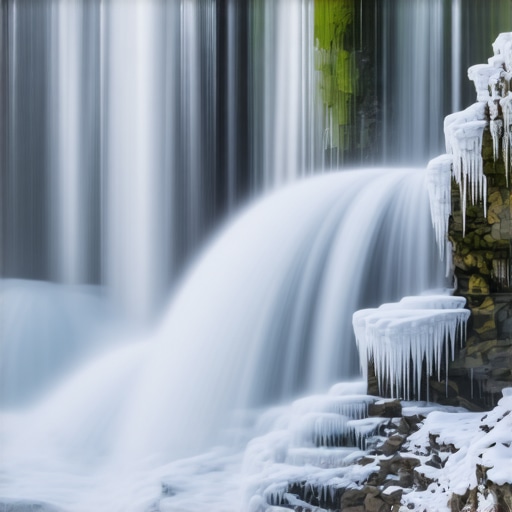
The Structural Reality of Frozen Water Features
Winterizing a custom waterfall isn’t about tossing a tarp over some rocks; it is a critical engineering intervention to prevent 2026 from becoming the year your hardscape self-destructs. Proper winterization involves managing hydrostatic pressure and preventing ice dams that force water out of the liner and into your foundation. It is a biological and mechanical reset. I recently got called out to tear up a $30,000 patio that was sinking because the previous contractor failed to account for ice damming in the adjacent waterfall. The ice forced water behind the liner, which saturated the modified gravel base of the patio. In the freeze-thaw cycle, that saturated base heaved four inches, cracking every single paver. It was a total loss. This is the reality of poor landscaping engineering. If you don’t control the water, the water will control your wallet.
Why Ice Dams Kill Your Water Feature
An ice dam occurs when moving water freezes into a structural barrier, redirecting the flow of the waterfall over the liner’s edge and into the surrounding soil. This causes erosion, foundation saturation, and liner displacement, leading to catastrophic hardscape failure and plant root rot during yard cleanup. Don’t underestimate ice. It expands by 9% in volume. That expansion generates enough force to crack concrete and shift boulders weighing thousands of pounds. When water is redirected by ice, it finds the path of least resistance. Usually, that path leads straight into your sub-base. Once your sub-base is saturated, you lose compaction. No compaction means settling. Settling means your waterfall is now a pile of expensive rubble.
“A retaining wall doesn’t fail because of the stone; it fails because of the water trapped behind it. In winter features, ice behaves as a structural solid that redirects hydraulic forces into vulnerable soil zones.” – Hardscape Engineering Axiom
How much modified gravel do I need for a waterfall base?
For a standard residential waterfall, you need at least 6 to 12 inches of compacted modified gravel (2A or 3/4-inch minus) to ensure proper drainage and stability. This base prevents the weight of the water and stone from causing the feature to sink into soft soil. Irrigation lines nearby must be buried at least 12 inches deep to avoid interference with this structural base. Without this drainage layer, water trapped under the liner will freeze and heave the entire structure.
The Shutdown vs. Flow Logic
Choosing whether to run your waterfall through a 2026 winter or shut it down depends entirely on your local USDA hardiness zone and the feature’s design. If you live in an area where temperatures stay below 20 degrees Fahrenheit for weeks, a total shutdown is the only way to guarantee ice dam prevention. Running water in extreme cold creates ‘ice bells’ and bridges. These look interesting until they divert the entire pump’s output into your flower beds. If you choose to run it, you must be out there daily with a pry bar and warm water to clear the spillways. Most homeowners shouldn’t take that risk. Shut it down. Drain the lines. Blow out the irrigation systems. It is cheaper than a rebuild.
| Feature Component | Winterization Action | Technical Requirement |
|---|---|---|
| Submersible Pump | Removal & Submersion | Store in bucket of water in 40°F+ garage |
| Biological Filter | Drain & Deep Clean | Remove filter mats to prevent anaerobic rot |
| External Piping | Air Blowout | Use 100 PSI air to clear all check valves |
| Liner Edges | Inspection | Check for 2-inch vertical clearance above grade |
Does running a waterfall in winter prevent freezing?
Running a waterfall does not prevent freezing; it only delays it while creating complex ice formations that can lead to ice damming. While the friction of moving water generates a microscopic amount of heat, it is not enough to counter sustained sub-zero temperatures. Eventually, the splash zone will freeze, building layers of ice that will eventually divert water out of the basin. This can lead to pump burnout if the water level drops too low. Sod install projects near the waterfall will also be ruined by this overflow.
Mechanical Protection and Component Storage
The pump is the heart of your system, and it is also the most vulnerable to thermal expansion. If water freezes inside the volute, the plastic or cast iron housing will shatter. Period. Pull the pump. Clean the intake screen of any debris from your fall yard cleanup. I tell my crew that a dirty pump is a dead pump. After cleaning, store the pump in a bucket of water in a frost-free environment. This keeps the seals from drying out and cracking. If you have an external centrifugal pump, you must drain the case and the lines. Don’t forget the check valve. Water trapped above a check valve will split a PVC pipe like a toothpick.
“Frozen soil can exert lateral pressures exceeding 1,000 pounds per square foot, necessitating that all water-retaining structures be either fully drained or engineered for ice expansion.” – Agricultural Extension Engineering Manual
The 2026 Winterization Checklist
Follow this sequence exactly to ensure your feature survives the freeze. Do not skip steps. Precision saves money.
- Cut the Power: Disconnect the GFCI and remove the timer to prevent accidental dry-starts.
- Drain the Basin: Lower water levels below the skimmer opening to prevent ice from cracking the plastic housing.
- Remove All Organic Matter: Decaying leaves produce hydrogen sulfide gas, which can kill any dormant fish.
- Bypass the Auto-Fill: Shut off the irrigation line feeding the auto-fill and drain the valve.
- Cover the Filter: Use a heavy-duty UV-resistant cover to keep snow and debris out of the biological chamber.
Soil Grading and External Drainage
The area around your waterfall needs to be graded away from the feature at a minimum 2% slope. This is where landscaping fails most often. If your yard cleanup doesn’t include checking the grade, you are asking for trouble. Surface melt from snow should never flow into the waterfall basin. It carries salts, fertilizers, and silt that ruin water chemistry. Furthermore, ensure your sod install isn’t buttressing against the liner. Grass roots can actually wick water over the edge of a liner via capillary action, which then freezes and expands, pulling the liner down. Keep a clear stone perimeter of at least 6 inches between the turf and the water’s edge. It is a cleaner look and a better engineering choice. It will save your feature. Don’t compromise.”,